Falls from height are among the most common causes of serious workplace injuries. Working at height means any work where there is a risk of falling more than 1.5 metres or into a free depth. The employer must organise such work so that no one falls, and prepare employees for it.
What counts as working at height
Working at height is any activity where there is a risk of falling more than 1.5 metres from the floor or ground, or into a free depth. The threshold is set by Czech Government Regulation No. 362/2005 Coll. on detailed health and safety requirements for workplaces with a risk of falling from height or into depth. What matters is the height of a possible fall, not the type of equipment the employee is standing on.
This includes work on roofs, scaffolding, platforms and ladders, at the edges of excavations or on steel structures. The obligations do not apply only to construction, but to every industry where employees work above this threshold.
Employer obligations for working at height
The employer must assess the risks, provide a safe workplace and equipment, train employees and make sure they are medically fit.
Before work starts, assess where and how an employee could fall and choose protective measures accordingly. This includes a rescue plan for a person left hanging in a harness or injured after a fall. Do not let anyone onto the workplace who has not been informed of the risks and the work procedure.
How to protect against falls
Collective protection always comes first: guardrails, barriers, scaffolding or safety nets. Personal fall protection equipment is used only when collective protection cannot be provided.
Collective protection protects all workers at once and does not require any action on their part. Personal protection, meaning a harness with a lanyard and an anchor point, depends on correct use and the quality of the equipment. The system is built on a full-body harness, a lanyard with an energy absorber and a reliable anchor point.
A few principles apply:
- use only certified equipment suitable for the type of work
- choose an anchor point above your head with sufficient load capacity
- check the harness, ropes and karabiners before every use
- withdraw any harness that is damaged or has arrested a fall
Training and medical fitness
An employee may work at height only if they have been demonstrably trained and are medically fit. The employer is responsible for both.
Training covers the risks, the work procedure, the use of protective equipment and the rescue procedure. We recommend adding hands-on practice, because handling a harness and rope cannot be learned well from a presentation. Medical fitness is assessed by an occupational health services provider.

Rescue and first aid after a fall
A person caught in a harness must not be left hanging without help, which is why the company must have a rescue plan prepared in advance. Hanging in a harness for a long time is dangerous, because the straps restrict blood flow in the legs.
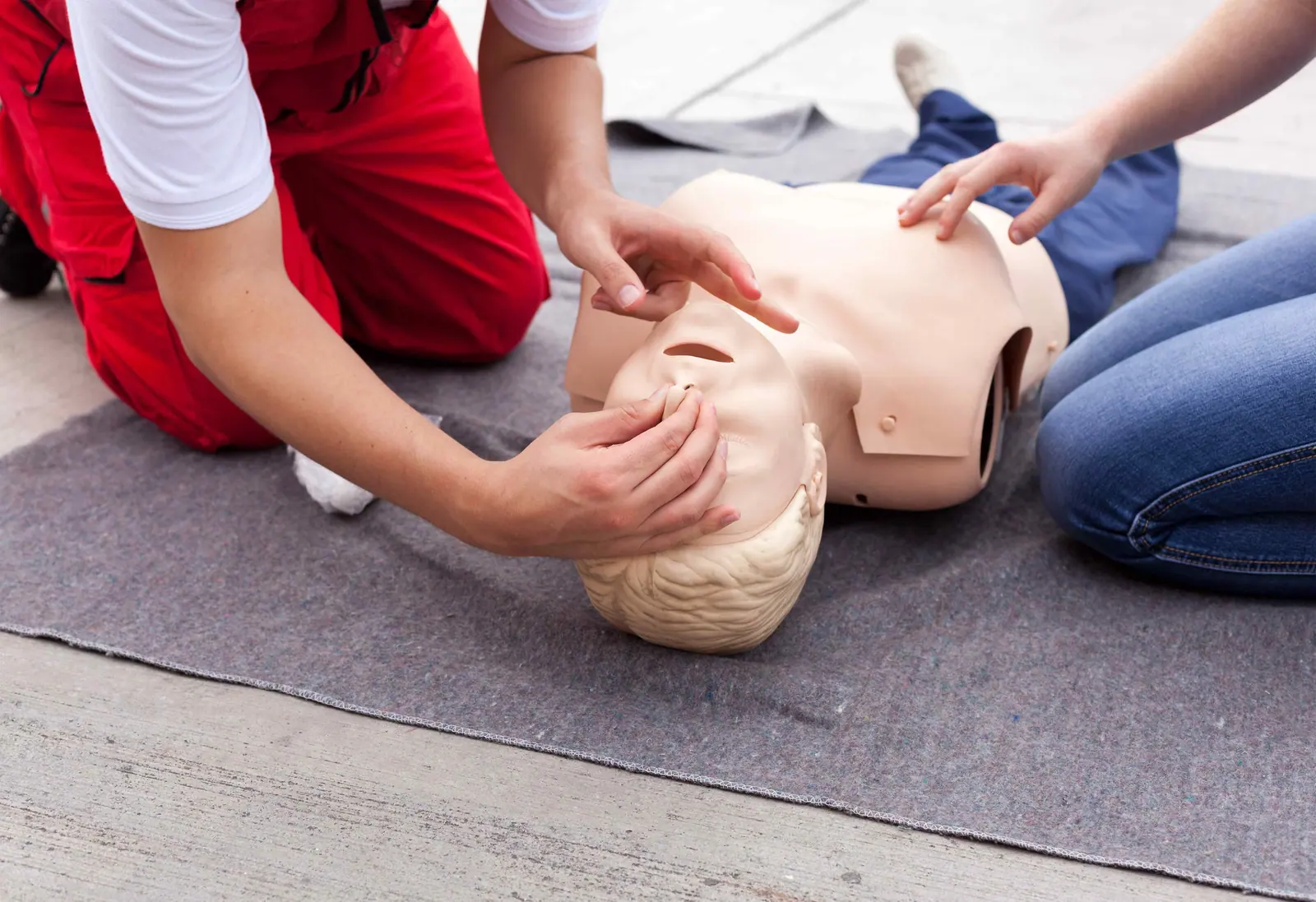
If someone falls or gets stuck, call the fire brigade on 150 or the emergency medical service on 155 or 112 and start the rescue according to the plan. Do not move an injured person unnecessarily after a fall, as there is a risk of spinal injury. Monitor consciousness and breathing and start CPR immediately if the heart stops. Procedures for other injuries are summarised in our article on first aid in the workplace.
Safe work at height
Safe work at height rests on three foundations: properly assessed risks, quality equipment and trained employees with a rescue plan ready. If you are not sure how to set up work at height in your company, get in touch. We will assess your specific workplace and propose a tailored solution.
Frequently asked questions (FAQ)
From what height does work count as working at height?
It is work where there is a risk of falling more than 1.5 metres or into a free depth. What matters is the height of a possible fall, not the type of workplace. The rules apply in every industry where employees work above this threshold.
Does an employee need training to work at height?
Yes, before starting work they must be demonstrably trained in the risks, the work procedure and the use of protective equipment. The employer also ensures they are medically fit.
How often is personal fall protection equipment inspected?
The employee checks it before every use and a competent person inspects it regularly, at least at the intervals set by the manufacturer. Damaged equipment or equipment that has arrested a fall is withdrawn from use.
What should I do if a colleague falls from height?
Call the emergency medical service on 155 or 112, or the fire brigade on 150. Do not move the injured person unnecessarily, as there is a risk of spinal injury. Monitor consciousness and breathing and start CPR if the heart stops.
Do you need quality training or a risk assessment for your company?
Free consultation