Workplace safety is not just a matter of legal requirements, but also a fundamental element of the efficient running of every organisation. Risk analysis is a basic tool that helps uncover hazards, minimise risks and ensure a safe environment for employees and operations.
Why risk analysis is essential
Every business, whatever its size or field, faces certain risks. These risks can take many forms – from the danger of employee injuries and the risk of fire or machinery breakdowns to technological faults or the failure of work processes. Risks, however, are not only a matter of direct threats to health and property. Ignoring or underestimating them can have far-reaching consequences, including higher operating costs, lost productivity, fines for non-compliance or even damage to the company’s good name.
Without thoroughly mapping and dealing with these risks, a business exposes itself not only to a greater likelihood of accidents, but also potentially to failure through an inability to respond to crises. Unaddressed risks can lead to long-term losses – from the cost of repairing damaged equipment to the departure of key employees, who may leave because of an unsafe working environment.
Risk analysis as a fundamental pillar of prevention
Risk analysis is a systematic process for identifying potential hazards, assessing how serious they are and proposing measures to remove or minimise them. It is not just a formal legal obligation – it is a basic prevention tool that protects not only property and employees, but also the overall stability and competitiveness of the business.
The key benefit of risk analysis is its comprehensiveness. It considers not only visible hazards such as dangerous machinery or slippery floors, but also less obvious factors that can have a major impact on safety and operational efficiency. These include, for example:
- Organisational risks: inadequate employee training, unclear working procedures or poor communication within the team.
- Technological risks: outdated equipment, poor machinery maintenance or a lack of modern safety features.
- Environmental risks: poor handling of hazardous substances or inefficient waste management, which can lead to environmental damage and subsequent penalties.
The benefits of risk analysis
The risk analysis process brings a business many benefits. As well as meeting legal requirements, it helps to:
- Minimise the risk of injuries and accidents – identifying and eliminating hazards can significantly reduce the likelihood of workplace injuries, protecting employees’ health and improving their working conditions.
- Make operations more efficient – removing risks often leads to better organisation of work and optimised working procedures.
- Reduce costs – prevention is always cheaper than dealing with the consequences. Investment in risk analysis pays for itself through lower costs for repairs, fines or compensation for injuries.
- Give peace of mind during inspections – businesses with a well-prepared risk analysis need not fear inspections or certification audits.
- Improve the company’s image – a safe working environment increases the trust of employees, business partners and the public.
Risk analysis is not a one-off activity, but a continuous process that needs to be updated regularly and adapted to changing conditions. It is precisely this dynamic nature that ensures the business stays ready to face new challenges and keeps its competitive advantage.
Businesses that pay enough attention to prevention and deal with risks systematically are not only safer, but also more stable and efficient. Risk analysis is therefore a key tool that should be part of every strategy for responsible and successful business.

How risk analysis works
The risk analysis process is comprehensive and consists of several consecutive steps that together identify hazards, assess how serious they are and propose effective measures. Each stage has its irreplaceable place and contributes to a safer and more efficient working environment.
The first step is getting to know the operation thoroughly. To identify risks effectively, it is essential to understand the specific business in detail – its processes, working procedures, technologies and particular conditions. Every operation is unique, so it is important to understand its specifics. Analysts focus on how the business works, what equipment it uses and how its organisational processes are set up. This step is the foundation for the next stages, as it allows the analysis to be tailored to the real needs and situation of the business.
Once the operation has been thoroughly mapped, the next step is identifying the risks. This stage involves systematically mapping all the potential hazards that could endanger the safety of employees, property or the operation as a whole. The risks identified can be very varied – from physical ones, such as dangerous machinery or poor lighting, to organisational problems, such as inadequate employee training or unclear working procedures. The aim is to create as complete an overview as possible of all the threats that could harm the running of the business.
Once the risks have been identified, they are assessed. At this stage, each risk is evaluated in terms of how likely it is to occur and how serious the possible consequences are. This process helps set priorities and focus on the risks that pose the greatest threat. The assessment is key to allocating resources effectively and deciding which areas to focus on first. The result is a clear plan setting out what measures need to be introduced and by what means the risks can be reduced as far as possible.
Based on the risk assessment, specific measures are proposed to eliminate the risks or reduce them to an acceptable level. These measures may include technical changes, such as installing safety features; organisational changes, such as introducing new work procedures; or providing training for employees. The emphasis is on making the proposed measures realistic, effective and sustainable in the long term. The proposal may also include recommendations for modernising equipment, improving the working environment or introducing regular monitoring of high-risk areas.
The final step of the process is implementing the proposed measures and checking them regularly. Putting the measures into practice involves not only making the changes, but also continuously monitoring their effectiveness and adapting them to changing conditions. Safety is a dynamic area that requires constant attention and updating. Regular monitoring makes it possible to respond quickly to newly emerging risks and ensure that the measures introduced remain effective in the long term.
The result of the whole process is safer, more efficient and more stable operations. Risk analysis is not just about meeting legal requirements, but above all an investment in the future of the business. Minimising risks not only reduces the likelihood of accidents and financial losses, but also increases productivity, employee trust and the company’s overall competitiveness. This systematic approach to risk management brings long-term benefits that are appreciated not only by the company’s management, but also by its employees and business partners.
The key benefits of risk analysis
Risk analysis brings a business a whole range of benefits that show up in the safety, efficiency and economics of its operations. Its benefits are essential not only for meeting legal requirements, but above all for creating a stable and prosperous working environment.
One of the main benefits of risk analysis is a safer working environment. A thorough analysis can uncover even hidden hazards that could lead to injuries or serious accidents. Identifying risks and introducing suitable measures minimises the likelihood of accidents and ensures employees can do their work in safe conditions.
Another significant benefit is more efficient operations. The process of eliminating risks often reveals weak points in the organisation of work that stand in the way of the business running smoothly. Putting these shortcomings right not only increases safety, but also improves working procedures, leading to higher productivity and better results. Another key benefit is preparation for inspections and audits. Businesses with a well-prepared risk analysis need not fear inspections or certification audits. Thorough documentation and the measures in place show that the company takes a responsible approach to safety and meets all the required standards. An equally important factor is greater employee trust. A safe working environment has a positive effect on employee satisfaction and loyalty.
The most common areas where risks occur
Workplace injuries
- Slippery surfaces, dangerous machinery or insufficient use of protective equipment.
- Prevention includes technical measures and thorough employee training.
Fire safety
- Risks associated with electrical installations, flammable materials or a poorly organised workplace.
- Solutions include installing fire extinguishers, evacuation plans and regular checks of the technical condition of equipment.
Organisational shortcomings
- Unclear working procedures, inadequate training or chaotic organisation of work.
- These problems can lead to accidents, low productivity and employee dissatisfaction.
Technical faults
- Faulty machinery, worn tools or missing safety features.
- Minimising the risks requires regular maintenance and modernisation of technology.
How to get started with risk analysis
If you want to make sure your business is safe, efficient and meets all legal requirements, the first step should be to turn to the experts. Specialised companies such as Rescue Group have not only in-depth knowledge of risk analysis, but also extensive experience from a range of sectors. This allows us to carry out a comprehensive assessment of your operations and propose solutions tailored exactly to your needs.
Risk analysis is not a one-off task, but part of a continuous process of ensuring safety and efficiency. It is an investment that always pays off. Preventing accidents and problems protects not only your employees’ health, but also the smooth running of your operations. It also brings long-term savings, because prevention always costs less than dealing with the consequences.
The important thing is not to wait until a problem appears. A proactive approach to safety allows you to create an environment where employees feel protected and where there is no risk of unnecessary downtime or penalties. Start your risk analysis as soon as possible and lay solid foundations for your company’s success. A safe working environment is not just a legal obligation, but also a competitive advantage that strengthens the trust of employees, business partners and clients.
If you need help with risk analysis in your company, do not hesitate to contact us.
Employee safety education and training
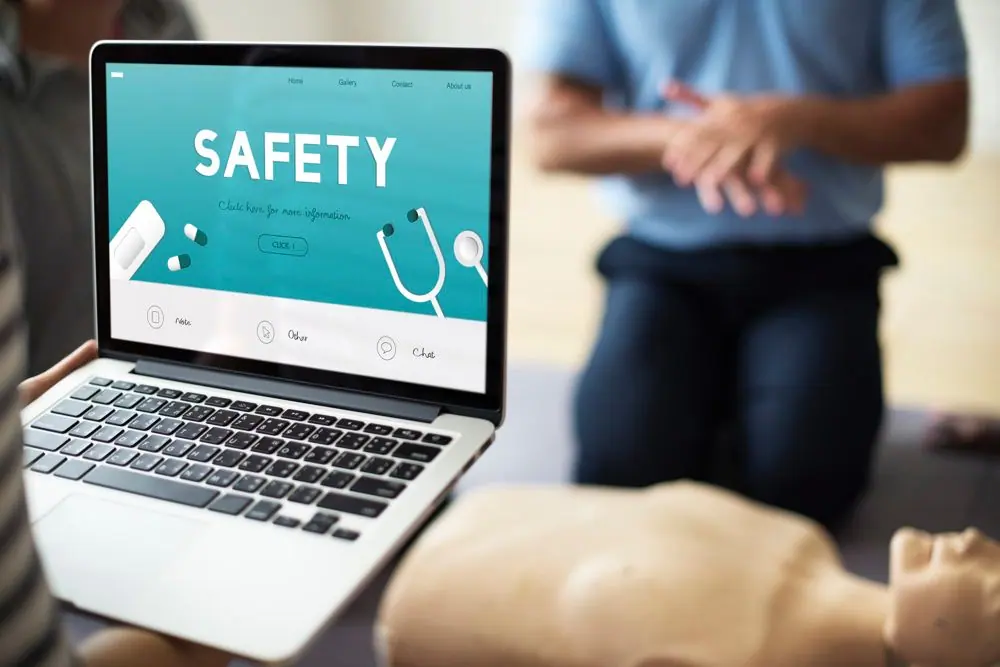
Workplace safety is not just a matter of technical measures or a detailed risk analysis. A key element of an effective safety strategy is also the education and training of employees, who are exposed to possible hazards every day. Even the most accurate and modern safety technologies can fail if employees do not know how to use them properly or are unaware of the specific risks associated with their work tasks. That is why regular training is essential, not only for protecting employees’ health, but also for the efficient running of the whole business.
Occupational health and safety (OHS) training plays a key role in preventing workplace injuries and accidents. Well-informed employees can respond quickly to risks, prevent problems and act correctly in a crisis when needed. Regular training has a number of positive effects, including: greater awareness of the risks that may arise in the workplace, whether dangerous working conditions or specific risks associated with particular work tasks; teaching employees the correct working procedures and how to use the protective equipment that is essential for minimising risks; strengthening employees’ responsibility not only for their own safety, but also for the safety of their colleagues, which helps create a team atmosphere of responsibility; and improving the ability to respond to emergencies such as fires or injuries, which can be crucial for saving lives and minimising the consequences of accidents.
Employee education can take various forms, and the specific focus of the training depends on the particular needs and nature of the workplace. The most common types of training include OHS training, which is the foundation for learning the general rules of safety at work, identifying risks, preventing injuries and the basic principles of safe behaviour in the workplace; fire protection, which explains to employees how to prevent fires, how to use fire extinguishers and how to evacuate the workplace correctly in a fire; first aid, where employees learn how to give basic medical help after injuries or accidents, which can be crucial for preserving health and life in a crisis; and specific training designed for particular activities, such as operating machinery, working at height, handling chemicals or working in high-risk environments where serious accidents are more likely.
Every type of training should be repeated regularly and adapted to current conditions and changes in the working environment. Another important aspect is putting the knowledge into practice, which helps employees develop habits that can be decisive at critical moments.
Building a safety culture
Building a safety culture in the workplace is an essential step towards a high level of protection for employees’ health and safety. Employee training plays a key role in this process, because it provides not only technical skills, but also encourages a responsible approach to safety in every aspect of work. A safety culture means that every employee sees safety as their personal responsibility and takes an active part in creating a safe working environment. This culture is not limited to formal training, but includes the everyday practices, communication and values shared across the whole organisation.
Employees who are aware of the importance of safety become more motivated, more satisfied and more loyal. When they feel protected and know that their safety is a priority for the company, their performance improves, because they have greater trust in their working environment. This trust then carries over into their relationship with the company and their colleagues, contributing to a positive working atmosphere and lower staff turnover.
A safety culture also has a positive effect on the company’s image, both within the organisation and externally. A company that actively focuses on safety and on training its employees gives the impression of a responsible, ethical business, which can attract high-quality staff and strengthen its reputation with business partners, investors and the public. A good image is an advantage not only when winning new contracts, but also when building long-term relationships with partners and customers who value a safe and stable working environment.
Investing in safety education and training is therefore not just about meeting legal requirements, but above all an investment in the long-term stability, efficiency and success of the business. This proactive approach helps companies not only prevent accidents and injuries, but also build a strong, sustainable organisational culture that is the foundation for successful growth and competitiveness in the market.
We will provide training for your employees.