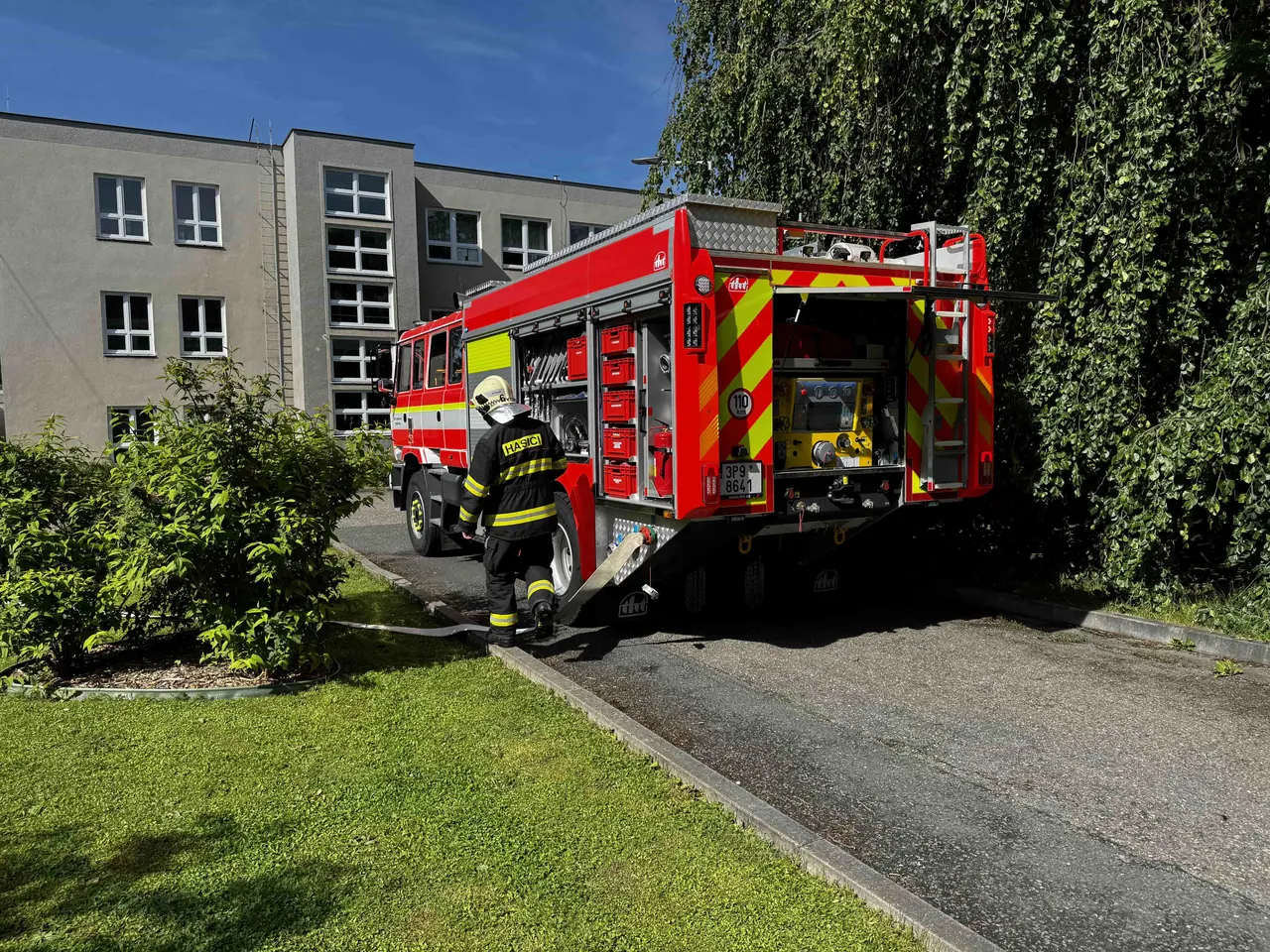
Imagine the chaos – smoke rolling down the corridors, employees panicking as they look for a way out, and you with no clear plan for getting them to safety. An evacuation plan is not just a piece of paper in a drawer – it is a lifeline that can save lives, property and your reputation. At Rescue Group we know that preparedness is the difference between a disaster and a situation under control – and we will show you why it matters.
When seconds count
A fire, a chemical leak, a power cut in an industrial hall or even a trivial fault that turns into chaos – emergencies do not send an invitation with a date and time. They come unexpectedly, quickly and without warning, and it only takes a few minutes for a situation to get out of control. According to Czech fire brigade statistics, an average fire in a building takes less than 10 minutes to grow to the point where it is almost impossible to put out without professional intervention. Add smoke, panic and a confused search for the exit, and you have a recipe for disaster. Now imagine your company at that moment – do your employees know where to run when a fire starts? Do they have a clearly marked route, a familiar exit and a designated assembly point? If you do not have an evacuation plan, the answer is most likely “no”. And that is a risk no company – whether a small office or a large manufacturing plant – can afford to ignore.
An evacuation plan is not just about drawing a red arrow on paper pointing to the nearest door. It is a comprehensive system that takes into account every detail of your building and its operations – from the width of corridors that must cope with a stream of people and the exact location of fire extinguishers and emergency lights to specifics such as narrow staircases, storage areas or machinery that can block the way. Over our years of experience at Rescue Group, we have seen the enormous difference preparation makes between “we have something sketched out” and “we have a plan that works”. That difference has saved companies not only millions of crowns in property, but above all what matters most – human lives.
The law, an obligation or common sense?
You may be thinking that an evacuation plan is just another bureaucratic obligation that someone is imposing on you so they can tick off their agenda. The truth is that the law – specifically Act No. 133/1985 Coll. on fire protection – does require companies to have one, whether you run a small office with a few desks or a large production site with dozens of employees. But let us look at it from a different angle: it is not just about complying with regulations and avoiding official paperwork. It is about common sense and what really makes sense for you as a responsible manager. Whether you have 20 people in one room, 50 workers on a shift or 200 employees spread across several buildings, their safety is in your hands – not only legally, but also as a human being.
Imagine an accident happens – a fire, an explosion or a leak of a hazardous substance. The inspection authorities, whether firefighters, the labour inspectorate or public health officers, will not just examine whether your forms are correctly filled in. They will ask about practice: were your people prepared? Did they have clear instructions? Without an evacuation plan, you risk not only fines, which can reach hundreds of thousands of crowns depending on the seriousness of the breach, but also something much worse – your company becoming an example in the media or in training courses of how safety was underestimated.
At Rescue Group we have made it our goal that an evacuation plan will not be just another mandatory item you put away in the archive. It is not about you having a piece of paper with a stamp, but about being genuinely prepared for the real scenarios that can happen – from minor incidents to major crises. Every company is unique, so we build your plan from the ground up: we map your premises, analyse the number and distribution of employees and take into account the specifics of your work processes – whether narrow corridors in an office, warehouses full of pallets or production halls with heavy machinery and limited exits. Our approach covers everything from the initial risk assessment and the design of routes and assembly points to practical testing, because we know that in a crisis, what matters is not how nice the plan looks on paper, but how reliably it works when it counts. Because when the moment of truth comes, it is not about formalities – it is about everyone in your company knowing what to do and getting out in time and safely.

Chaos or control: which will you choose?
Imagine two companies in the middle of the same emergency – a fire engulfs their buildings and smoke begins to fill the corridors. In the first company, employees hesitate, search for exits in confusion and stumble around in poor visibility; half of them get out dangerously late, and some perhaps not at all. In the second company, they have a clear plan: everyone knows where the nearest exit is and where to go to the assembly point, and there are even designated people coordinating the situation with a cool head. Which company are you? Without an evacuation plan, the answer is unfortunately a foregone conclusion – chaos wins. And chaos is not a luxury you can afford, because what is at stake is not just lost time, but the health of your people, their trust in you as an employer and, in the worst case, their lives.
One of the things that constantly amazes us at Rescue Group is how little it takes to turn a potential disaster into a managed process that will hold up even in the most difficult moments. It is not about complicated manoeuvres or expensive technology – it is about basic preparation that works. An accurate map of escape routes, employee training and a few rehearsed steps are enough to turn uncertainty into confidence. In practice, it means the difference between panic and order, between confusion and safety. Our aim is not just to create a plan, but to make sure it is alive – that your people know it, understand it and trust it when it matters.
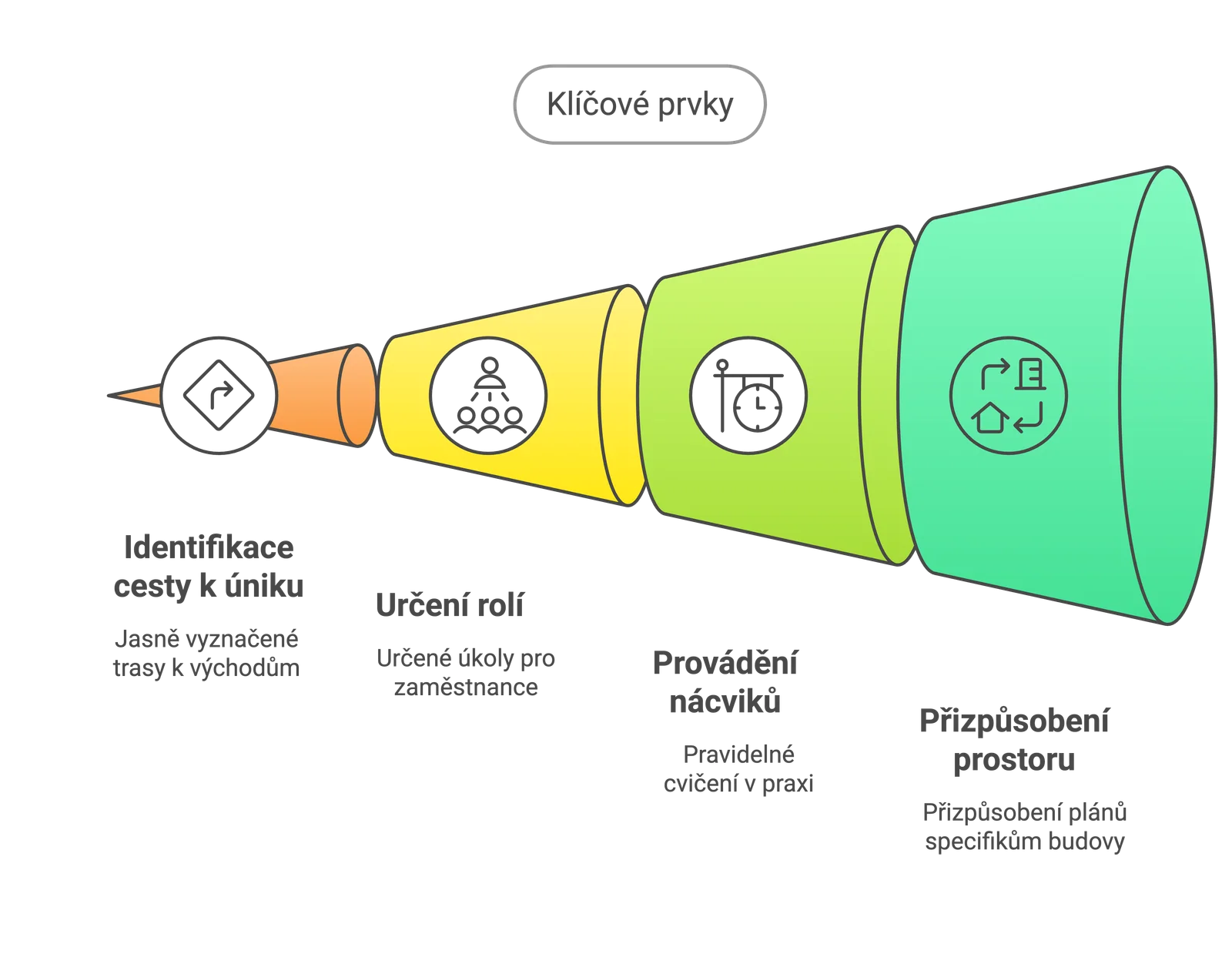
What makes an evacuation plan so effective? Here are some of the key elements we at Rescue Group consider essential:
- Clear routes: clearly marked routes to the exits that reflect the real situation – no blocked doors or unclear directions.
- Assigned roles: people who know what to do – from checking the assembly point to helping those who need it.
- Regular drills: theory is not enough – simulations show what works and reveal weaknesses before a crisis.
- Adapted to the space: every building is different, and the plan must reflect its specifics, whether narrow corridors, several floors or warehouses.
Preparedness is not just about avoiding problems – it is about having the situation under control when something goes wrong. At Rescue Group we know that a good evacuation plan is not a static document, but a tool that will guide you through a crisis and make sure your employees go home safely. That is why we do not build it only on paper, but in practice – with you, for you and with an emphasis on what really works.
Not just fire – what else threatens your company
An evacuation plan is not only about fire – even though fire is often the first thing that comes to mind. What if there is a chemical leak that fills the space with toxic fumes? Or an earthquake that undermines the stability of the building and blocks the usual ways out? And what about something seemingly trivial, like an electrical short circuit that plunges a production hall into darkness and causes panic among employees who cannot see a step in front of them? Every building has its own characteristics that affect how it behaves in a crisis – a warehouse of flammable materials where flames can spread rapidly, an office crammed with electronics and a risk of short circuits, or a production line with heavy machinery that can block escape routes and make movement difficult.
Each of these scenarios requires its own evacuation plan, because a one-size-fits-all solution simply does not exist. At Rescue Group we think about this comprehensively – we do not limit ourselves to one threat, but analyse all potential risks, design precise escape routes and test procedures in real conditions. Because when the crisis comes – whether a fire, a chemical accident or a natural disaster – there is no time for improvisation or trial and error.
Do you know the feeling of helplessness when you are lost in an unfamiliar city with no map, no signal and no idea where to go? Now imagine the same chaos in your own company, except instead of unfamiliar streets there is smoke, sirens and dozens of people who do not know what to do. An evacuation plan is exactly the map that will lead you and your employees out of uncertainty – clear, easy to understand and prepared precisely for your premises. At Rescue Group we do not just draw arrows on paper – we are your guides, who create that map from the ground up and make sure it works. We start with a detailed analysis – where the weak points are, what threats you face and how quickly a situation can escalate. Then comes route design – not just the main routes, but backup routes too, because what if one exit is impassable? And finally testing – simulations that reveal whether the plan is usable or needs fine-tuning. Our aim is that at the critical moment you do not have to think – you just follow the plan, knowing it will lead you to safety.
An investment that pays for itself
You may now be thinking about the costs and asking yourself whether you can afford an evacuation plan. But let us turn this around and look at the other side of the coin – what does it cost you not to have one? Not having an evacuation plan is not a minor inconvenience, but a real risk with serious consequences. Fines for breaching fire regulations can reach hundreds of thousands of crowns depending on the seriousness of the breach, and that is just the beginning. The loss of property in a fire – whether office equipment, stock in a warehouse or production equipment – quickly runs into millions. And worst of all: injuries to employees, or even loss of life? That is a price that cannot be measured in money, but which can change the course of your company and your personal life for ever. An evacuation plan is therefore not an expense that weighs you down – it is an investment that pays for itself. An investment in the safety of your people, in your peace of mind and in the future of your business. At Rescue Group we do not build it as a paper formality; we want it to be a living tool – one that your employees know, practise regularly and can trust completely when it matters.
It is not only a question for large corporations with dozens of floors and hundreds of workers. Even a small business with five employees can face the same risks, because danger does not care about the size of a company. Whether you run a cosy office, a small workshop or a café, threats like fire, short circuits or gas leaks do not care how many names are on your payroll. At Rescue Group we know that every space has its risks – even a seemingly innocent oven, a stock of paper or the electrical wiring – so we approach every company individually. It is not about how many employees you have, but about how quickly a small spark can grow into a problem that will cost you more than you ever imagined.
What will an evacuation plan give you?
- Minimal financial losses – you avoid fines and limit damage to property thanks to a fast, organised response.
- Protection for employees – clear procedures mean a lower risk of injury and a greater chance that everyone gets to safety.
- Legal compliance – you meet legal requirements and avoid the stress of inspections and penalties.
- Trust and peace of mind – you will know you have done everything you can for the safety of your team and your company.
At Rescue Group we do not just help you with a plan on paper – we give you a system that works. From risk analysis and training to simulations, we make sure your investment in an evacuation plan is not just a line in the budget, but real insurance against the worst. Because when it comes to safety, it is not about what it costs you now, but what it could cost you if you put it off.
Preparedness that inspires
Have you ever wondered what your employees say about their workplace? When they see that you are thinking about their safety, they not only feel better – they spread the word. A well-handled evacuation plan is not just about surviving a crisis – it is a showcase for your company. It shows that you care. That you are professionals. That you are prepared. And at Rescue Group we will help you with it from A to Z – from risk analysis and creating the plan to training and simulations.
How often to update an evacuation plan
Creating an evacuation plan is an essential step, but it is not a one-off. A company is not a static organism – its premises, employees and operating conditions change, and the evacuation strategy must keep pace. An outdated plan can be as dangerous as no plan at all, because incorrect routes, out-of-date assembly points or failure to take new risks into account undermine the effectiveness of the response to a crisis. At Rescue Group we recommend reviewing your evacuation plan regularly, so that you can be sure it reflects the reality of your workplace and current legal requirements.
How often should you update the plan? The basic guideline is a review at least once a year, which is in line with fire protection recommendations and allows you to capture routine changes such as moved furniture or small layout adjustments. However, an immediate update is essential after major changes:
- Renovation or extension of the building – new walls, added exits or a changed layout can invalidate the original escape routes.
- A change in the number of employees – a growing team can overload the existing routes, while a smaller one may require the coordinators’ roles to be adjusted.
- New equipment or materials – adding flammable substances, machinery or technology changes the risk profile and the procedures needed.
- Legislative changes – updated standards (e.g. in fire protection) can bring new requirements for the content of the plan.
At Rescue Group we not only design evacuation plans, but also help check and adjust them regularly. We work with you to assess changes in your environment and test the plan in practice to make sure it remains functional. For example, after a new warehouse is added, we recommend reassessing the availability of fire extinguishers and the capacity of the exits. Likewise, after every major change we carry out a simulation to reveal whether the plan still serves its purpose. Regular updating is not just about complying with regulations – it is about being sure that nobody is left stranded at the critical moment.
Contact us and together we will make sure your evacuation plan is always ready when you need it.