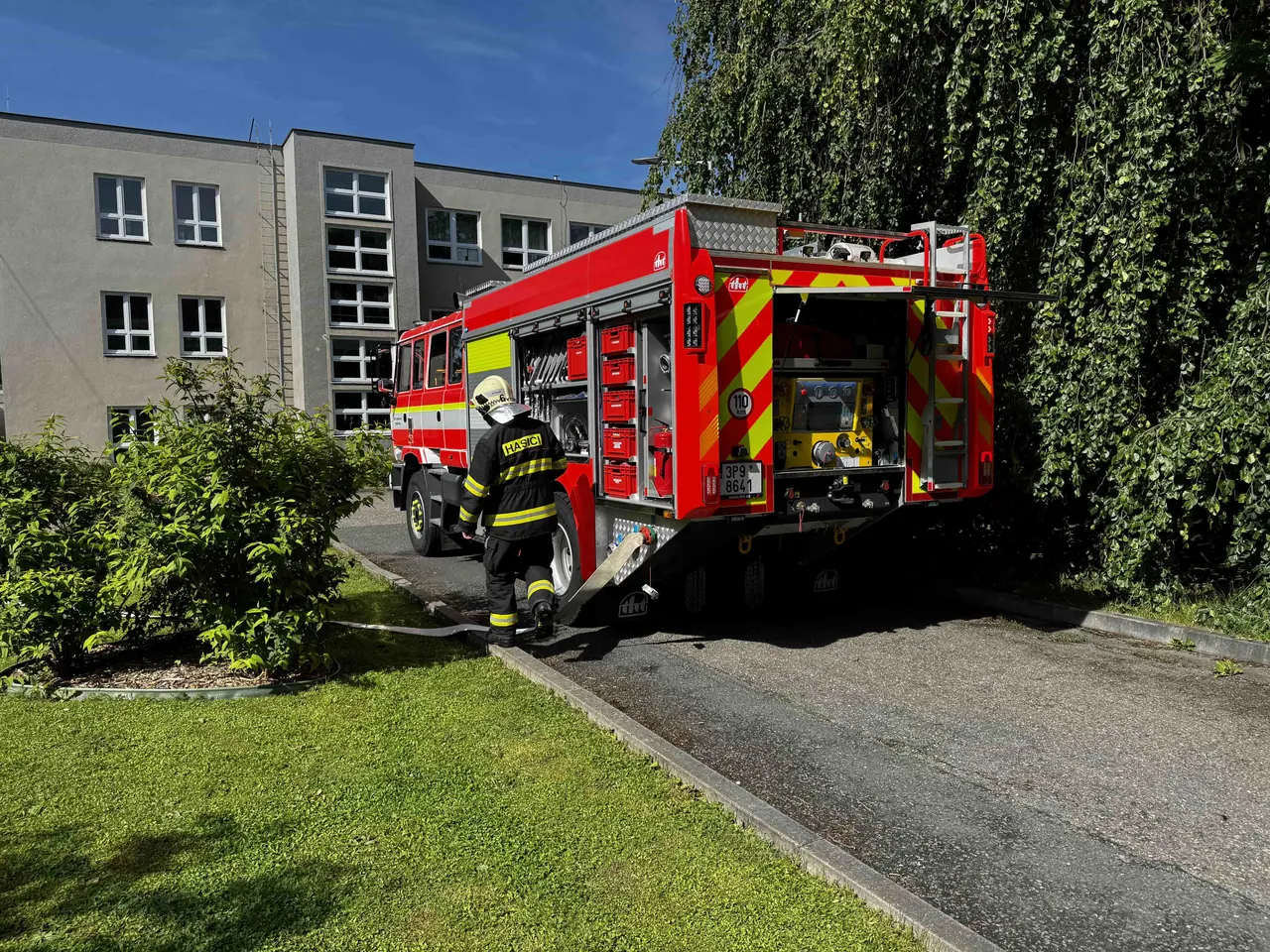
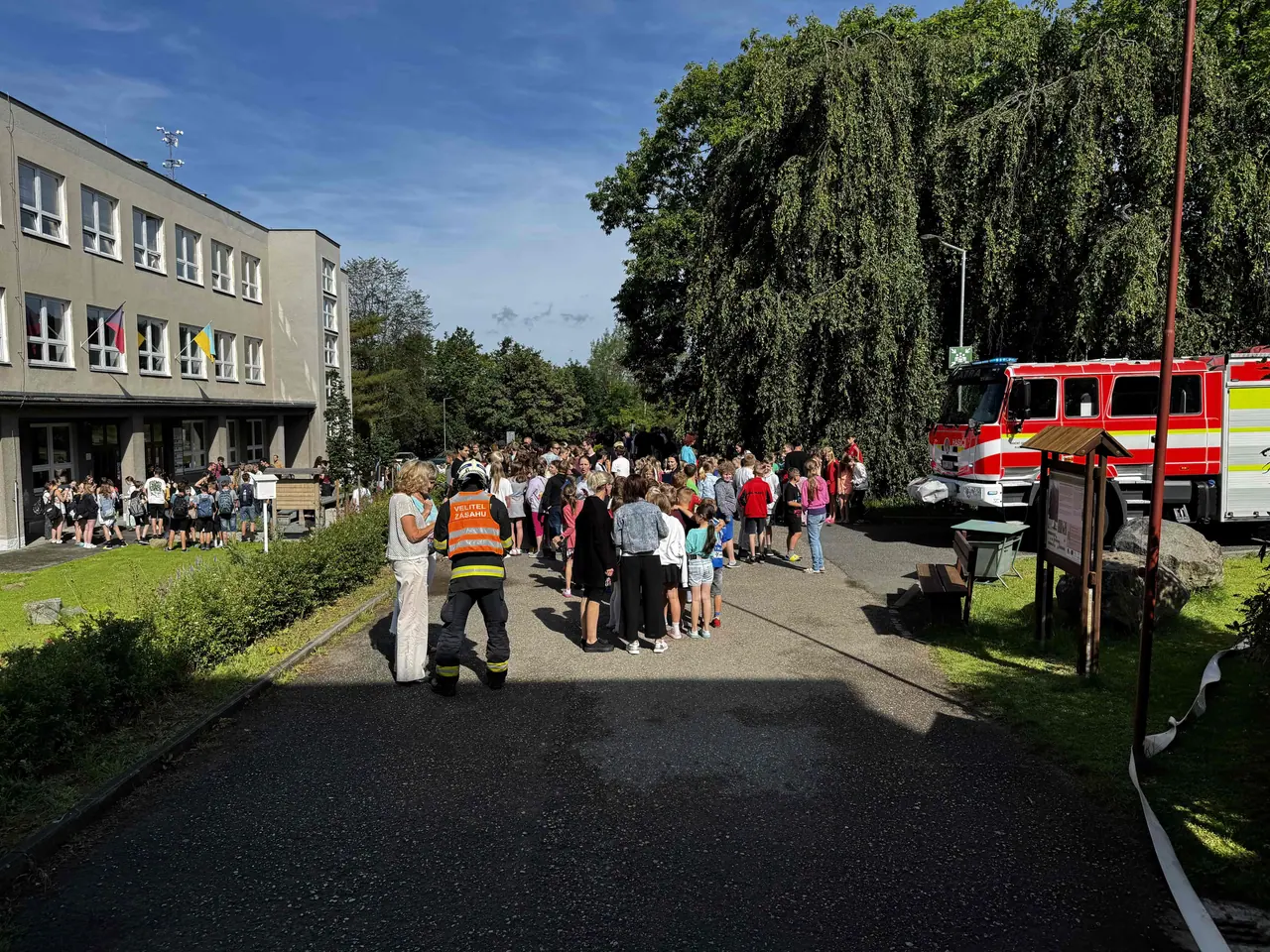
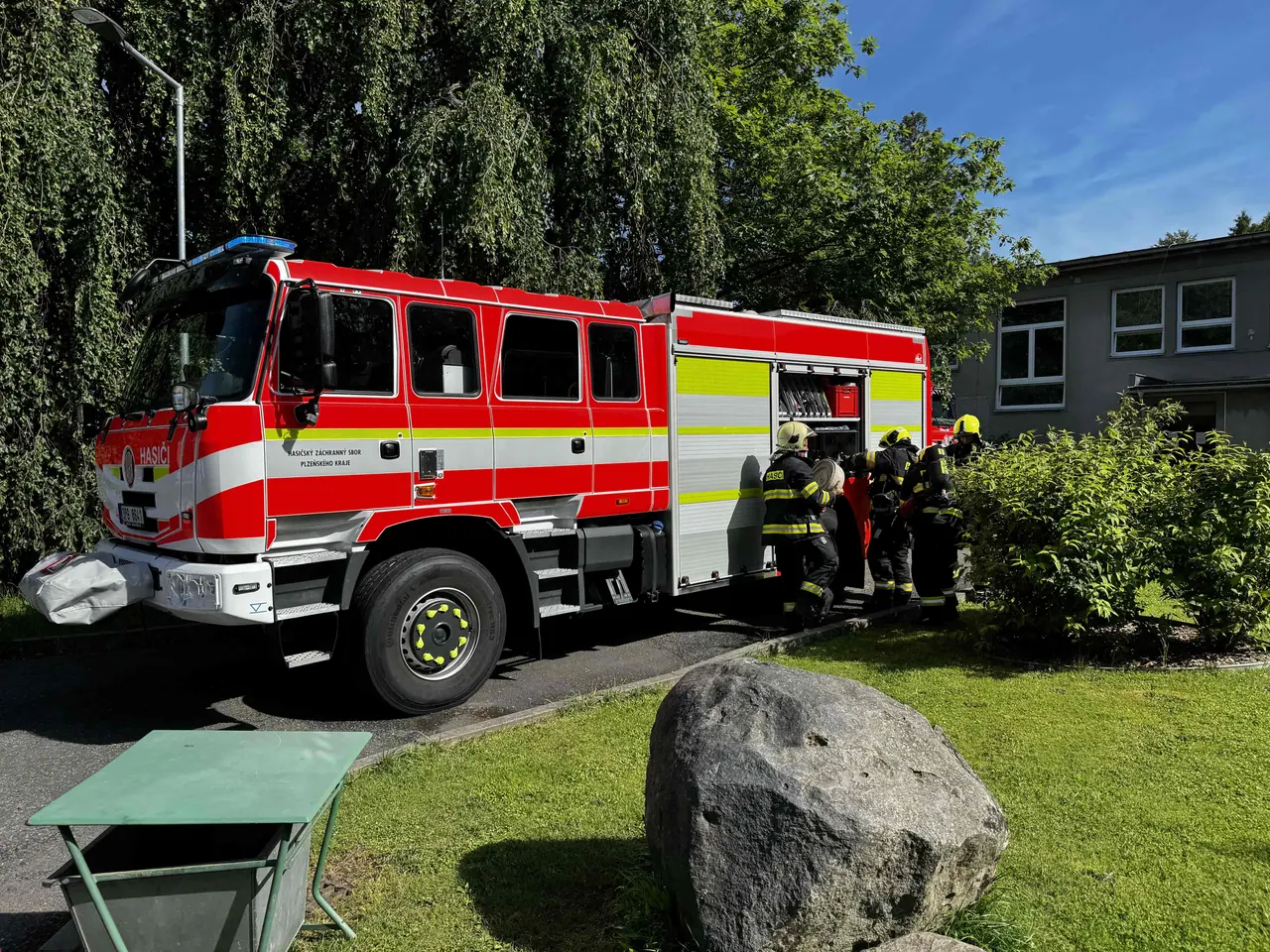
In June this year, together with the Pilsen Region fire brigade, we organised a fire evacuation drill at the primary school in Plasy, a long-standing client of ours. Here is a look at how the event went, why it matters and more about the importance and organisation of fire evacuation drills.
How the event went
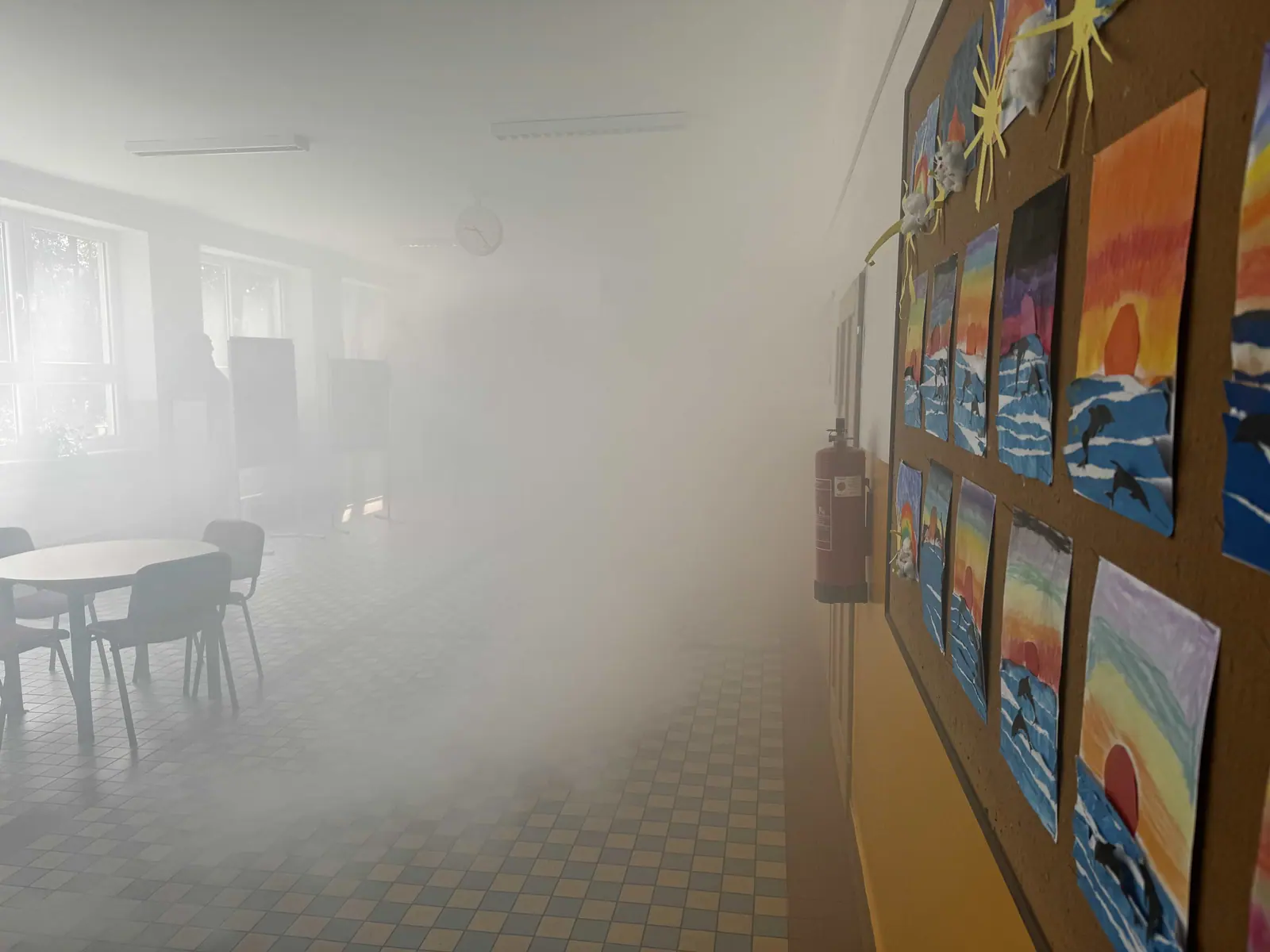
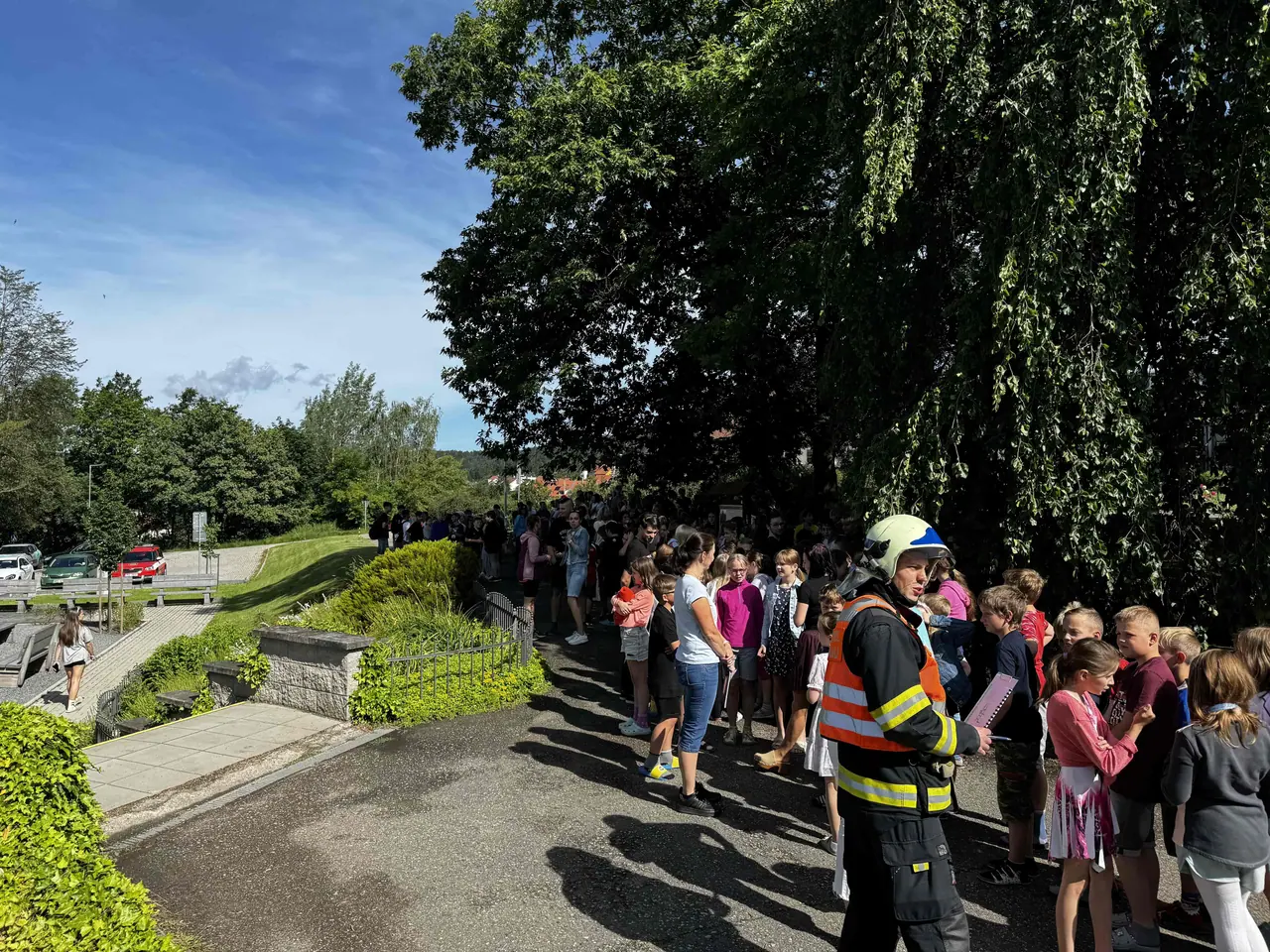
The fire alarm was raised by activating the smoke detectors in the school’s rooms, which also tested that they work properly. The simulated response was led and staged by the fire brigade. Real smoke was imitated using a fog and smoke simulator. During the evacuation, pupils and teachers moved quickly and in an orderly way to the nearest assembly point according to the evacuation plans. Within a few minutes everyone had been safely evacuated to the assembly point, which shows how well prepared everyone was.

Cooperation with the Pilsen Region fire brigade
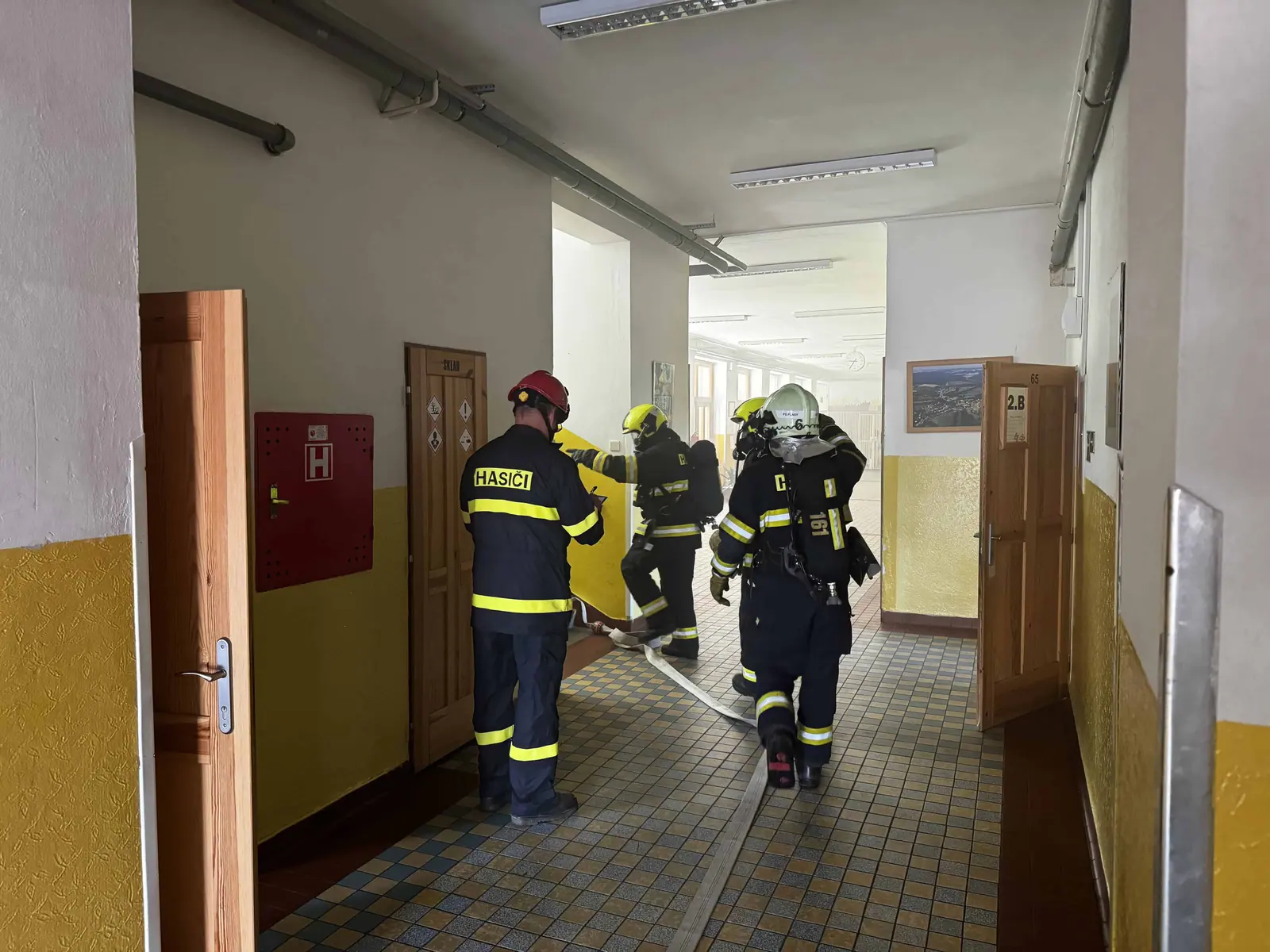
Our main partner for the whole event was the Pilsen Region fire brigade unit from Plasy. The firefighters led and simulated the whole response to show how quickly and effectively they can react to emergencies. Their professional approach and expertise were key to the success of the event.
Simulating a real rescue
To make the evacuation more authentic, some pupils were selected to stay in their classroom during the alarm. The firefighters fitted these pupils with special rescue masks and practised evacuating them from the classroom to the assembly point. The pupils thus experienced what it is really like to be rescued by a firefighter from a smoke-filled space. This active element of the drill gave the pupils valuable experience and showed them what to do in a real emergency.
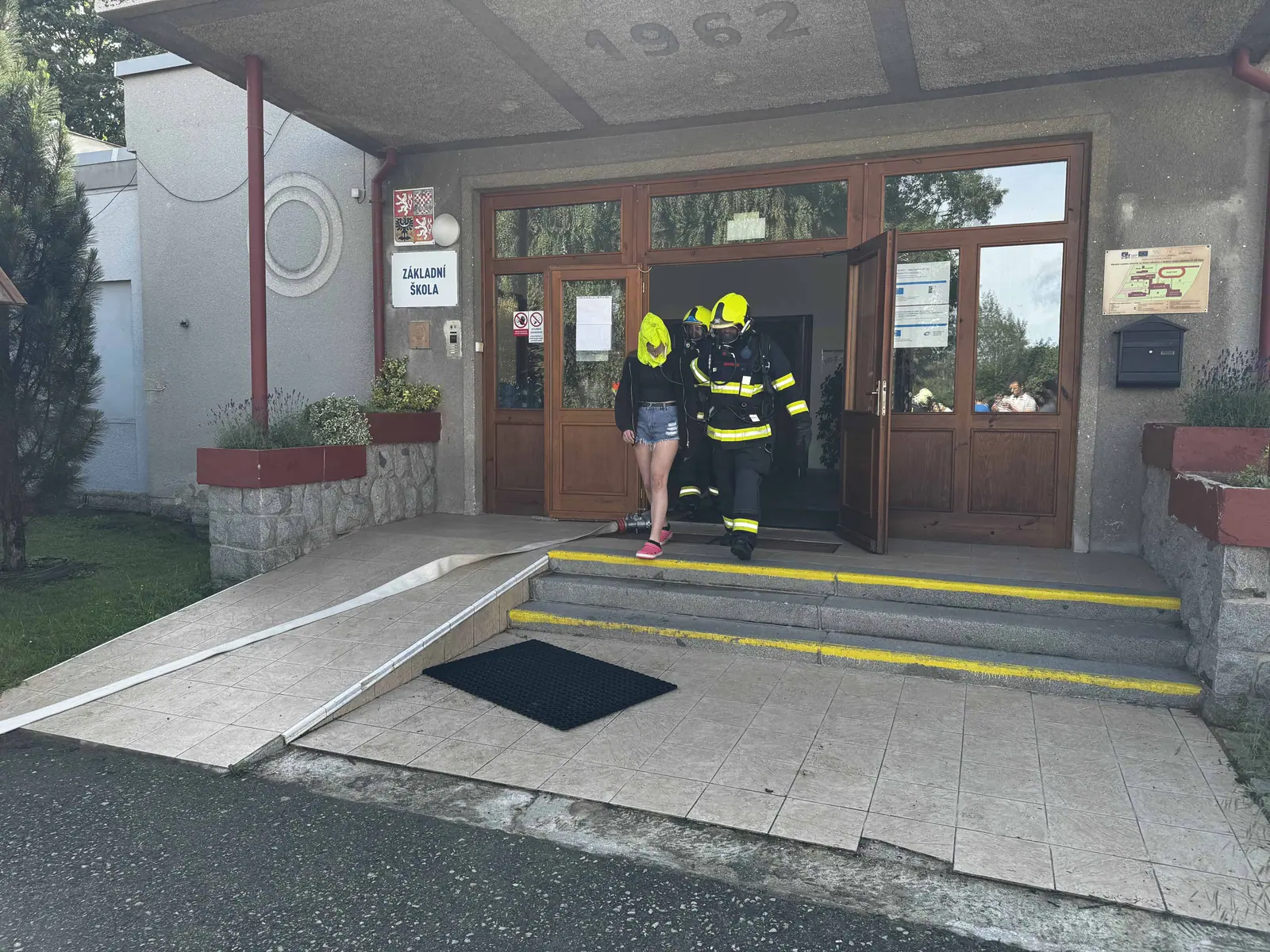
Evaluation and a simulated smoke-filled room
After the evacuation, the incident commander evaluated the overall situation and gave pupils and teachers feedback. This feedback is important for us because it helps us keep improving our procedures and ensuring a higher level of safety.
After the drill, one classroom was also used to simulate a heavily smoke-filled room. Pupils could try out how to respond correctly when a room is full of thick smoke and nothing can be seen. The experience was instructive for the pupils, and we believe it has, to some extent, strengthened their ability to act in a crisis.
What is an evacuation plan?
An evacuation plan, together with firefighting documentation (DZP), is a key document that sets out the procedures and instructions for the fast and safe evacuation of people from a building in an emergency such as a fire. The plan includes:
- Escape routes and exits: a detailed map of the building showing all escape routes and exits.
- Assembly points: safe places where people should go after evacuating.
- Evacuation instructions: clear, easy-to-understand instructions on what to do during the evacuation.
- Responsible persons: people designated to coordinate the evacuation and help others.
Evacuation plans help ensure that everyone in the building knows what to do in an emergency and allow a fast and effective evacuation, minimising the risk of injury and chaos.
Why evacuation drills matter
Fire evacuation drills are an essential part of ensuring safety in schools and other organisations classified in a high fire hazard category. They help pupils and staff learn how to respond correctly to a fire or other danger. They also provide valuable information and feedback for the school management and the emergency services. These drills make it possible to identify and correct any shortcomings in evacuation plans and gradually raise the level of fire safety.
Pros and cons of evacuation drills
Pros:
- They increase participants’ preparedness and confidence in emergencies.
- They help uncover and reduce shortcomings in evacuation plans.
- They provide practical experience that can save lives.
Cons:
- Lessons or the organisation’s operations may be temporarily disrupted.
- If carried out incorrectly, they can cause confusion and panic.
Legal obligations and evacuation planning
Under Czech legislation, regular fire evacuation drills are mandatory for schools and other public institutions with a high fire hazard. Our goal is not only to meet these legal obligations, but above all to ensure the maximum safety of everyone involved.
Planning evacuations includes:
- Planning and preparation: the school should have a precise evacuation plan specifying evacuation routes, assembly points and responsible persons. The plan should be regularly updated and adapted to changes in the building.
- Realistic scenarios: for maximum effectiveness, the drill should be as close to real conditions as possible. This may include simulating smoke (with safe smoke machines), placing “obstacles” on evacuation routes or simulating blocked exits. The aim is for pupils and staff to be prepared for various scenarios and learn to respond correctly.
- Informing pupils and staff: before the drill, everyone should be told when it will take place and why it matters. Pupils should be instructed on how to behave and what to do during the evacuation.
- Carrying out the drill: the evacuation should be as realistic as possible to give a true picture of a real emergency. It is essential that pupils and staff move in an orderly way along the designated routes without bunching up.
- Evaluation and feedback: after the drill, it is important to evaluate it, identify any shortcomings and propose corrective measures. Feedback should be given to both pupils and staff. The evaluation includes analysing the evacuation time, identifying possible problems on the evacuation routes and finding out how well the evacuation procedures were followed.
Video of the event
The fire evacuation drill in Plasy was another step towards safer schools and better-prepared communities. Our cooperation with the Pilsen Region fire brigade unit from Plasy once again confirmed our expertise and our ability to work together effectively on health and safety. We thank everyone involved and look forward to more joint events.
If you would like more information about our services or training in health and safety and fire protection, do not hesitate to contact us. We are here to keep you safe.
Looking for a fire protection and health and safety partner?