Fire is one of the risks that can threaten a company overnight. Damage to property is only one part of the problem – the other is the lives of employees and the responsibility the employer bears for them. Fire safety measures are therefore not a formality for inspectors, but real protection for your operation.
What fire safety measures are and why they are mandatory
Fire safety measures are a set of technical, organisational and documentary steps that reduce the risk of fire and mitigate its consequences. The obligation to introduce them is laid down by the Czech Fire Protection Act; the specific scope then depends on the size of the operation and the level of fire hazard.
A company with a higher fire risk, such as a warehouse of flammable substances or a production operation, must have a more elaborate system of measures than a small office. The scope of obligations is therefore always determined by a competent person based on an assessment of the specific operation.
Which fire safety measures a company must have by law
By law, a company must have fire protection documentation, working fire extinguishers, clear escape routes and trained employees. These four pillars form the basis on which further obligations build, depending on the type of operation.
The standard requirements include:
- Fire protection documentation appropriate to the operation’s fire hazard category
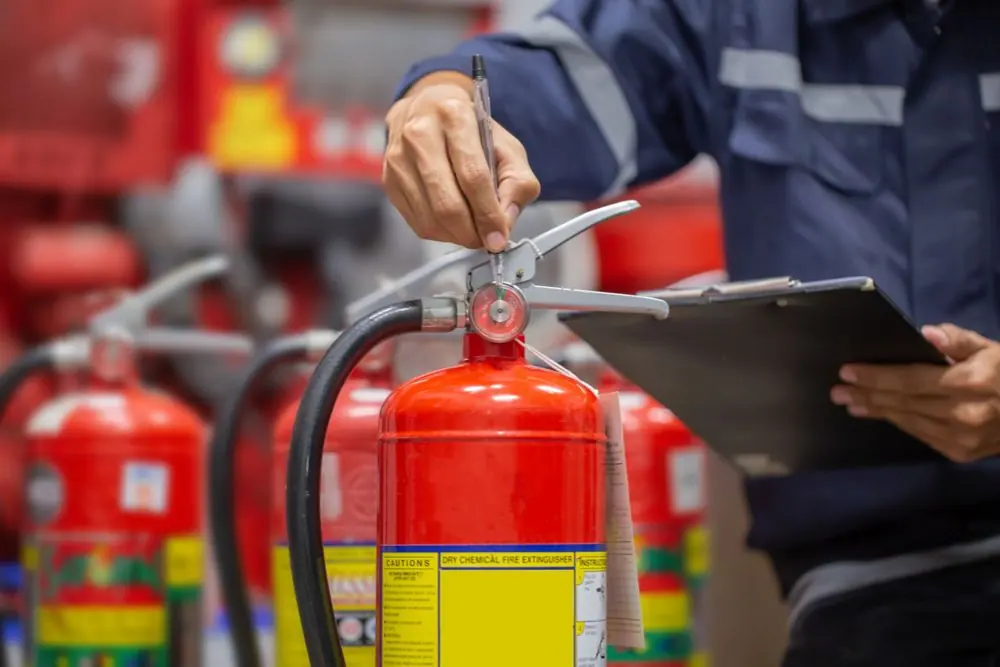
- Working and regularly checked fire extinguishers and fire hydrants
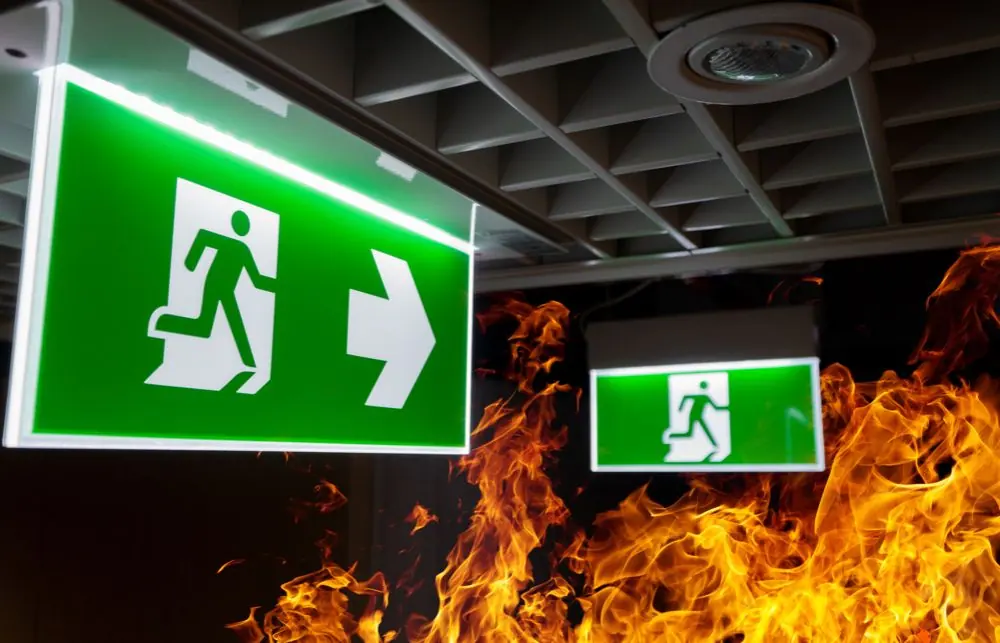
- Clear and properly marked escape routes and emergency exits
- Fire protection training for employees and managers
- Designated fire patrols where the nature of the operation requires them
The scope of obligations varies with the fire hazard category assigned to the operator. We therefore always recommend consulting the exact set-up of measures with a competent person in fire protection.
What fire protection documentation contains
Fire protection documentation describes the fire risks of the operation and sets out specific measures to eliminate them. It mainly includes the fire regulations, fire alarm instructions, the evacuation plan and records of employee training.
It also includes the fire safety design of the building, which is created during the design phase and sets technical parameters such as the capacity of escape routes or the fire resistance of structures. Without up-to-date documentation, a company cannot prove it is meeting its legal obligations – even if the physical measures on site are in order.
We recommend having your documentation reviewed regularly, because a change in operations, an extension of the premises or new legislation all require it to be updated.
How often a fire extinguisher must be checked
Portable fire extinguishers must be checked at least once a year, unless the manufacturer sets a shorter interval. The check is carried out by a competent person who verifies the extinguisher’s functionality, pressure and overall condition.
Besides the regular annual check, fire extinguishers are also subject to periodic pressure tests at longer intervals, usually once every three to five years depending on the type of filling. A neglected fire extinguisher check is a risk not only in a fire itself, but also during an inspection.
Fire safety training for employees
Every employee must complete fire safety training, usually when they start and then repeatedly at the interval set by the company’s internal rules.
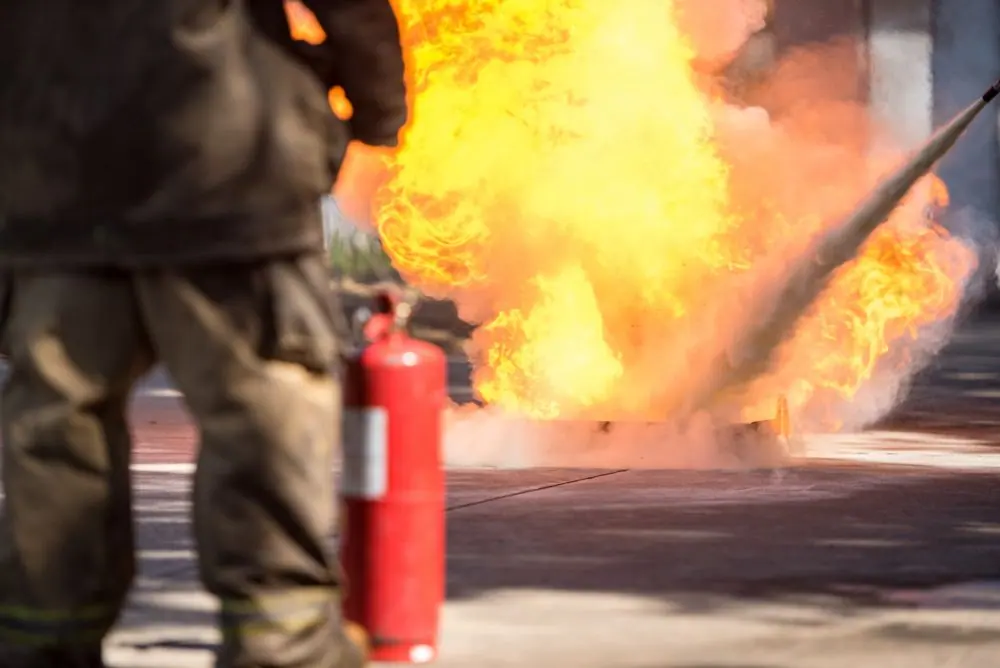
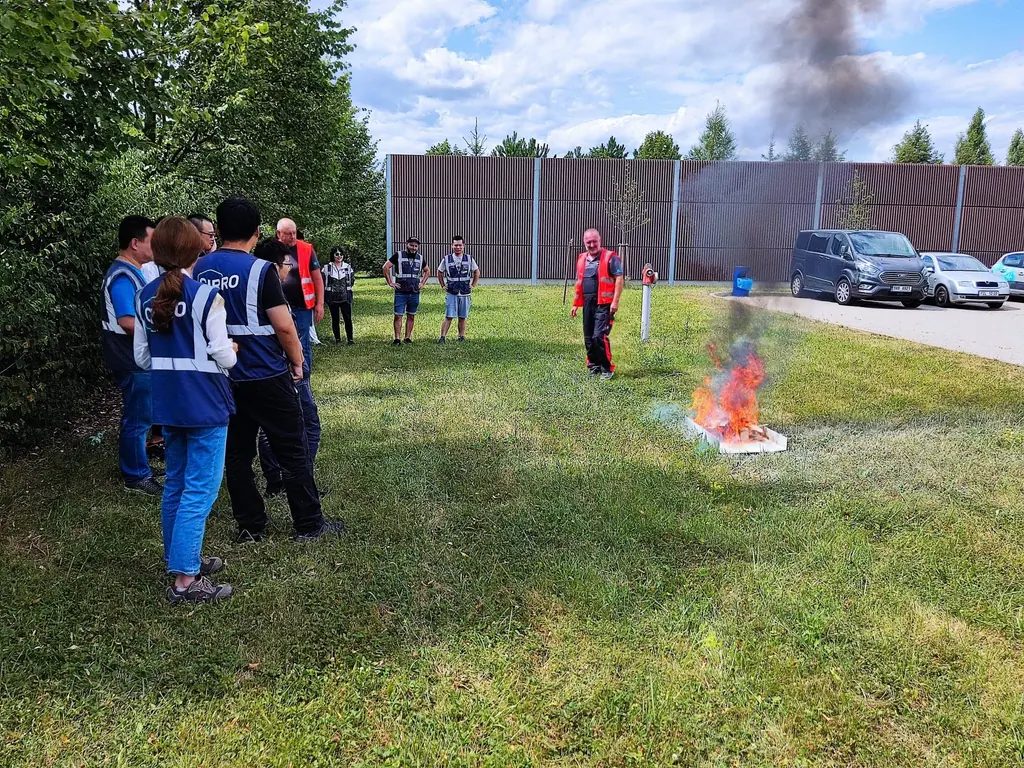
The practical part of the training, such as firefighting practice with an extinguisher or the evacuation procedure, significantly increases the chance that employees will act correctly and quickly in a real situation. Theoretical training without practical experience often stays on paper and does not come through in a crisis.
What fines you face for breaching fire protection rules
Breaching fire protection obligations can lead to a fine from the inspection authority and, in the case of a serious breach, even to the operation being shut down. The amount of the penalty depends on the seriousness of the shortcoming and the level of danger to people or property. The maximum fine can reach CZK 1 million.
Besides the fine itself, the company also faces an indirect risk: a reduced or rejected insurance payout after a fire if the insurer finds that fire safety measures were not in order. That is precisely why regular inspection of the documentation and the condition of the building pays off in the long run.
Leave fire protection to the experts
Fire safety measures protect employees, property and the very existence of the company in the event of an emergency. They include documentation, technical equipment, employee training and regular checks, all of which need to be kept up to date as legislation and operations change. The surest way to keep everything in order without unnecessary administrative burden is to entrust fire protection to experts who continually check and update the documentation and the technical condition of the building for you.
Frequently asked questions (FAQ)
What fire safety measures must a small company with a few employees have?
Even a small company must have fire protection documentation appropriate to its fire hazard category, working fire extinguishers and trained employees.
How often must fire safety training be renewed?
The interval for refresher training is set by the company’s internal rules, usually once every two to three years for ordinary employees. When an employee changes position or workplace, the training must be repeated regardless of the previous interval.
What happens if a company does not have up-to-date fire protection documentation?
Missing or outdated documentation is one of the most common findings during Fire and Rescue Service inspections and leads to a fine. In the event of a fire, missing documentation also complicates dealings with the insurer, who may reduce or reject the payout.
How do I find out the fire hazard category of my operation?
The fire hazard category is determined by a competent person in fire protection based on an assessment of the operation, the substances used and the technologies.
Need reliable help with fire protection?