In summer 2024 we organised hands-on firefighting practice for the employees of one of our partner companies. Under the guidance of Rescue Group experts, participants could experience for themselves how to tackle a fire effectively and safely using a fire extinguisher. In this article we describe how the event went, the types of fire extinguishers and their specific uses in practice.
Training with hands-on firefighting practice led by Rescue Group
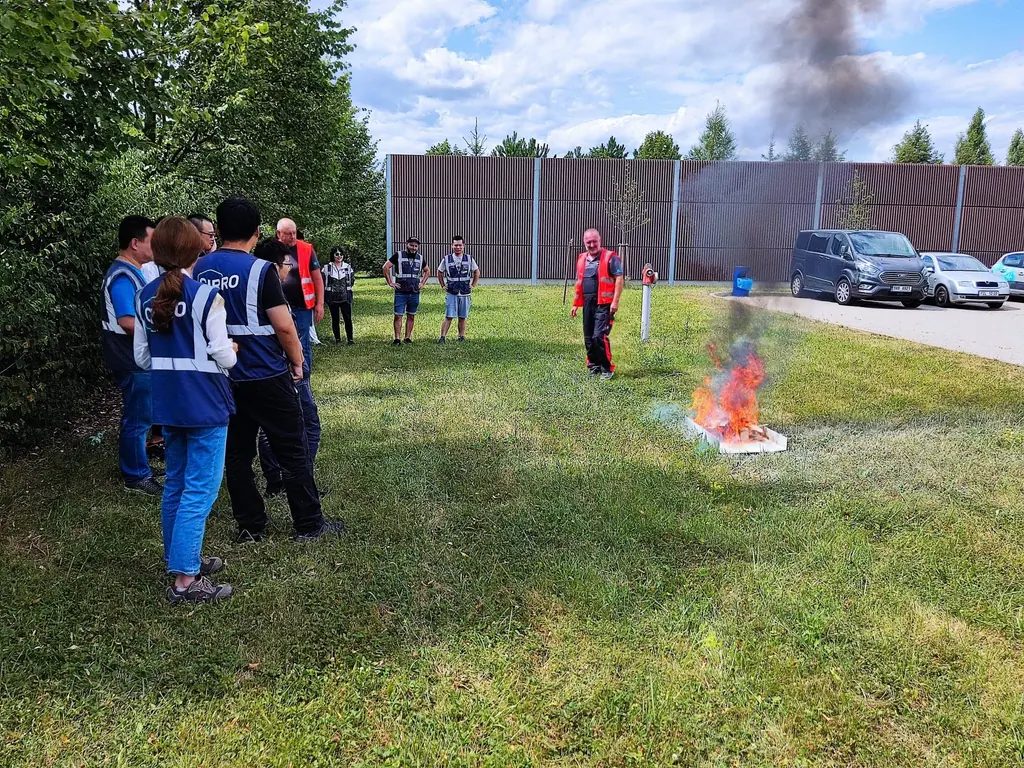
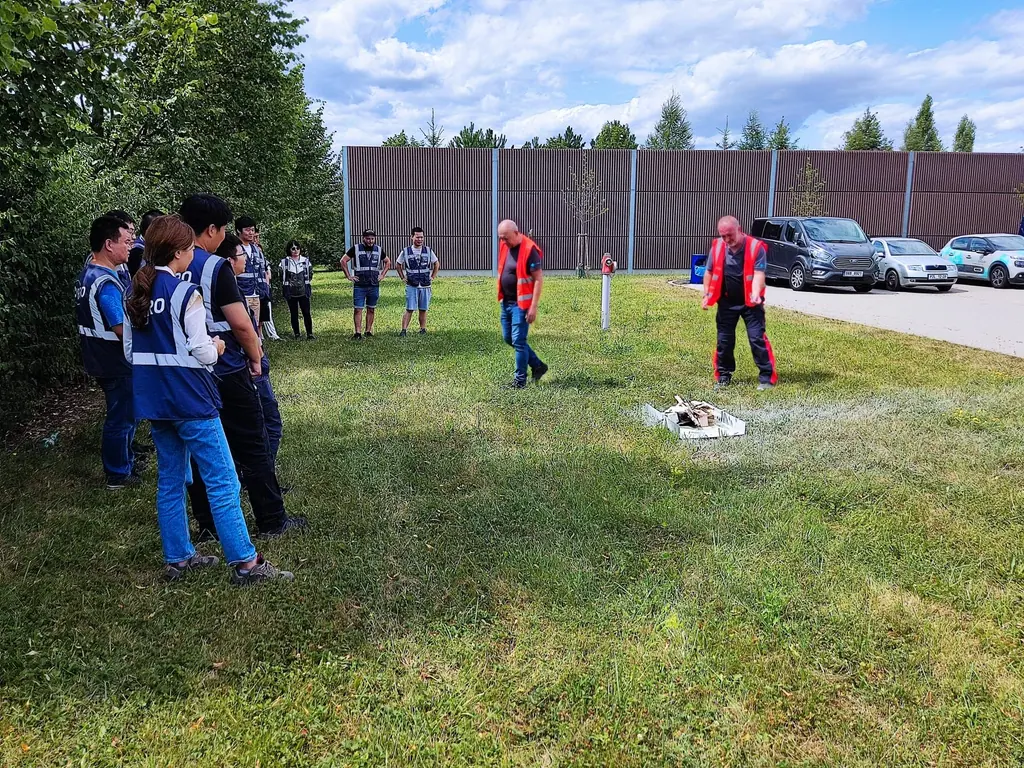
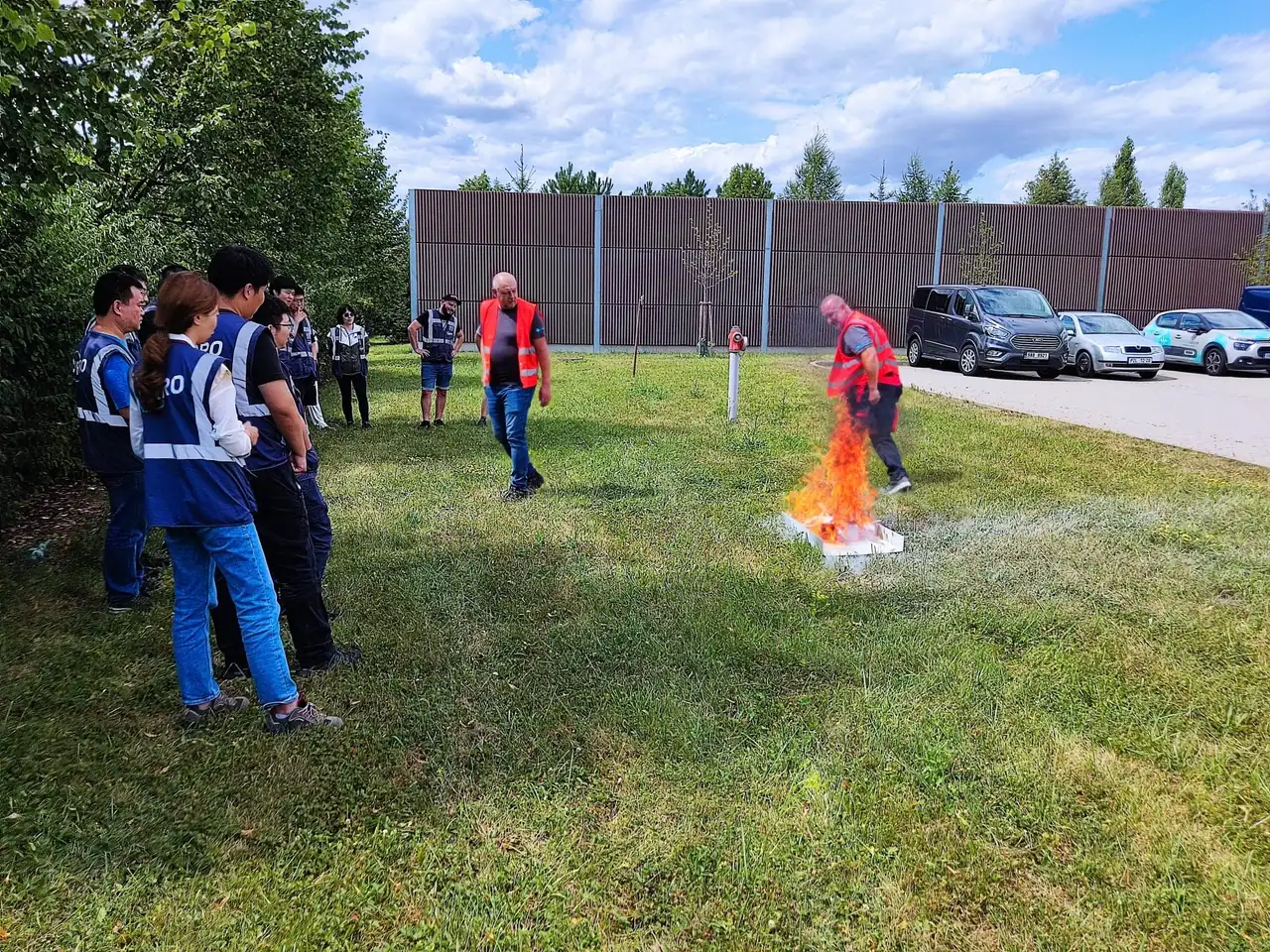
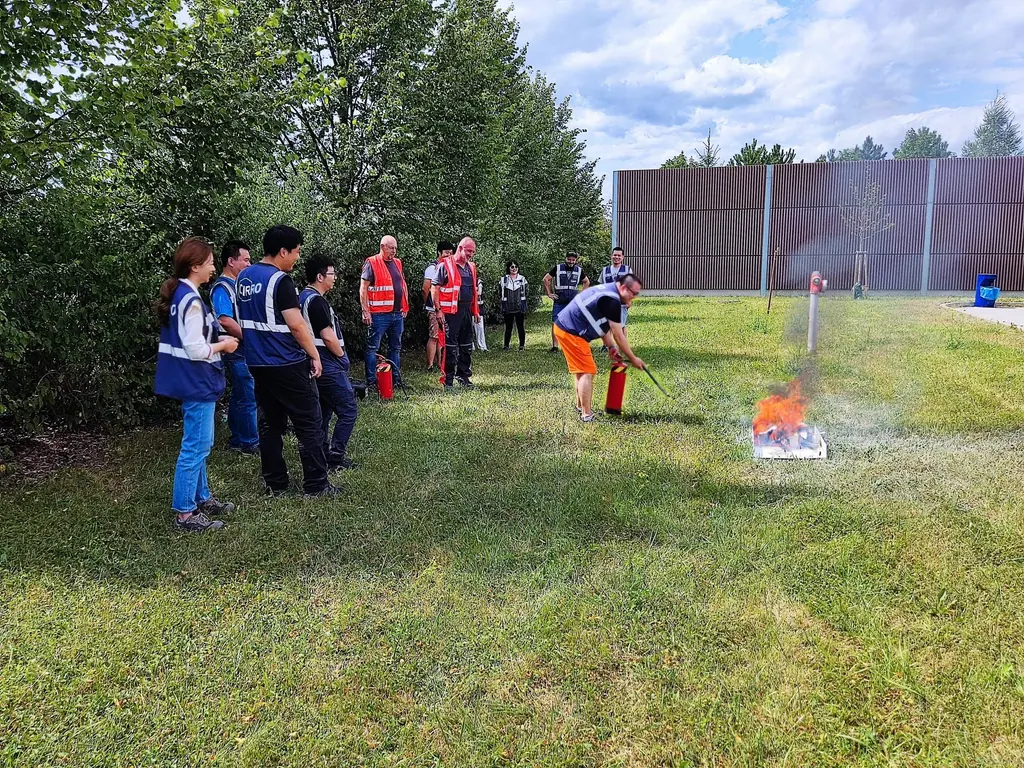
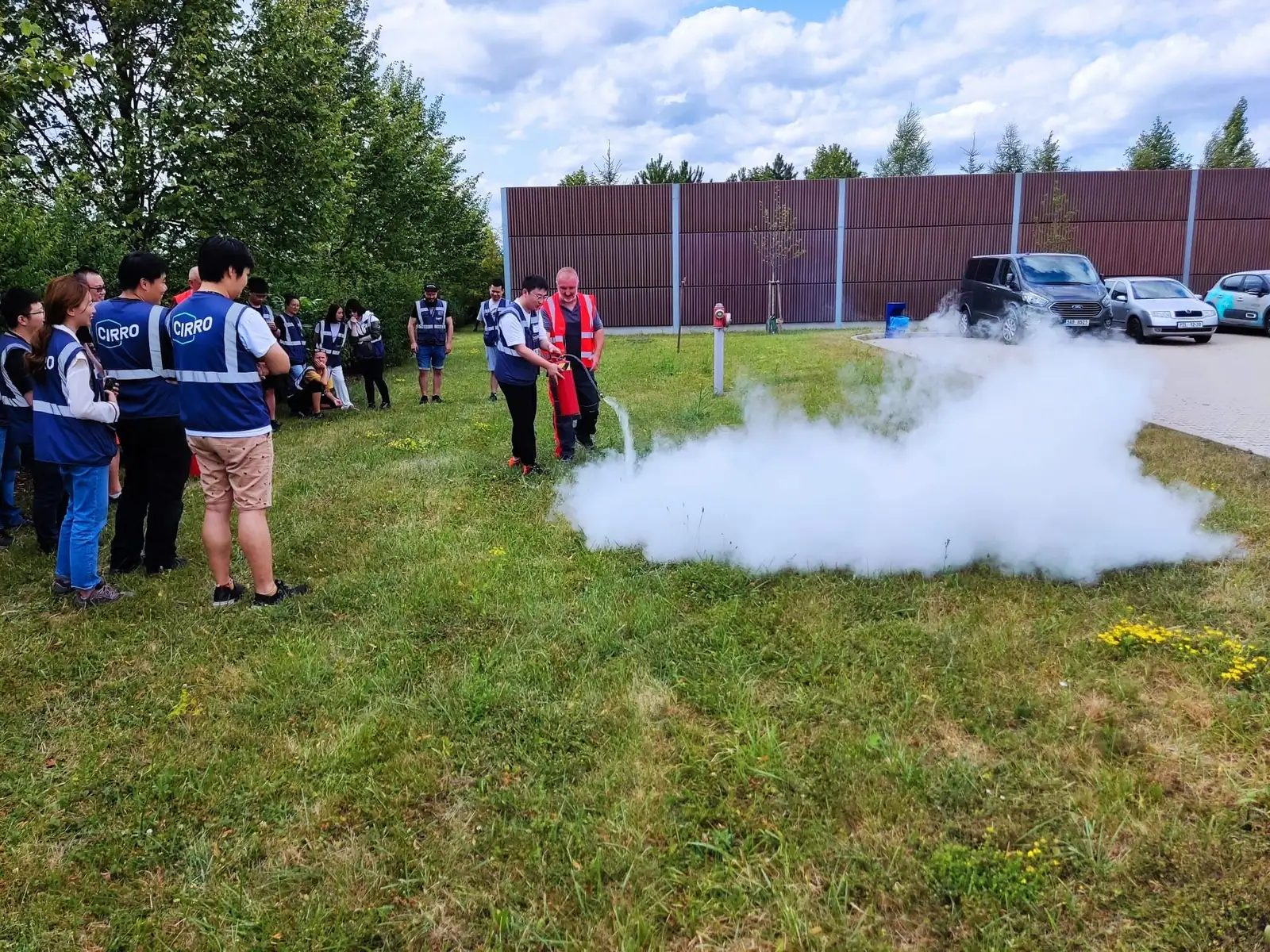
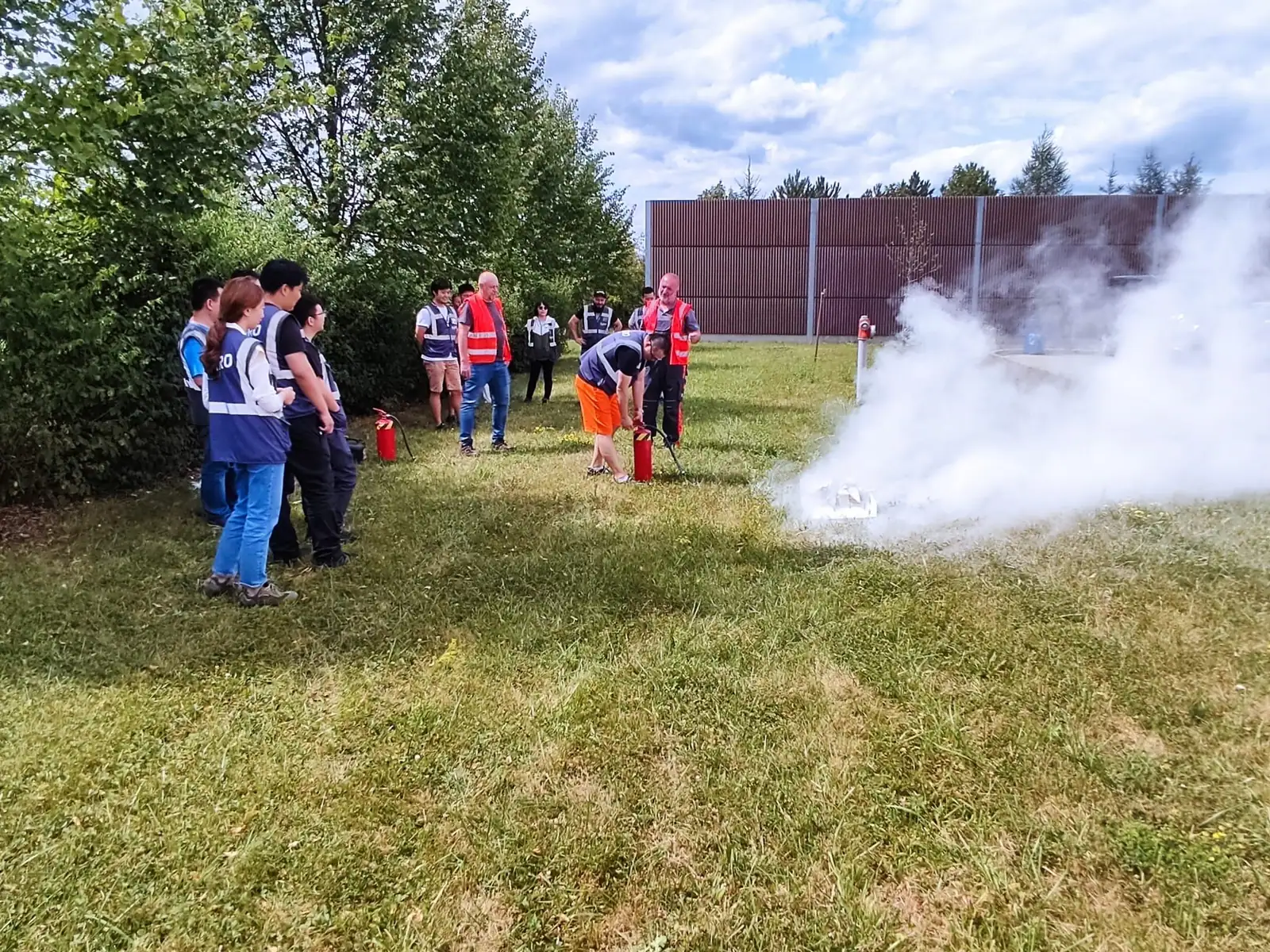
The practice took place outdoors in front of the company’s premises, and its main goal was to teach participants how to handle a fire extinguisher correctly as part of fire protection. Under the supervision of our experts, participants tried putting out a simulated fire using a powder fire extinguisher. The experience made them realise how important it is to be ready to respond quickly when a fire breaks out.
How the practice went: real experience with a fire extinguisher
The practice took place under realistic conditions. In a designated training area we prepared a small controlled fire, which the participants put out using a powder fire extinguisher. This extinguisher is a versatile tool used for fires involving solids, liquids and gases (classes A, B and C). During the practice, participants not only learned to operate the extinguisher correctly, but also gained practical experience of what a fire looks like and how quickly they need to act. Every step was carefully monitored by our instructors, who made sure everything was done safely.
Types of fire extinguisher: which to choose in a fire
Although the participants only worked with a powder extinguisher, it is important to know the different types and their uses. Each type of fire extinguisher has specific properties and is designed for different situations. Knowing the differences is key to knowing which one to choose in a crisis and how to use it correctly. Here is the basic information on the common types:
Powder fire extinguisher
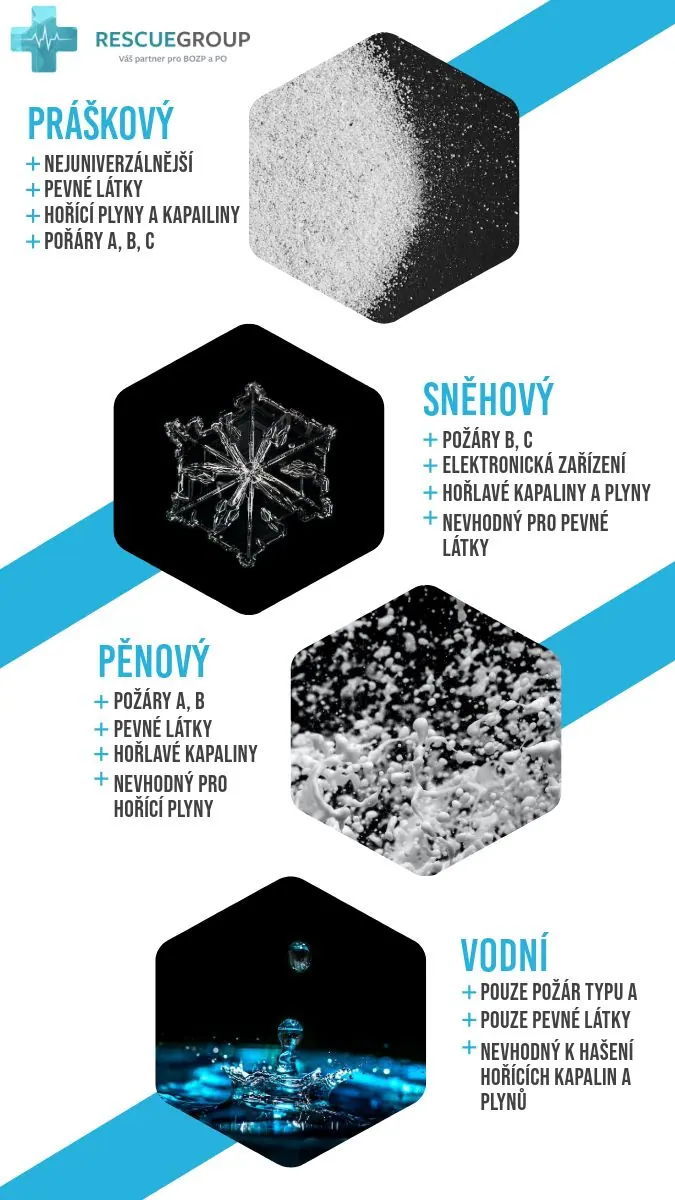
This extinguisher is filled with powder that is driven out by gas. The powder stops the fire by cooling and covering the burning object, preventing oxygen from reaching the flames. Its advantage is that it is versatile – it can be used on solids, liquids and gases (classes A, B, C). It is suitable for most homes and industrial operations, but its disadvantages are the residue left after use and potential damage to electronics. A powder extinguisher is unsuitable for fine combustible materials such as loose bulk materials or light metals, and it can increase the risk of burning liquids splashing.
| The most versatile | Solids |
| Burning gases and liquids | Class A, B, C fires |
CO₂ fire extinguisher
This extinguisher works by using carbon dioxide to push oxygen out of the fire area, which smothers the flames. CO₂ also cools the area. It is ideal for fires involving electrical equipment or liquids (class B). Its disadvantages are the risk of frostbite if handled incorrectly and the danger in small enclosed spaces, where it can increase the concentration of CO₂. A CO₂ fire extinguisher is also less effective in windy conditions and is not suitable for burning loose materials or alkali metals.
| Class B, C fires | Flammable liquids and gases |
| Electronic equipment | Not suitable for solids |
Water fire extinguisher
Water extinguishers are simple, effective and environmentally friendly. Water is used to cool the burning object and stop the flames from spreading. This type is ideal for solids such as paper, wood or textiles (class A). With this extinguisher, however, you must beware of the danger when used on electrical equipment or flammable liquids such as oils and fats, which could cause the fire to spread. A special variant is the water mist extinguisher, which releases a fine mist that is also suitable for fat fires.
| Class A fires only | Not suitable for burning liquids |
| Solids only | Not suitable for burning gases |
Foam fire extinguisher
This extinguisher is water-based with a foaming agent. The foam covers the seat of the fire, cutting off the oxygen while cooling it. Foam fire extinguishers are suitable for fires involving solids and liquids that do not mix with water (classes A and B). They are ideal for flammable liquids such as diesel or petrol. They are not recommended for electrical equipment or alkali metals.
| Class A, B fires | Flammable liquids |
| Solids | Not suitable for burning gases |
Fire classes: what to watch out for
During the practice we also focused on how to distinguish the different fire classes and which extinguishing methods suit them best. The fire classes are as follows:
- Class A: fires involving solids, such as wood or paper.
- Class B: fires involving flammable liquids, such as petrol or oils.
- Class C: fires involving gases, such as propane or natural gas.
- Class D: fires involving metals, such as magnesium or aluminium.
- Class F: fires involving cooking fats and oils.
Each class requires a specific approach, and not every fire extinguisher is suitable for every type of fire. For example, using water on a class B (liquid) fire could cause even greater damage.
Why regular training and fire extinguisher inspections matter
Regular fire safety training, like this practice session, is key to maintaining a safe working environment. Knowing how to use a fire extinguisher can save lives and property in a crisis. However, theoretical preparation alone is not enough – practical experience like that gained during this training plays an irreplaceable role.
Regular inspections of fire extinguishers are just as important. Extinguishers must be checked at least once a year to make sure they are fully functional. A poorly maintained or expired extinguisher can fail in a critical situation and put lives and property at unnecessary risk.
The hands-on firefighting practice we organised in summer 2024 was an invaluable experience for everyone involved. We believe that, thanks to such training, employees can protect the company from the risk of fire and keep themselves and their colleagues safe. Fighting a fire is not just a matter of technique, but also of staying calm and reacting quickly – and these skills are best developed through hands-on training.
If you are interested in similar training at your company, do not hesitate to contact us. Together we will make sure your employees are ready to face any emergency.
We will provide tailor-made training that gets everyone involved