Fires can break out anytime and anywhere, which is why it is essential to have the right tools up your sleeve for an immediate response. Fire extinguishers are an irreplaceable part of safety equipment and represent the first line of defence against fire.
If a fire starts to spread, a fast and targeted response is almost essential for reducing the harmful consequences. Fire extinguishers are designed to give users the ability to suppress fires quickly and safely in their early stages. They are practical fire protection devices that allow individuals and professionals to intervene quickly and effectively, which can significantly limit the extent of a fire and minimise damage to property and threats to life.
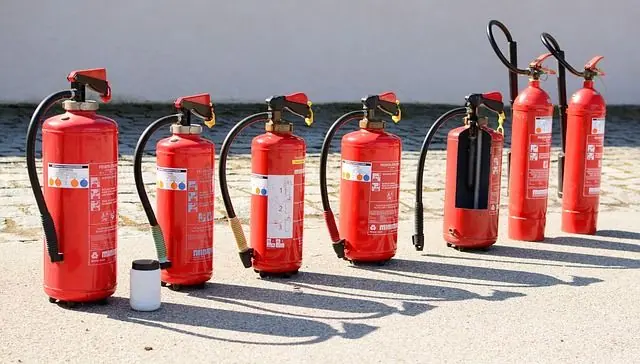
Dividing fires into five classes provides guidance for choosing the right fire extinguisher:
- Class A covers solid materials, for which powder or water extinguishers are suitable
- Class B covers flammable liquids such as petrol, where powder, foam or CO₂ extinguishers are effective
- Class C covers flammable gases, where powder or CO₂ extinguishers are ideal
- Class D focuses on flammable metals, which require special powder or foam extinguishers
- Class F covers fires involving vegetable fats and oils, for which foam or powder extinguishers are effective
Knowing these categories is important for choosing the right firefighting equipment quickly and correctly, depending on the nature of the fire.
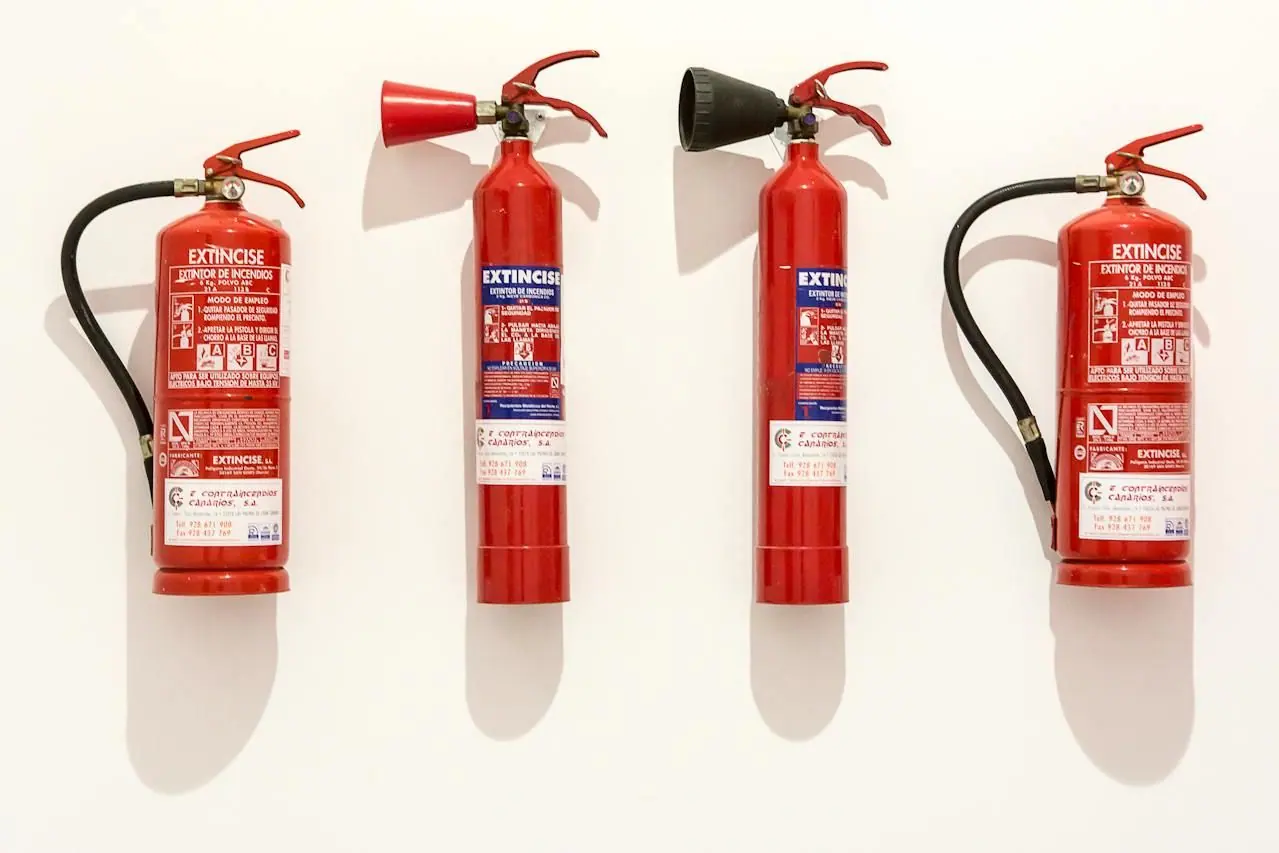
Powder fire extinguishers: all-round protection
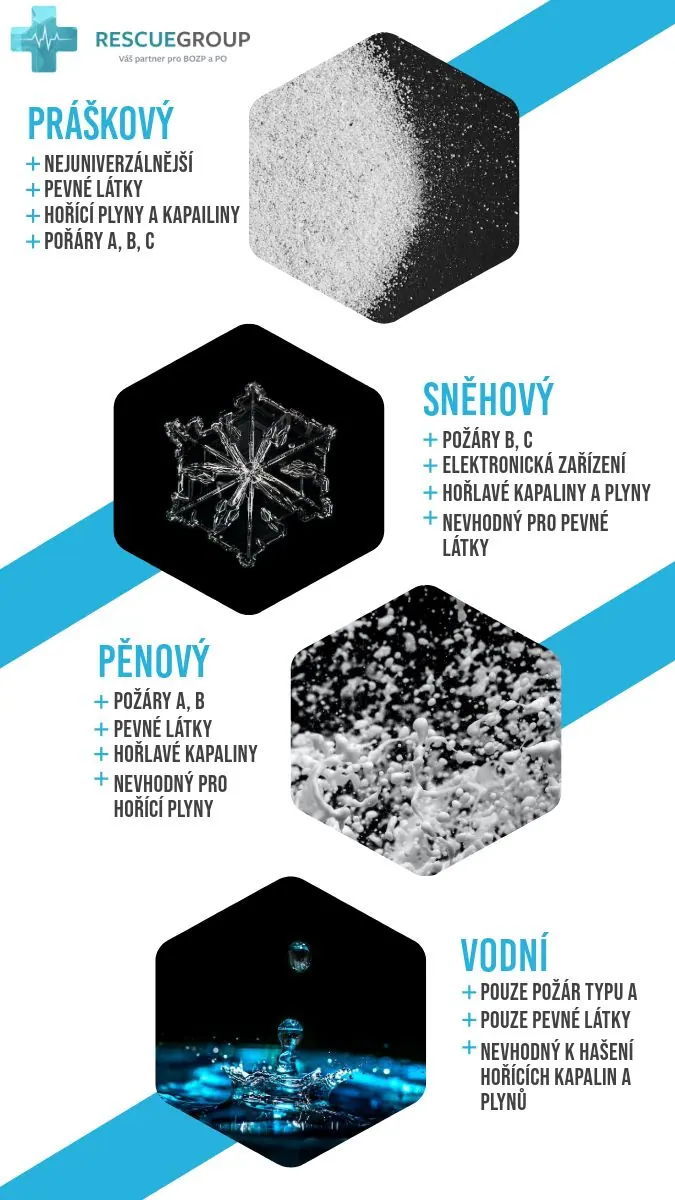
Powder fire extinguishers are widely used in health and safety because they can put out many different types of fire. They are effective on burning solids, liquids and gases. These extinguishers are ideal for homes, offices and shops, where different types of fire can occur. On the other hand, they are not entirely suitable for materials such as textiles, wood and the like, or for delicate electronics. Powder extinguishers must never be used on flammable alkali metals.
CO₂ fire extinguishers: safe for electronics and sensitive equipment
Carbon dioxide (CO₂) fire extinguishers are suitable for fires in places where water or powder could damage electronics or sensitive equipment (classes B and C). They are ideal for offices, data centres and laboratories, where collateral damage needs to be kept to a minimum. On the other hand, they are not suitable for solid materials, where there is a risk of re-ignition. (Learn more about CO₂ extinguishers.)
Water fire extinguishers: for industrial premises and public buildings
Water fire extinguishers are often prescribed for industrial premises and public buildings. They are effective on solid materials (class A) such as wood or paper and can also contain additives to increase their effectiveness.
Foam fire extinguishers: for liquid fuels and chemicals
In areas where there is a risk of fire involving liquid fuels or chemicals (classes A and B), foam fire extinguishers are essential. The foam forms an insulating layer that prevents the fire from spreading, making it effective against these specific hazards. However, foam extinguishers cannot put out burning gases, and with liquids that mix with water the foam tends to dissolve.
Special fire extinguishers: for kitchens and motor vehicles
There are special fire extinguishers for kitchens and motor vehicles. For example, extinguishers designed for fats are ideal for putting out burning oil or fat in kitchens, while extinguishers for motor vehicles are optimised for engine fires.
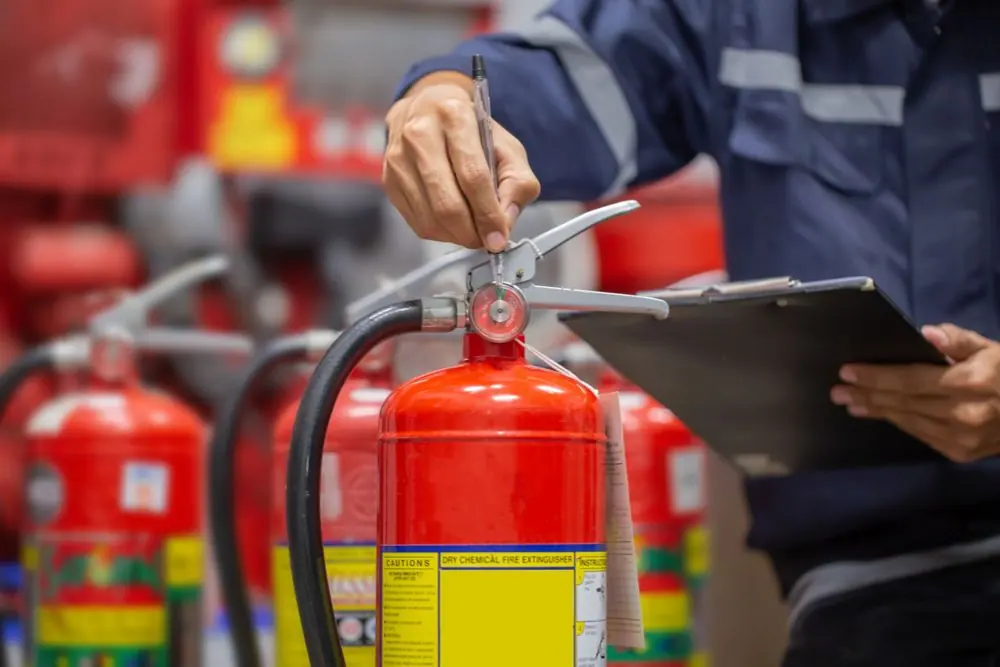
Choosing the right fire extinguishers depends on the specific needs and conditions of the environment. It is important that extinguishers are checked regularly and kept in optimal condition through inspections. Safety equipment, including fire extinguishers, is key to protecting life and property, so it should be chosen correctly and maintained for maximum effectiveness in an emergency.
Safety training and fire extinguishers
Safety training and professional preparation play a key role in ensuring effective fire protection. Especially when it comes to fire extinguishers, knowing how to use them properly is essential for a quick and effective response in an emergency. So why does professional training in handling extinguishers matter?
A fast and correct response in an emergency
Professional training allows people to respond quickly and correctly in situations where every second counts. Safety training provides not only theoretical knowledge of the different types of extinguishers, but also practical skills in using them correctly. This ensures that people can respond immediately and effectively to a fire.

Minimal risk of harmful consequences
Without professional training there is a risk of using extinguishers incorrectly, which can lead not only to ineffective firefighting but also to dangerous situations for the user. Training provides detailed information on how to use each type of extinguisher correctly, minimises the risk of mistakes and reduces the danger to the surroundings.
Knowledge of safety procedures
Professional training also covers safety procedures and fire procedures. Participants learn how to report a fire correctly, how to keep themselves and others around them safe, and how to cooperate effectively with fire crews in major incidents.
Investing in safety training brings significant benefits in the form of a faster and more effective response to fire, which can ultimately save lives and property.
Innovations in fire extinguishers
In the field of safety and firefighting, innovations keep appearing that change the way we deal with fire. The latest developments in fire extinguisher technology bring a range of innovative features that increase the effectiveness, speed and safety of firefighting. Let us look at the key aspects of this evolution.
Automated fire suppression systems
One of the most significant recent shifts is automated fire suppression systems that respond to fires with minimal human intervention. These systems can detect fires using advanced sensors and then trigger the extinguishing mechanisms, shortening the response time and minimising damage.
Virtual reality in firefighting training
In training, innovations are appearing in the form of virtual reality (VR). Virtual simulation environments allow firefighters to experience realistic scenarios and improve their skills without any real danger. This leads to greater preparedness and shorter response times in a real incident.

Environmentally friendly fire extinguishers
With the growing emphasis on sustainability, environmentally friendly extinguishing agents are emerging. They are designed to minimise the negative impact on the environment while remaining highly effective at putting out fires. This innovation responds to the needs of organisations and companies that emphasise environmental responsibility.
Innovations in fire extinguishers represent a key step towards a safer future. Automated systems, smart technology, nanotechnology and environmentally friendly approaches allow us to respond better to fires and minimise risks. These innovations not only make firefighting more effective, but also help protect lives, property and the environment. If you need to temporarily increase your level of fire protection, Rescue Group offers, among other safety services, fire extinguisher rental – all extinguishers are thoroughly checked and serviced.
Need advice?
Published: 01/2024