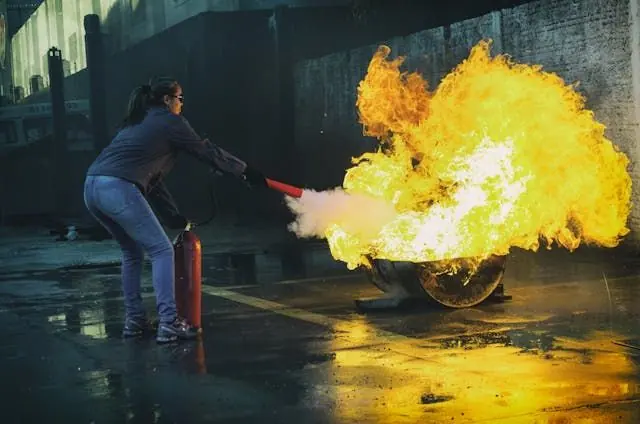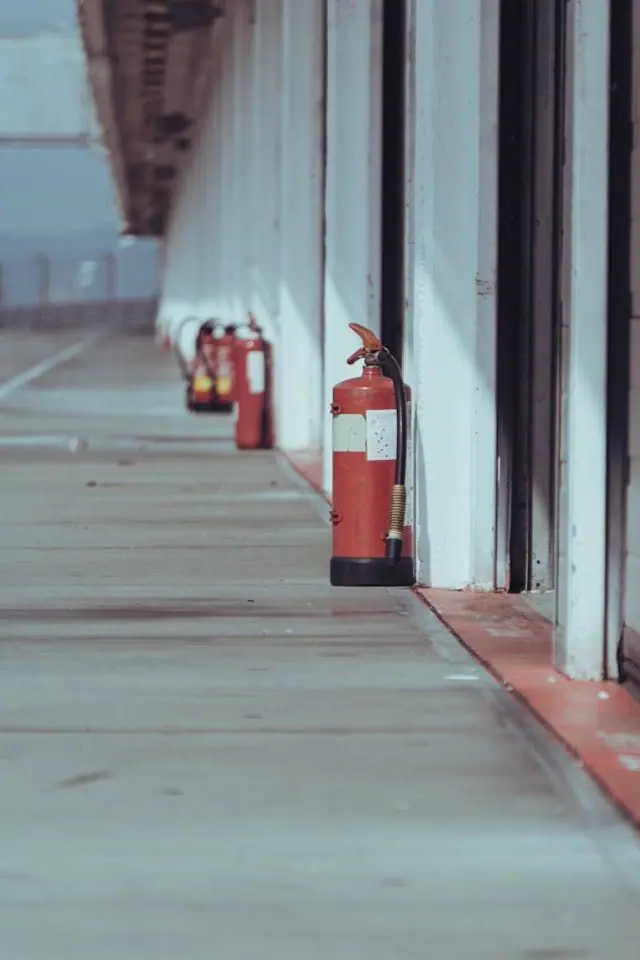
Fire extinguishers are an indispensable part of fire safety. Many people may not realise how big a difference the right choice and placement of a fire extinguisher can make in a fire. This article looks at the different types of fire extinguisher, how to choose them correctly and where to put them so that you are ready for any situation. We also look at the regular maintenance and inspections that keep them working effectively for the long term.
How to choose the right fire extinguisher
Choosing a fire extinguisher is a key step in preventing fires and protecting property and health. The right choice depends above all on the kind of fire that could break out in a particular environment. Every fire extinguisher is marked with a letter and a number that tell you what kind of fire it can put out and how big a fire it can handle. The letter indicates the fire class and the number indicates the size of fire the extinguisher put out during testing. To choose correctly, it is therefore essential to know not only the type of fire, but also the size of the potential fire.
Fire classes
Under the EN 2 standard (ČSN EN 2), fires are divided into five main classes, marked with the letters A to F. Each class covers different kinds of materials or substances that can catch fire, and each requires a specific type of fire extinguisher.
Class A – solid materials
Class A covers fires involving solid materials such as wood, plastics, paper, textiles, coal or natural materials. These fires are among the most common and can start both in homes and in industrial operations. Water or foam extinguishers are the most suitable for this class, as they cool the burning materials effectively and stop the fire spreading.
Class B – flammable liquids
Fires involving flammable liquids such as petrol, petroleum products, cleaning agents, paints or diesel fall into class B. These fires can be very dangerous, because flammable liquids tend to spread and spill quickly. Foam or powder extinguishers are used for this class. Foam forms a protective layer on the surface of the burning liquid that cuts off the oxygen and puts out the fire, while powder effectively removes oxygen from around the fire.
Class C – flammable gases
Fires involving flammable gases such as propane, butane, methane, acetylene and others fall into class C. These fires are very dangerous, because gas can easily escape into the surroundings and spread fire over long distances. Powder or CO₂ extinguishers are used for these fires. Powder not only cools the burning gas, but also removes oxygen, preventing the fire from spreading further. CO₂ extinguishers effectively reduce the amount of oxygen around the fire and cool the burning surface.
Class D – flammable metals
Fires involving metals such as magnesium, lithium, sodium, potassium, titanium or aluminium fall into class D. These fires are particularly dangerous, because some metals can react with water or air and cause an explosion. Special powder extinguishers developed for this specific purpose are used for these fires. It is important to remember that water or foam extinguishers are not suitable for this type of fire.
Class F – oil and fat fires
Fires involving cooking oils and fats, such as vegetable oils, lard or butter, fall into class F. This type of fire is common in kitchens, both domestic and professional. It calls for a special class F foam (wet chemical) extinguisher, designed to put out fires in hot oil effectively without splashing the burning liquid and spreading the fire even further.
What the number after the letter means
As well as the letter indicating the fire class, every fire extinguisher shows a number giving the size of fire the extinguisher put out in testing. The higher the number, the bigger the fire the extinguisher can put out. For example, 43A and 233B on a powder extinguisher mean that it can put out a fire of 43 m² of burning wood (class A) and 233 m² of burning liquid (class B). This number tells you how large a fire the extinguisher can handle effectively, which is important for deciding whether it will be enough for a given space.
How to choose a fire extinguisher correctly
When choosing a fire extinguisher, several factors need to be taken into account:
- Type of fire: find out what materials are present in the space. In a kitchen, it might be oils and fats (class F); in an office, paper and plastics (class A); in production halls, flammable liquids (class B).
- Size of the potential fire: choose an extinguisher according to the size of the space and the potential extent of a fire. Assume that even a small fire can quickly grow larger.
- Type of equipment: consider whether you will need an extinguisher for live electrical equipment, such as computers or electrical appliances, which require non-conductive extinguishers (e.g. powder or CO₂ extinguishers).
Training and awareness on using fire extinguishers
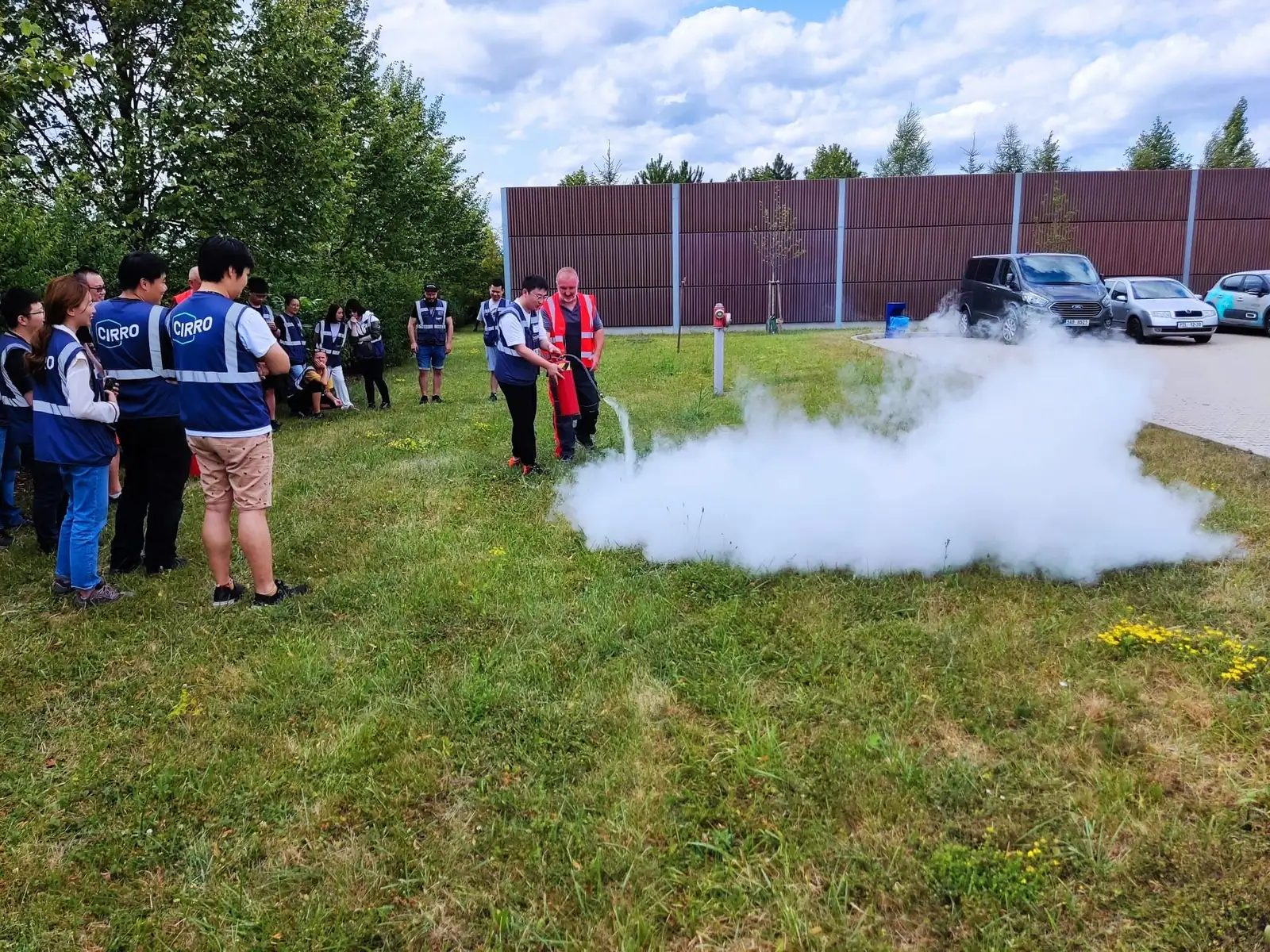
Training and awareness on using fire extinguishers are a key aspect of fire prevention and protection that is often overlooked. Although most people know they should use a fire extinguisher in a fire, not everyone has a clear idea of how to act correctly. It is essential not only to have fire extinguishers in the right places, but also to make sure people know how to use them properly and how to respond in a crisis. The right training can make the difference between a fast, effective response and an unnecessary delay that can have serious consequences.
Basic training in using fire extinguishers should be part of fire prevention in all types of buildings – homes, offices, schools, production halls and public institutions alike. Every space can have different risks that need to be taken into account. Properly trained people can respond in time and effectively, which can save not only property, but also lives.
Training should include a detailed introduction to the different types of fire extinguisher and how to use them correctly. Each extinguisher is designed for a different type of fire (solids, liquids, gases, electrical equipment), so it is important to know which one to use in a particular case. Employees or residents should be familiar with the following procedure:
Most important is awareness of the safety risks. Before using the extinguisher, people must make sure they are safe themselves and that their health and life are not at risk. If there is danger, it is always better to evacuate the area and call the fire brigade. Next, it should be explained how to prepare the extinguisher, pull the safety pin and hold it in the best position for use. The basic technique is “pull, hold and spray”, and it is important to aim the nozzle at the base of the flames, not at the top, so that the fire is put out effectively.
Training should also cover recognising risk factors. Users should know how to avoid the risks associated with fighting fires involving flammable liquids, electrical equipment or other specific fires that may require a different kind of response.
Types of fire extinguisher
There are several types of fire extinguisher, each suitable for a different kind of fire and situation. Each type has its own specific properties and uses:
Water fire extinguisher
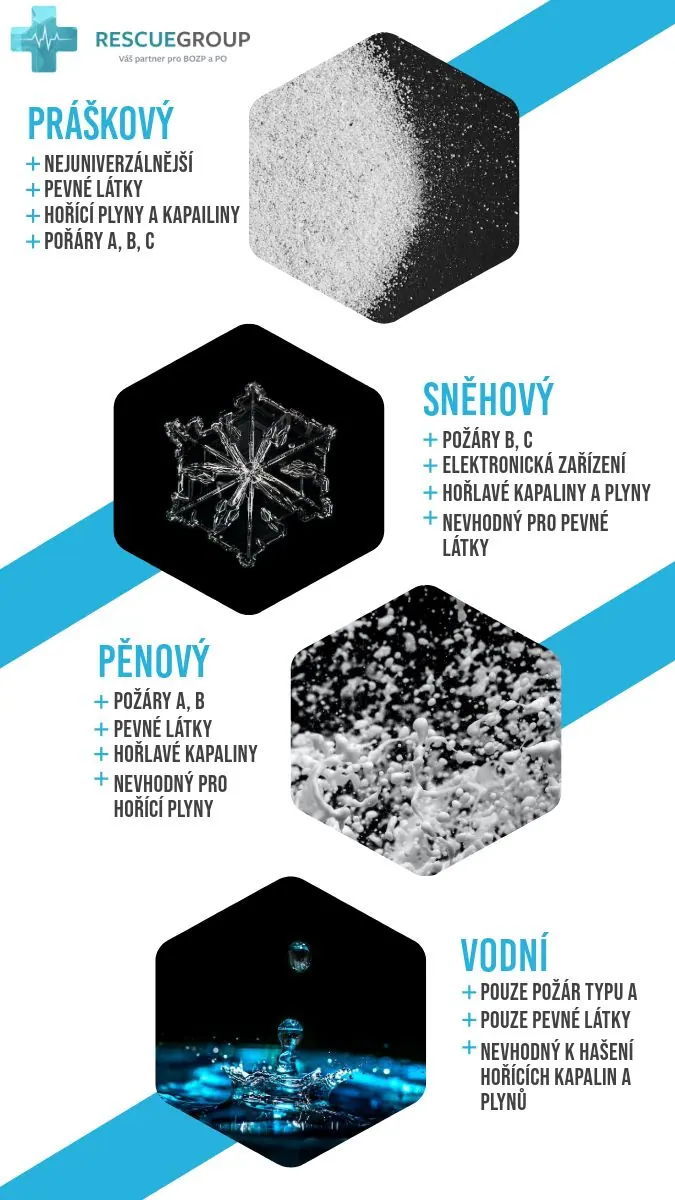
This type is designed mainly for class A fires (solid materials). It works by cooling the burning material, which puts out the fire. As well as water, the extinguisher contains substances that increase its extinguishing effect and prevent it from freezing. A water fire extinguisher is relatively simple and effective, but its use is limited – it cannot be used on flammable liquids or electrical equipment.
Powder fire extinguisher
Powder extinguishers are versatile and can handle class A, B and C fires and even fires in live electrical equipment. The powder cuts off the oxygen, smothering the fire. A powder fire extinguisher is non-conductive, so it can be used safely on electrical equipment up to 1,000 V. Bear in mind, however, that the powder can damage electronics or other sensitive materials after use.
Foam fire extinguisher
A foam fire extinguisher is ideal for class A and B fires. The foam forms a layer on the burning material that cuts off the oxygen and smothers the fire. In addition, a foam fire extinguisher helps stop flammable gases and vapours escaping. This type of extinguisher is effective on liquids such as oils or diesel. A special version of the foam extinguisher is designed for class F fires (cooking oils and fats).
CO₂ fire extinguisher
A CO₂ fire extinguisher is excellent for fires in electrical equipment and flammable liquids (class B). It uses carbon dioxide, which reduces the oxygen concentration around the fire and smothers it. It is ideal for live electrical equipment because it is non-conductive. A CO₂ extinguisher is also very effective on flammable liquids, because it does not splash the burning liquid, as can happen with water.
Clean agent gas extinguisher
This type of extinguisher uses a clean, environmentally friendly and electrically non-conductive gas. It is ideal for class A, B and C fires and for live electrical equipment. Its advantage is that it evaporates after use and leaves no harmful residue. It is used where surrounding equipment needs to be protected, such as expensive electronics, documents or valuable exhibits.
Placing fire extinguishers correctly
Placing fire extinguishers correctly in buildings is key to using them quickly and effectively in a fire. They must be easily accessible and ready for immediate use. Decree No. 246/2001 Coll. on fire prevention sets out specific requirements for where fire extinguishers are placed, which must be followed to ensure maximum safety.
The first basic requirement is that fire extinguishers are placed where they are easy to reach in an emergency. This ensures that even in a crisis the extinguisher can be grabbed quickly and firefighting started without unnecessary delay. For this, the way to the extinguisher must be clear and unobstructed. Another key point is the visibility and marking of the extinguisher. Every extinguisher should be clearly marked with fire safety signs that make it easier to find even in difficult conditions such as smoke or darkness. It should be placed in a clearly visible location that is not blocked by other equipment or furniture, so that it is easy to get to.
Fire extinguishers should also be placed close to high-risk areas – for example, where flammable materials are stored, in kitchens, workshops or other areas with a higher likelihood of fire. This ensures an extinguisher is always within reach if a fire suddenly breaks out.
If a fire extinguisher is mounted vertically, the handle should be no more than 1.5 metres above the floor. This standard ensures the extinguisher is easy to reach for anyone who needs it and minimises the risk of problems handling it in a fire. As well as in buildings, fire extinguishers can also be placed in vehicles such as cars, lorries or boats. In these cases, the extinguisher must be securely fixed and stable so that it does not move while the vehicle is travelling, which could endanger the crew.
Overall, placing fire extinguishers correctly is essential for a fast response to fire and for protecting property and health. Following these principles not only meets legal requirements, but also helps create a safe environment to work and live in.
Regular maintenance and inspections
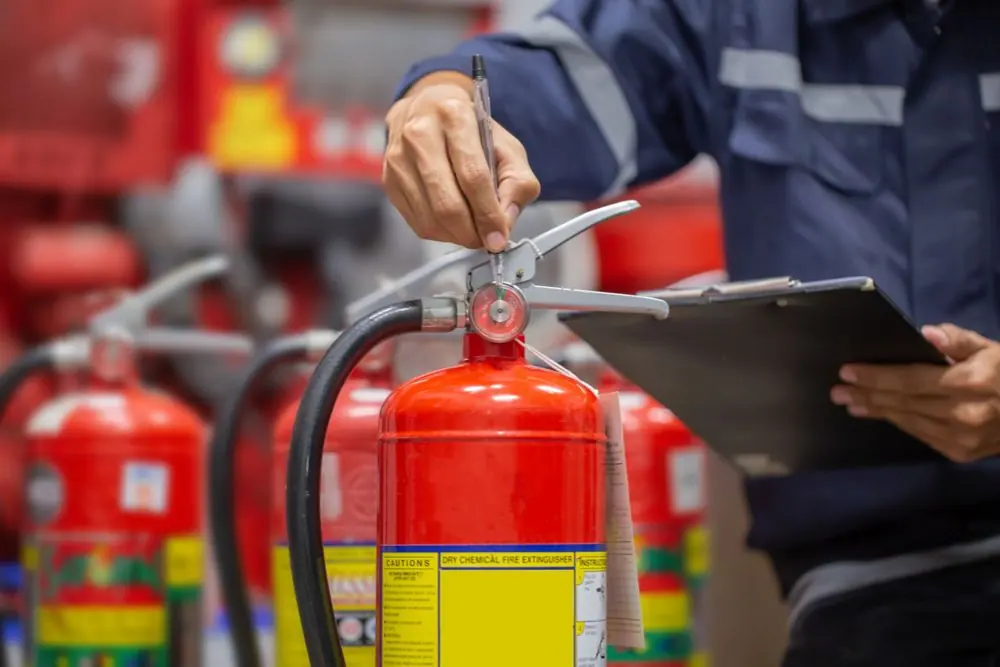
Fire extinguishers should be checked regularly and kept in good technical condition. Under the regulations, inspections must be carried out at least once a year, with periodic tests every 3 to 5 years, depending on the type of extinguisher. The inspection should include a check of functionality, pressure tests and a check of the condition of the extinguishing agent. After each inspection, the extinguisher should receive an inspection label showing the date of the last and next inspection.
As well as regular checks, the location of the fire extinguisher must be marked and access to it ensured with clearly visible fire safety signs. It is also important to check regularly that the extinguisher is not damaged and is in the right place.
Choosing, placing and regularly maintaining a fire extinguisher correctly are essential for safety. It is important to choose an extinguisher that matches the type of risk in the environment and to check it regularly so that it is ready for use in a fire. A properly placed and maintained fire extinguisher can save lives and property at a critical moment. If you have any doubts about choosing or maintaining one, do not hesitate to contact professionals who will help you find the ideal solution for your needs.
Need a reliable solution for your fire extinguishers?