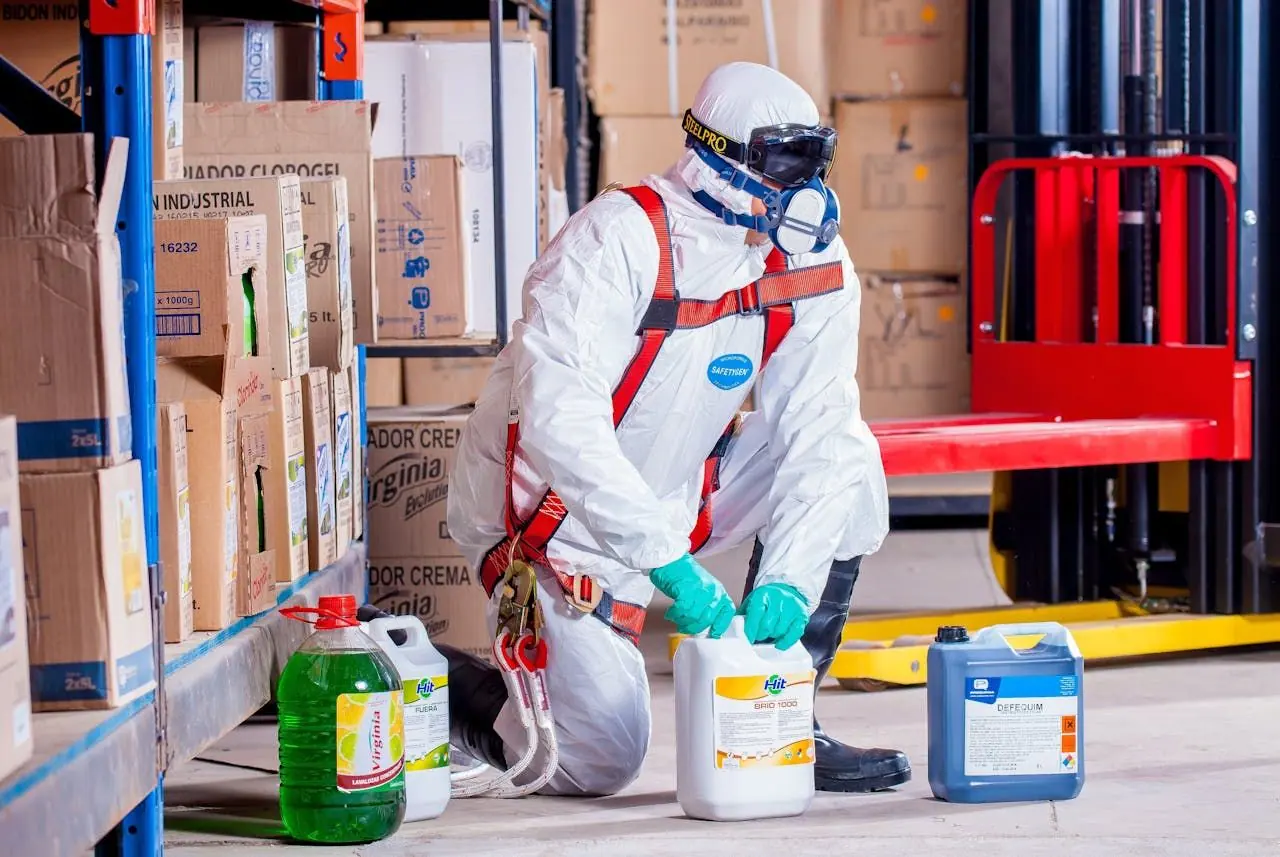

This article provides useful information on training employees to work safely with hazardous chemicals, helping to reduce the risk of workplace injuries and poisoning associated with handling chemicals.
Working with hazardous chemicals poses a high risk to employees if the correct safety procedures are not followed. Proper employee training is therefore key to minimising the risk of injury and poisoning associated with handling chemicals. In this article we look at how to raise employees’ awareness of working with hazardous chemicals and so reduce the risk of workplace injuries and poisoning.
Why safety training matters
Safety training for employees who work with hazardous chemicals is essential for protecting workers’ health and safety and preventing workplace injuries and poisoning. Training should cover the following key points:
Identifying hazardous chemicals
Employees should be able to identify the hazardous chemicals they work with and be familiar with their properties, risks and protective measures.
Safe storage and handling
Employees should be trained in storing chemicals safely, handling them correctly and using personal protective equipment.
First aid in the event of poisoning or injury
Employees should be trained in giving first aid in the event of poisoning or injury involving hazardous chemicals, including the use of eyewash stations, emergency showers and respirators.
Disposing of hazardous chemicals
Employees should be familiar with safe ways of disposing of hazardous chemicals and with the relevant rules and regulations.
Best practices for safety training
Training new employees
New employees should complete training on working with hazardous chemicals before they start working with chemicals.
Regular refresher training
Safety training should be repeated regularly so that employees keep improving and maintain their knowledge and skills.
Involving employees in the process
Employees should be actively involved in creating and updating safety procedures for working with hazardous chemicals. Their experience and views can help create effective and realistic safety measures.
Demonstration materials and practical exercises
Demonstration materials and practical exercises can help employees understand safety procedures better and remember them more easily.
Mandatory requirements and regulations
The basic requirements include:
- Mandatory employee training on working with hazardous chemicals.
- Access to chemical safety information, including safety data sheets (SDS).
- Compliance with the relevant rules and regulations on storing, handling and disposing of hazardous chemicals.
- It is important to comply with these mandatory requirements and regulations and make sure your company meets all requirements for safe work with hazardous chemicals.
Safety training for employees who work with hazardous chemicals is key to protecting workers’ health and safety and preventing workplace injuries and poisoning. Regular employee training and compliance with the relevant rules and regulations are essential for a safe working environment.
Need to arrange training?