Noise produced as a by-product of operating machinery and equipment in various industries can have a negative impact not only on hearing, but on employees’ overall health. Long-term exposure to high noise levels can cause permanent hearing damage, and it can also have serious non-auditory effects. Legislation and the Labour Code require effective protection against the harmful effects of noise and vibration to ensure health and safety in the workplace.
Why it is important to measure workplace noise
Measuring workplace noise is a key step in protecting employees’ health and ensuring compliance with legal requirements. Under Czech Government Regulation No. 272/2011 Coll., which focuses on protecting health against the adverse effects of noise and vibration, employers must regularly monitor noise exposure and take measures to minimise it. Failing to comply with these requirements can lead to legal sanctions and financial penalties.
The health effects of excessive noise
Excessive noise can have a wide range of negative effects on employees’ health:
- Hearing loss: long-term exposure to high noise levels can cause irreversible hearing damage. This can show up as ringing in the ears or even permanent deafness.
- Increased stress and fatigue: noise can increase stress and fatigue, which negatively affects work performance and employees’ overall well-being.
- Concentration problems: high noise levels can disrupt concentration and the ability to focus on work, leading to mistakes and lower productivity.
- Risk of injury: noise can mask warning signals and safety alerts, increasing the risk of workplace injuries.
The legal requirements for noise measurement
The legislation on workplace noise is strict and requires employers to carry out regular measurements and evaluate the results. Regulation No. 272/2011 Coll. sets limits for the maximum permitted noise levels, which must not be exceeded. If they are exceeded, measures must be taken to reduce noise exposure, including the use of protective equipment and improving the acoustics of the working environment.
How Rescue Group can help
At Rescue Group we offer comprehensive noise measurement services, including:
- Detailed noise measurement: we work with accredited laboratories, which carry out precise noise measurements in your working environment. Working with laboratories ensures accurate and reliable results.
- Analysis and advice: after the measurement, you receive a detailed analysis of the results. Based on it, we give you specific recommendations and proposals for improving the working environment to minimise the effect of noise on employees’ health.
- Employee training: we offer training that informs employees about the risks associated with noise and how to protect themselves, including the use of protective equipment and suitable work practices.
- Long-term support: we provide ongoing support and advice on managing noise exposure so that your workplace continually meets all legal standards.
What you can do
To minimise the effect of noise in the workplace, it is essential to introduce preventive measures aimed at reducing its sources and spread. Effective prevention involves several approaches that can significantly improve the working environment and protect employees’ health.
Reducing noise at source
The most effective way to limit noise is to focus on its source. Buying machinery or tools with lower noise levels is the basic step towards minimising operators’ exposure. Using original noise-reducing covers and other special measures directly on the equipment is often the most effective way to reduce noise without affecting productivity.
Sound insulation and controlling the spread of noise
Another important step is isolating noise and limiting its spread. These steps are based on a detailed acoustic analysis of the working environment and include measures such as flexible machine mounts, enclosing units and installing noise barriers. They help limit noise emission and its transmission through structures, creating a quieter workplace.
Improving the acoustic properties of spaces
Improving the acoustics of production halls and workspaces with acoustic wall and ceiling panels can make a significant contribution to a better sound environment. Although these measures can be expensive and their effectiveness in areas with intense noise may be limited, combined with other approaches they can significantly improve acoustic comfort in less noisy areas.
Organisational and technological measures
Organisational and technological measures can also significantly reduce noise. These include rotating workers who operate noisy machines, introducing mandatory breaks and adjusting work shifts. Another option is to modify production technologies to reduce noise exposure.
Using personal protective equipment
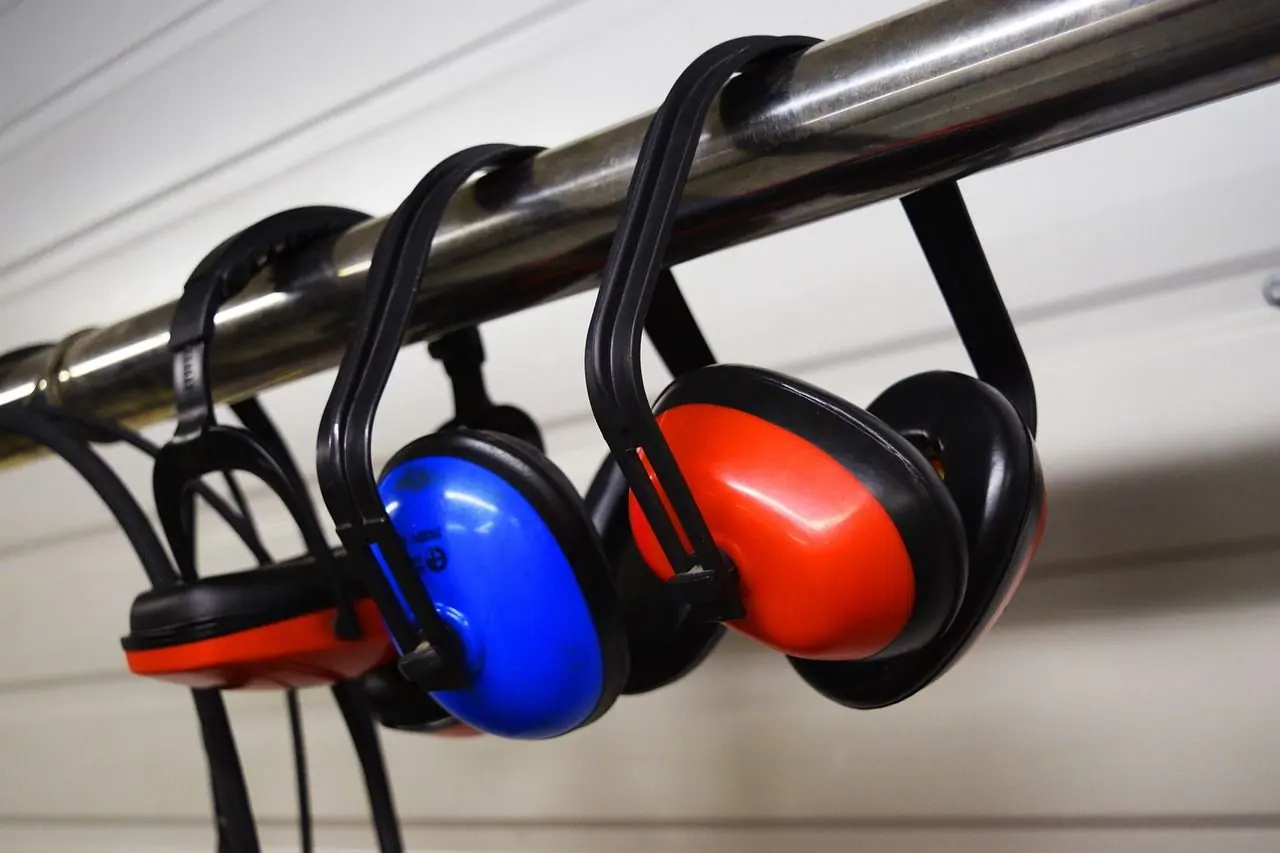
If noise cannot be reduced sufficiently with the measures above, personal protective equipment must be used. Hearing protection should be worn if the noise level exceeds 85 dB. For exposures up to 10 dB above this threshold, earplugs are recommended, while above 95 dB earmuffs are more effective. At noise levels above 100 dB, noise-protection helmets are recommended, as they also limit bone conduction of sound. It is important to choose hearing protection that does not compromise comfort or safety at work.
TIP: if you are looking for a complete range of personal protective equipment, including hearing protection, gloves, protective clothing and more, visit Zios Profi. Their range includes renowned brands such as Cerva, Adler and Portwest, known for their quality and reliability.
Caring for your employees’ health should be your priority. If you are concerned about noise exposure in your workplace or need help with measuring and managing noise, do not hesitate to contact us. Our specialists will be happy to help make sure your working environment is not only compliant with the law, but above all safe and healthy for your employees.
Caring for employees’ health is our priority.