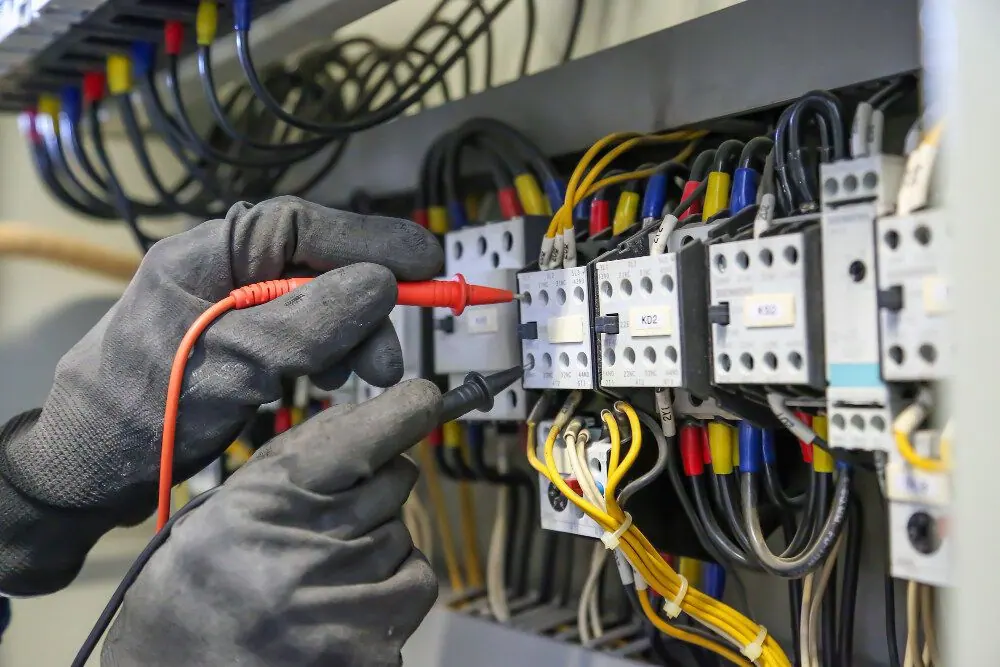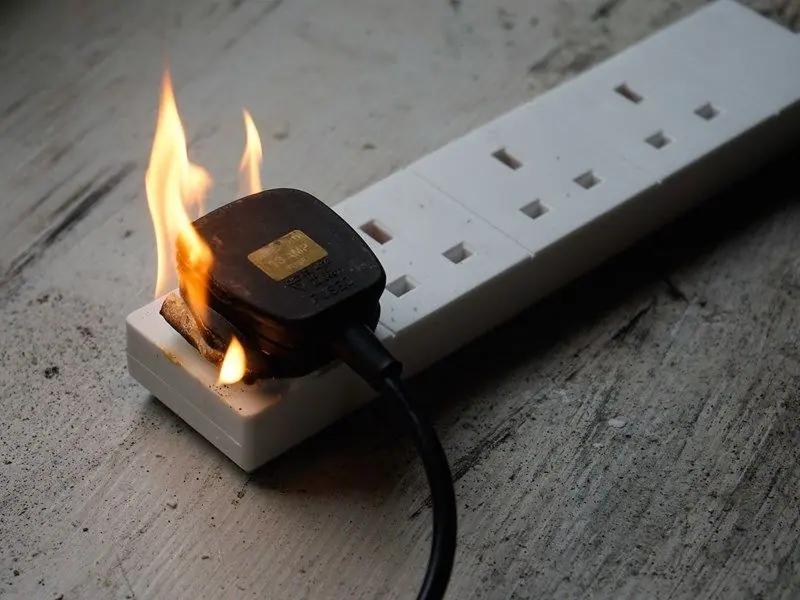
A power cut can bring a company to a standstill within minutes – the lights go out, computers stop and production collapses. How can you prepare for such a situation, and what should you do when the electricity suddenly goes off? We will show you practical steps to minimise losses, keep employees safe and keep the business running even in a crisis. With know-how from crisis experts such as Rescue Group, you will be ready to handle a power cut like a professional.
Why a power cut is a nightmare for businesses
Electricity is the backbone of every modern business – an invisible force that drives everything from day-to-day operations to complex production processes. Whether you run an office full of computers where employees process data and communicate with clients, a production line whose precision depends on machines running continuously, or a warehouse of chilled goods where temperature determines product quality, a power cut causes immediate problems that can escalate quickly. Data can be lost for ever if it is not backed up, machines stop mid-cycle and put delivery deadlines at risk, and employees are left uncertain, with no clear guidance on what to do next.
In the Czech Republic, where thunderstorms with lightning, technical faults on the distribution network and overloads at peak times are an everyday reality, the question is not whether a power cut will happen, but when. These situations are not just an inconvenience – they can mean financial losses, damaged client trust and, in extreme cases, safety risks. At Rescue Group we therefore stress again and again that the key to surviving such crises is not just a quick response, but above all well-thought-out prevention. Without preparation, a company finds itself in chaos, while with a plan it can keep functioning even in the worst-case scenario. So how do you start preparing for the moment the lights go out and silence replaces the usual hum of activity? Let us look at the first steps that will take you from vulnerability to resilience.
How to prepare your company for a power cut
Preparation is the first and most important line of defence against a power cut that can paralyse a company in an instant. Companies that have a well-thought-out plan and procedures set up in advance can handle such a crisis with minimal losses – whether financial impacts, data loss or disruption to operations. It is about being proactive, not just reactive. So how do you make sure a power cut does not catch you unprepared? There are specific steps you should consider long before the lights go off and your company is left in silence and uncertainty.
The key is to provide backup power sources – investing in a backup generator or a UPS (uninterruptible power supply) can make the difference between complete collapse and keeping key operations going. These systems can save the most sensitive parts of your business, whether servers holding important data, cooling units protecting goods from spoiling or lighting in critical operations. But it is not enough just to buy the equipment – you need to know where to use it. That is why the next step is a risk inventory. Map carefully which processes in your company depend most on electricity. Is it the production line, whose stoppage means delayed deliveries? Or the air conditioning in the data centre, without which the servers risk overheating? Identifying these weak points is not just an administrative exercise – it is the first and essential step towards protecting them and ensuring business continuity.
Next, you need a “Plan B” – a detailed crisis manual that sets out clearly who does what, whom to call in an emergency and how to communicate if the internet or phones go down. Without predefined roles and procedures, a company can easily fall into chaos, where everyone improvises and time works against you. That is why we offer training that helps companies put together plans tailored to their specific needs – from evacuation to crisis communication. But a plan on its own is not enough if you do not test it. Regular testing, for example through power cut simulations, is essential to show what actually works and where the gaps are. These tests allow you to fine-tune the details and avoid unpleasant surprises when the real test comes. Do not wait for reality to force you to react unprepared – every test brings you closer to resilience.
Imagine a scenario where you have not only a plan, but also equipment ready for immediate use. When the power goes, you are not trapped in chaos – instead, you are one step ahead, with a clear strategy and the tools to keep your company running. This preparedness is not just about technology, but about mindset – knowing that you have anticipated the risks and prepared for them with care and professionalism. When the lights come back on, you will be able to carry on where you left off, instead of picking up the pieces after an unexpected crisis. So how will you start building this resilience in your company? The first step is to take preparation seriously.
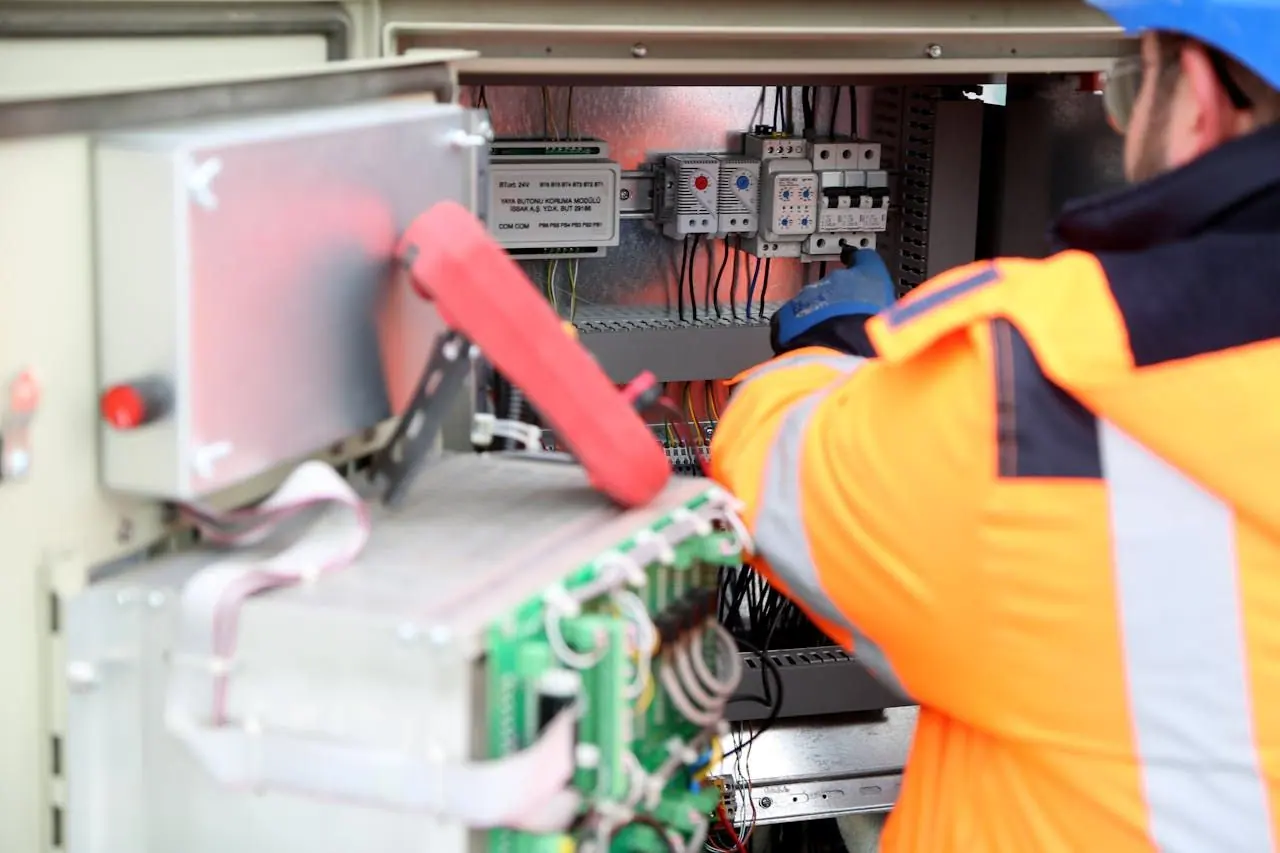
What to do as soon as the power goes out
When it happens, a quick response is key. Every minute without power can cost a company thousands of crowns. Here is what to do immediately:
- Check the situation: is the power cut only at your site, or across the whole area? Call your electricity distributor (e.g. ČEZ) and find out the estimated restoration time.
- Activate backup sources: start the generator or UPS if you have them and connect the most important equipment.
- Ensure safety: make sure employees are not at risk – dark spaces, stopped lifts or non-functioning fire systems can be dangerous. We recommend having battery torches ready and clear evacuation routes.
- Communication: tell the team what is happening and contact clients if necessary. If the internet is down, use mobile data or alternatives prepared in advance (e.g. a landline).
Speed and organisation in the first few minutes determine how serious the consequences will be.
How to keep your business running without electricity
A long power cut is a completely different league from a short interruption – while a few minutes without electricity may be a minor inconvenience, hours or even days without power are a serious test of any company’s resilience. At such times, it is no longer just about a quick response, but about the ability to switch to a full crisis mode that keeps the business running in adverse conditions. So how do you handle a situation when the lights do not come back and normal procedures fail? The key is strategic adaptation, well-thought-out steps and foresight, which ensure your company not only survives, but can come out of the crisis even stronger.
The first step is prioritisation – you need to focus on the key processes that are absolutely essential to your operations. If you have a limited backup source, such as a generator with a finite fuel supply or a UPS with limited runtime, you must decide what takes priority. Connect only what is truly essential – for example, servers that hold critical data and keep communication with clients going, or cooling for goods whose spoilage would mean huge losses. This choice is not random; it requires prior analysis so that you know what the heart of your business is. Every watt of energy counts in such a situation, and a wrong decision can make the difference between rescue and collapse.
Another option is to move some tasks to manual alternatives, because not everything depends on electricity. Even in the digital age, manual work can save the day – paper records can replace systems that are down, offline procedures allow basic operations to continue, and workers can temporarily stand in for some simple machines. This approach requires flexibility and foresight – companies that have “low-tech” solutions ready can stay afloat while others wait idly for the power to come back. It is a return to basics, but in a crisis this very simplicity can mean survival.
If the power cut is widespread and beyond your company’s capabilities, outside help becomes another option to consider. Moving key activities to another location – for example, a branch that has power, or even rented premises with working infrastructure – can be logistically demanding, but an effective way to keep operations going. This step requires contacts and a plan set up in advance, because improvisation in the middle of chaos rarely works. Cooperation with suppliers, partners or even competitors can open the door to solutions you would not otherwise have thought of.
And do not forget employee training – teams trained for crisis situations respond faster, more effectively and more calmly. When everyone knows what to do instead of groping in the dark, you save time and resources. At Rescue Group we offer courses that teach how to handle chaos without panic – from basic reactions to coordination. A well-prepared team is not only insurance against confusion, but also an asset that can move the company from defence to counter-attack. Investment in people pays off at such moments more than you would expect.
Adapting to a long power cut is a real art that separates companies that merely survive from those that come out of a crisis stronger. It is a combination of pragmatic decisions, creativity and discipline – from sensible use of limited resources and finding alternatives to making the most of human potential. When things get complicated, there is no time for lamenting; it is time to act. Companies that master this approach not only get through the darkness and silence of a power cut, but can take valuable lessons and a competitive advantage from it. So how will you make sure your company is one of those that adapt and win? Start with planning – and do not put it off until tomorrow.

How to minimise losses after a power cut
Even when the power comes back on, the consequences can linger. Lost data, damaged goods or dissatisfied clients – all of this can hurt for a long time. What should you do?
- Check equipment: once the power is restored, check whether any equipment has been damaged by a sudden voltage surge.
- Backups: regular data backups (ideally to external drives or the cloud) protect you from losing data.
- Communicate with clients: explain the situation openly and offer solutions – you will keep their trust.
- Analysis: assess what worked and what did not. Every power cut is a lesson in how to do better next time.
Preventing damage is just as important as a quick response – and this is where expert advice, for example from Rescue Group, can help.
Why invest in preventing the effects of power cuts
Some managers may quietly be thinking: “Why spend time and resources on something that only happens occasionally? Power cuts are not an everyday occurrence.” At first glance, this question may sound logical – why deal with a scenario that seems to be the exception rather than the rule? The answer, however, is simple and uncompromising: because it can cost you everything you have built. A single day without power can bring a cascade of problems that quickly get out of control. Imagine losing an important contract because you did not deliver on time, damaging your reputation with clients who expected reliability, or even endangering employee safety when basic systems such as lighting or fire alarms fail. These consequences are not hypothetical – they are real and can bring a company to its knees faster than you would expect.
Investing in backup systems such as generators or UPS units, employee training and carefully prepared crisis plans may therefore not seem like an immediate priority, but their value shows when it is needed most. These steps are not only about survival – they pay you back in the peace of mind that comes from knowing you are prepared, and in the resilience that keeps your company running even when others are in disarray. Think of it as insurance: you do not pay for it because you want something to happen, but because you know how devastating it can be if it happens and you are not prepared. And in today’s world, where power cuts caused by storms, technical faults or network overloads are becoming more frequent, an “occasional” risk is becoming something that demands attention.
At Rescue Group, as experts in safety and rescue solutions, we see this clearly and constantly stress that companies that take safety seriously not only survive crises, but can come out of them as winners in the competitive race. These companies do not wait for a problem to force them to act – they anticipate it and face it with a plan in hand. Preparedness is not just about avoiding the worst; it is a strategic advantage that sets you apart from those who underestimate risks. At a time when markets move fast and clients expect uninterrupted reliability, the ability to handle a power cut can be what puts you at the top. Preparedness is therefore not a luxury only large corporations can afford – it is a necessity for every company that wants to prosper in uncertain times.

How Rescue Group helps companies handle crises
We have many years of experience in crisis management – from fire protection and first aid to preparing for unexpected situations such as power cuts. We offer:
- Employee training – not just basic instructions, but comprehensive training that teaches your team to respond quickly, safely and with a cool head even in the most difficult situations. Employees learn how to switch off equipment safely, coordinate an evacuation if needed, use backup power sources and communicate without the usual technology. The training includes practical scenarios simulating a power cut, so that everyone is ready to act without hesitation when a real crisis comes.
- Consulting – we provide more than general recommendations; we help you create crisis plans tailored to your company. Together with you, we analyse the specifics of your operations, identify the key risks associated with a power cut and design a detailed strategy covering everything from prioritising processes to alternative communication. The result is a manual that is not just paper on a desk, but a working tool that guides you through the chaos step by step.
- Practical support – this service goes beyond theory. It includes real help, from installing safety systems such as battery-powered emergency lights or detectors for crisis situations to organising crisis simulations tailored to your business. These simulations test your plans and your team’s reactions in a safe environment, reveal weaknesses and allow them to be fine-tuned before a real power cut. In this way, Rescue Group makes sure your company is not only prepared in theory, but also practically equipped for whatever may come.
With this support, a power cut turns from a potential disaster into a manageable challenge that you can overcome with minimal losses. Rescue Group gives you the tools, know-how and confidence to stay in control even in the worst-case scenario.
Preparedness is the key to success
A power cut is not just a minor inconvenience that can be waved away – for a company it can pose a real threat to its existence, endangering not only its operations, but its future. Imagine lost contracts, systems that do not work or damaged client trust – and that may be just the beginning. But here is the good news: with careful preparation, a fast and well-thought-out response and a well-designed plan, this crisis can be overcome with minimal losses, and even with added value. Whether you invest in a backup generator to keep key processes running, training so that your team knows how to act under pressure, or a crisis manual that provides clear guidance, each of these steps brings you closer to the resilience that will set you apart from the competition. So the question is: do you want to be the company that collapses under the weight of a power cut and searches desperately for solutions, or the one that comes out of the crisis stronger, with lessons that move it forward? If you are looking for expert help so that your company can hold its own in the most difficult moments, Rescue Group is ready to guide you through the world of safety and preparedness with a professional approach and practical solutions.
Want to protect your company? Do not hesitate to contact us.