Every company whose activities produce waste is a waste producer and must keep continuous records. If you exceed the statutory quantity, you will also have to file an annual report in the ISPOP system.
Who is a waste producer and who must keep records
A waste producer is anyone whose activities produce waste. The law also counts legal entities and self-employed persons who treat waste or carry out activities that change its nature or composition. The obligation can therefore apply to sole traders, small shops, offices and large plants alike.
Waste is produced by many ordinary business activities. In a company it may be paper, toner, packaging, fluorescent tubes, oil or used filters. The main piece of legislation is Czech Act No. 541/2020 Coll. on Waste. The details are set out in implementing decrees, which have changed in recent years, so check their current wording before setting up your records.
Classifying waste under the Waste Catalogue
First, you must classify each type of waste correctly under the Waste Catalogue. You assign it a six-digit catalogue code and a category – other or hazardous waste. Classification must also take into account the properties of the waste and any contamination.
The Waste Catalogue is set out in Decree No. 8/2021 Coll. Correct classification affects your other waste management obligations: how waste is collected, contracts with collectors and the scope of your duties. Hazardous waste, such as used oil or fluorescent tubes, is subject to stricter rules than ordinary paper or plastic. Incorrect classification is one of the most common mistakes and carries through the entire record.
Continuous waste records
Continuous records are an ongoing log of what waste is produced and what happens to it. The obligation follows from Section 94 of the Waste Act, and you keep the records continuously, not once a year.
The records must include in particular:
- the type of waste and its code under the Waste Catalogue
- the quantity of waste and the date it was produced or handed over
- how it is handled, i.e. whether it is passed on for recovery, recycling or disposal
- identification of the person you hand the waste over to, including their authorisation
Records can be kept in a spreadsheet, in specialised software or on forms. Consistency matters more than the tool. Record every handover of waste at the moment it takes place. Keep documents, such as acceptance confirmations, for the period required by law.
Annual waste report and the ISPOP system
You must file an annual report if in a calendar year you produce more than 600 kg of hazardous waste or more than 100 tonnes of other waste. It is due by 28 February of the following year.
The report is submitted electronically through the Integrated System for Fulfilling Reporting Obligations in the Environmental Field, known as ISPOP. A company that does not exceed the limit has no reporting obligation, but it must still keep records. Limits and deadlines may change with new legislation, so check them at the source before filing.
Hazardous waste
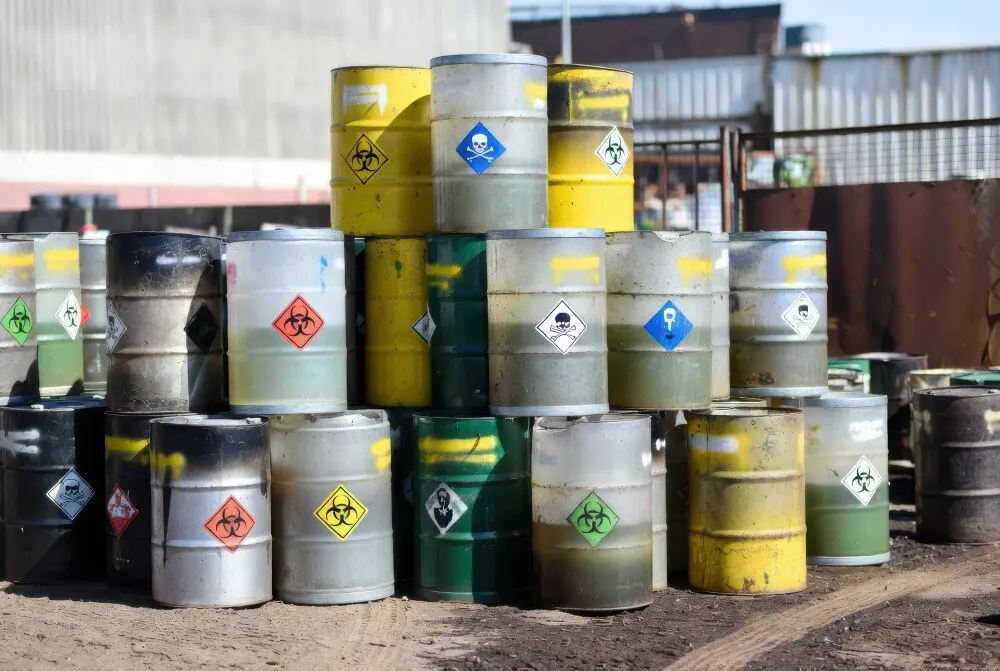
A stricter regime applies to hazardous waste, especially to collection, labelling and transport.
If you transport hazardous waste, you must report the shipment. Reporting is done electronically in a separate ISPOP module called SEPNO. Hazardous waste must also be collected separately from ordinary waste, in labelled and secured containers. A leak into the environment means real damage as well as penalties, so handle it only according to established procedures and have a procedure ready for emergency situations.
Most common mistakes in waste records
Most problems found during inspections stem from a few recurring mistakes. Eliminating them reduces the risk of problems during an inspection.
The most common mistakes are:
- incorrect classification of waste under the Waste Catalogue
- records kept retrospectively, now and then, rather than continuously
- missing contracts or proof of handover to an authorised person
- handing waste over to a person without the necessary authorisation
- no annual report from a company that exceeded the limit
You can prevent mistakes by appointing one responsible employee and checking the records regularly. Waste records are also reviewed during an ISO 14001 audit if the company has an environmental management system in place.
What a company risks by breaching its obligations
Failing to keep records, misclassifying waste or not filing a report can lead to a fine from the inspection authority. Inspections are carried out, for example, by the Czech Environmental Inspectorate.
The amount of the fine depends on the seriousness of the breach, and the law sets a range that reaches high amounts for more serious failings. A fine is only part of the risk, though. Poorly handled waste can cause environmental damage for which the company is liable. Properly kept records help prevent fines as well as remediation costs.
Keep your waste records under control
Keeping waste records is an obligation for every waste producer, from a small office to a manufacturing plant. Correct classification, continuous records, proof of handover and timely reporting form the foundation that protects your company from fines and environmental problems. If you are not sure how to set up waste management in your company, get in touch. As part of our environmental consulting, we will review your processes and propose a tailored solution.
Frequently asked questions (FAQ)
Does a small company or sole trader have to keep waste records?
Yes. Anyone whose activities produce waste is a waste producer and keeps continuous records regardless of size. Only those who exceed the statutory quantity limits file an annual report.
When is the annual waste report due?
It is due by 28 February of the following year for the previous calendar year. The obligation applies if you produce more than 600 kg of hazardous waste or 100 tonnes of other waste per year.
What is ISPOP?
ISPOP is the Czech Integrated System for Fulfilling Reporting Obligations in the Environmental Field. Companies use it to file annual waste reports and other reports.
Can I keep waste records in Excel?
Yes, the law does not prescribe a specific tool. The records must contain all the required information and be kept continuously and legibly. For larger operations, specialised software is worth it.
Would you like advice on waste management?
Free consultation