In a crisis, every moment can decide between life and death. But how can we make sure we are ready for these unexpected moments? At Rescue Group we believe the key lies not only in the availability of good-quality rescue technology, but also in regular training that prepares the general public to handle crisis situations. Here are some concrete examples of our activities that show how our services help improve people’s safety and their chances of survival in a crisis, and contribute to stronger, safer communities.
Access to life-saving equipment
In a crisis where someone suffers sudden cardiac arrest, every minute counts. A fast, effective response can make the difference between life and death. Automated external defibrillators (AEDs) are crucial at these moments, because they can restore heart function and save a life. At Rescue Group we believe access to this life-saving equipment should be available to everyone, which is why we are actively involved in installing it in public spaces.
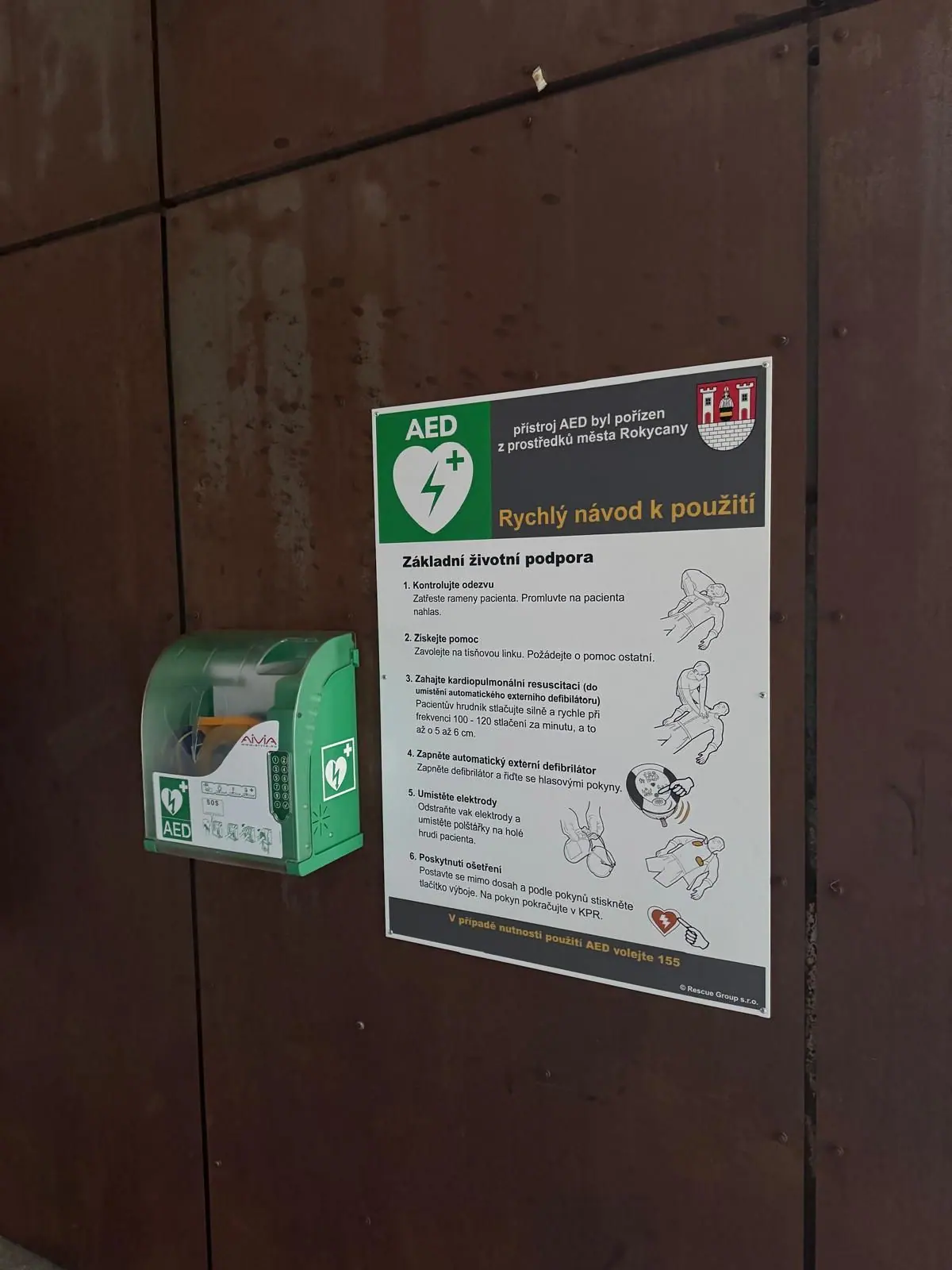
The AED installation project in Rokycany is one example of our efforts to expand the availability of AEDs across the Czech Republic. These devices, which can be used not only by professional rescuers but also by lay people, are an essential tool for saving lives in sudden cardiac arrest. AEDs can increase the chances of survival by up to 70%, which makes a huge difference at critical moments.
Our aim is not just to install AEDs, but also to work actively with town halls and public institutions to create a safer environment for all citizens. At Rescue Group we focus on long-term cooperation with towns, which includes not only installing modern rescue technology, but also training in accident prevention, first aid and other important aspects of crisis management.
Our cooperation with town halls is part of a comprehensive strategy that helps ensure public spaces are prepared for possible crises. Together we work on projects focused on prevention, installing safety equipment such as AEDs, and providing effective training for staff of public institutions. All of this leads to a higher level of safety, where citizens are informed and equipped with the tools to act effectively in a crisis.
Access to AEDs as part of prevention and preparedness
Providing access to AEDs in public places is an important part of prevention. When an AED is placed in busy locations such as squares, shopping centres or public buildings, the chance of timely help in sudden cardiac arrest is much higher. Thanks to our cooperation with town halls, we are expanding this network and making sure AEDs are available whenever they are needed.
Why the AED matters so much
An AED is a device used to restore heart function in sudden cardiac arrest. This condition can occur without warning and requires an immediate response. The sooner defibrillation is carried out, the higher the chances of survival. An AED not only delivers a shock to restore heart function, but also continuously assesses the patient’s condition and guides the user step by step through the whole process. This means that even people with no specialist knowledge can use an AED safely and effectively and give life-saving help before the ambulance arrives.
The importance of AEDs in crisis situations is enormous. Studies show that a correctly used defibrillator can increase the chances of survival of a person in sudden cardiac arrest by up to 70%. This simple but effective device is therefore an essential first aid tool and can be the deciding factor between life and death.
Installing AEDs in public places, as in Rokycany and the town of Radnice, is just one of many steps Rescue Group is taking as part of its wider strategy for public safety. AEDs are life-saving devices that can literally change someone’s fate at a critical moment. At Rescue Group we continue to expand this network and raise awareness of the importance of AEDs, because we believe each of us can have the chance to save a life.
- Speed of response is key – in sudden cardiac arrest, every minute can be decisive, and a quick response can save a life.
- The AED as a life-saving tool – automated external defibrillators (AEDs) can increase the chances of survival by up to 70%, making them a key tool for saving lives.
- AEDs available to the general public – Rescue Group actively supports the installation of AEDs in public spaces, making them available to everyone.
- Comprehensive cooperation with towns – our cooperation with towns includes not only installing AEDs, but also organising training in accident prevention, first aid and crisis management, which increases overall safety.
Learning about safety in a fun way
Children are our future, so it is essential to invest in teaching them about safety and how to behave in a crisis. The earlier they learn to respond correctly to unexpected situations, the better prepared they will be for the challenges life may bring. At Rescue Group we make sure that even the youngest have the right awareness of first aid, fire safety and other basic aspects of crisis management.
One of our major projects in this area was a Children’s Day focused on teaching children about safety and first aid. The day was specially designed not only to inform, but also to entertain and motivate children to take an active part in the exercises. We believe learning about safety should be not only useful, but also fun, so that children remember important skills and know how to use them in practice.
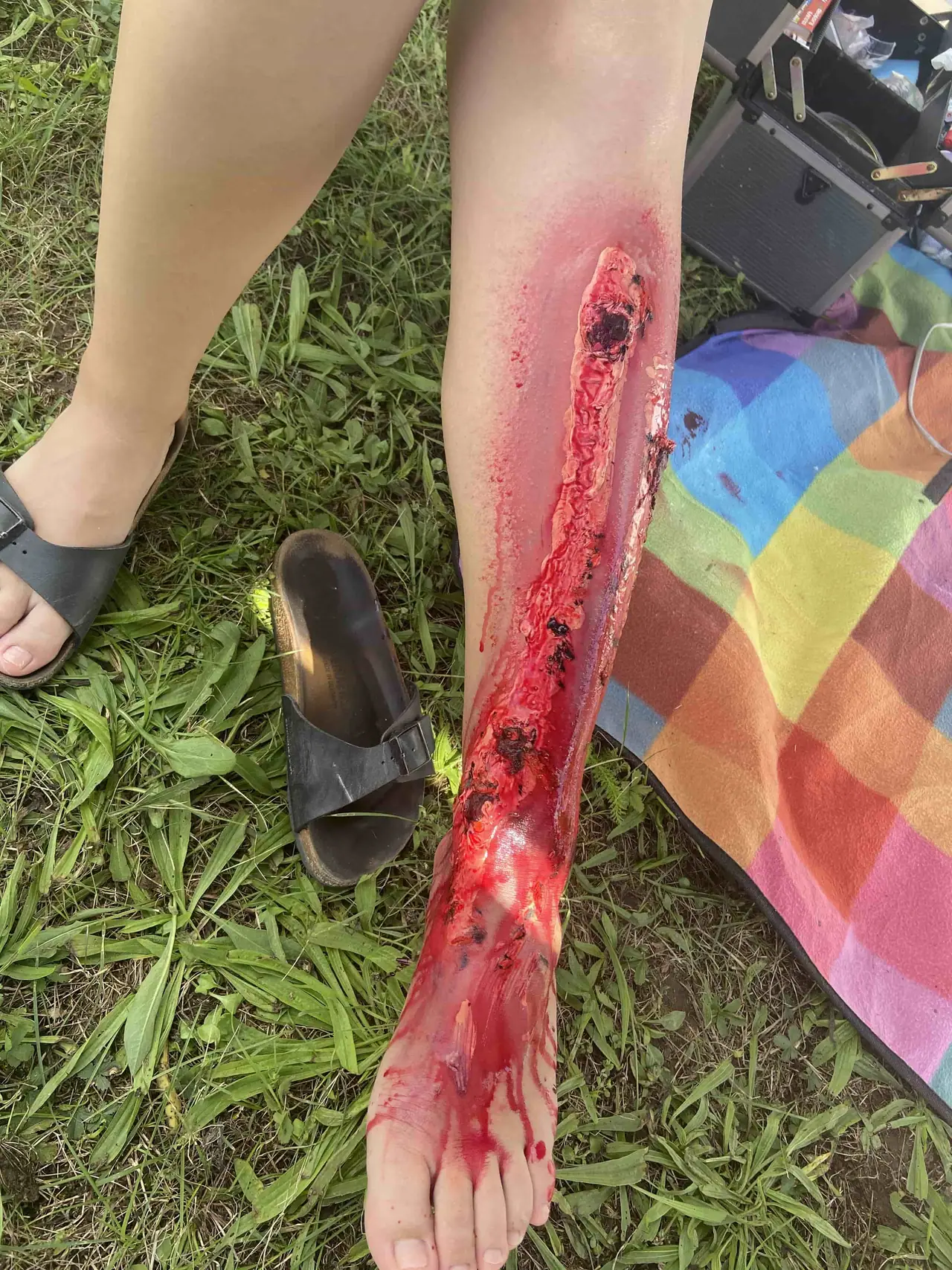
The event was both educational and practical. The children took an active part in simulated situations designed to imitate real emergencies as closely as possible. They had the chance to try out how to give first aid correctly for various injuries, how to behave in a fire and how to evacuate a building effectively in case of danger. The simulated scenarios, in which the children had to act under the guidance of our experts, allowed them to practise their skills in a safe environment and gain confidence in case they ever face a similar situation in real life.
It was important for the children not only to learn the theory, but also to have the opportunity to try everything out for themselves. Fun but realistic simulations, such as resuscitation, fire evacuation or giving first aid for injuries, were designed to show the children that first aid is not only about knowledge, but also about quick reactions and the right behaviour at critical moments.
Preparing for emergencies
The aim of our activities, such as Children’s Day, is to build children’s basic awareness of safety and prepare them to handle emergencies that may occur at home, at school or in public places. Unexpected events can happen around us every day, from small injuries to serious accidents, and it is precisely at these moments that children need to know how to respond correctly. Our aim is to equip them with skills that will not only help them in a crisis, but also teach them how to look after their loved ones and how to be useful to others in difficult moments. This includes not only first aid for injuries, but also the principles of safe behaviour, recognising dangerous situations and the ability to react quickly.
Through our activities, children learn how to help their loved ones, but also how to step in if they witness an accident or a dangerous situation. The aim is not only theoretical education, but real preparedness for real situations. Children learn how to call the emergency number correctly, how to give first aid for bleeding or fractures, and how to act in a fire or other emergency when every second counts.
Part of this process is psychological preparation, which helps children stay calm and focused even when they are in an unfamiliar or stressful situation. The ability to stay calm and composed is crucial in a crisis. Children learn how not to panic, how to analyse the situation quickly and how to focus on what needs to be done. They learn that in every crisis it is important to act decisively and thoughtfully – a skill that is useful not only in emergencies, but also in everyday life.
We also show children that safety is a team effort. In a crisis, it is not only about acting individually, but also about working with others. We teach children how to recognise when they need to ask for help, how to communicate with others and how to encourage them to get involved and help. It is important that children know they do not have to be heroes on their own in a crisis, and that the combined efforts of several people can mean a faster, more effective response. This collective approach not only increases the chances of handling a crisis successfully, but also builds a sense of responsibility and solidarity.
The earlier children learn how to behave correctly in a crisis, the better prepared they will be for the challenges they will face as adults. They will carry these skills into their everyday lives and help not only themselves, but others too. Our aim is for children to grow up into people who do not just wait for help, but are able to respond and contribute to their own safety and that of their community.
In our activities, therefore, we focus not only on specific skills, but also on shaping the right attitude towards responsibility for one’s own safety and the safety of others. Safety is not only about knowledge, but also about the values children adopt and carry into their lives. Creating a safe environment is a long-term process that should start with the youngest, so that they have the best possible foundation for handling unexpected situations and know how to be an asset to those around them.
Preparing for real situations
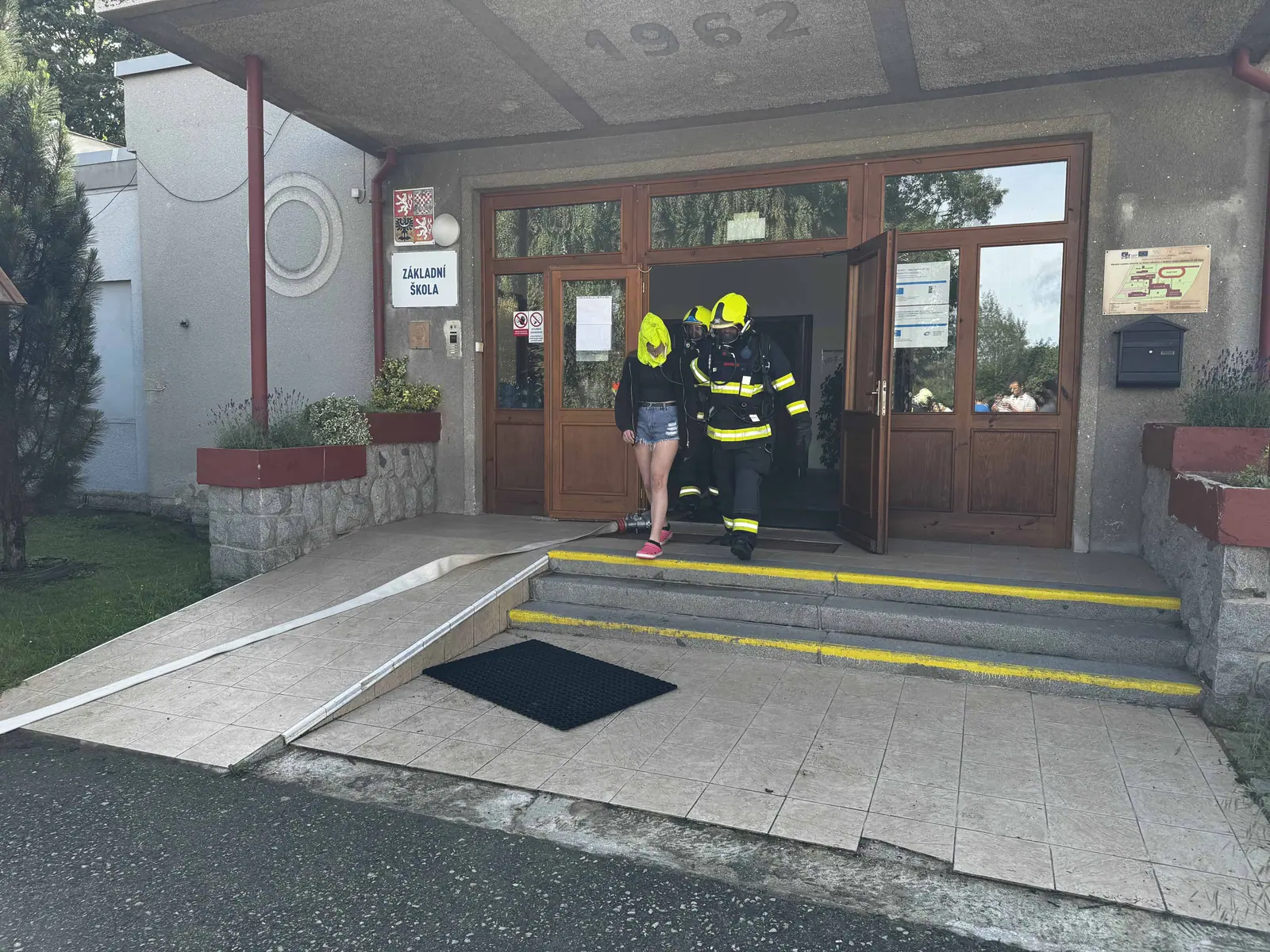
The safety of children in schools is a priority for us. We believe it is essential to prepare children and teaching staff for possible emergencies, which is why we focus on regular evacuation drills in schools. One of our key projects in this area is fire evacuation drills, which we organise at regular intervals. These drills are not just a formality, but real preparation for potential dangers that can arise at any time.
The aim of these drills is to give children and teachers practical experience of how to leave the school building safely in a fire or other emergency. During the evacuation, participants practise how to behave correctly, how to communicate and how to get to safety quickly and effectively. Children learn not only the escape routes and safety rules, but also the important instructions they should follow in a real situation. Teachers, in turn, gain valuable experience in coordinating the evacuation and helping children feel safe in a crisis.
These evacuations are key to safety, because in a fire or other danger every second counts. In a real situation, speed of response is decisive for minimising risks. Regular drills ensure that all participants master the correct procedures, know where the emergency exits are, how to behave in smoke or flames and how to help each other in difficult moments. Children learn that it is important to stay calm, listen to instructions and help themselves and others if someone needs help.
Preparing for real situations is absolutely essential. Fire evacuation drills not only strengthen children’s knowledge of safety, but also teach them the importance of collective responsibility. In these drills, children learn how to respond not only for their own safety, but also how to help friends and adults who may be in danger. The experience gained in these drills can be decisive in a real fire, because it allows children to react naturally and act without unnecessary panic.
Building a safer society through concrete steps
At Rescue Group we make sure our training and products not only inform, but above all help in real crisis situations. From installing AEDs and first aid training to fire evacuation drills – our activities are designed to give citizens concrete tools for keeping themselves safe. By focusing on prevention and education, we believe we are contributing to a safer society that is ready to face any crisis. Our efforts aim to give every citizen the knowledge and tools they need to keep not only themselves, but also others safe. Every step we take is aimed at making our towns and villages places where people feel safe, thanks both to technological solutions and to a human approach and readiness to act when danger threatens.
Crisis preparedness for everyone
Fire protection is a key element of prevention in every environment, whether schools, office buildings, industrial sites or public institutions. Fires can start for many reasons and always pose a serious danger to people’s health and lives. At Rescue Group we place great emphasis on making sure everyone who takes part in our training learns to respond correctly in a crisis. Our aim is not only to educate, but also to provide practical tools and skills that help protect lives and minimise damage.
Fire protection basics
Our training starts with the basics of fire protection – from getting to know the risks that can lead to a fire to specific steps for minimising those risks. Participants learn about the different types of fire, which fire extinguishers to use when needed and how to recognise the warning signs that may indicate a fire is starting. For companies and institutions, it is also important to become familiar with the legal requirements for fire protection, so that they meet all the necessary regulations while protecting the health and safety of their employees.
Practical exercises are one of the most important parts of our training. Participants have the chance to try out specific situations that can occur during a fire and learn to respond correctly. Fire evacuation drills are a key form of training in which participants practise not only the escape routes and the right behaviour in a fire, but also effective communication during a crisis.
In these exercises, participants learn to identify safe escape routes quickly, use evacuation aids correctly and stay calm under pressure. Escape routes are tested regularly to make sure everyone in the building knows how to get out if there is a threat. The simulation of a real fire is designed to be as realistic as possible and to give participants enough time to become familiar with different evacuation scenarios, such as smoke-filled areas or blocked exits.
The role of employees
In our training for organisations, we focus not only on the specifics of fire protection, but also on the role of employees in a crisis. Every worker, whether in production, administration or other positions, plays an irreplaceable role in keeping themselves and their colleagues safe in a fire. In the training, employees learn how to respond correctly in a fire, how to identify signs of danger immediately and how to alert others effectively.
One of the key aspects of the training is familiarising employees with the evacuation plans. They must learn how to leave the building quickly and safely, even in confusion or smoke. It is also important for employees to know where the emergency exits are and how to use them in a crisis. The training also includes learning how to help colleagues who cannot reach the escape routes on their own, for example because of a disability or injury.
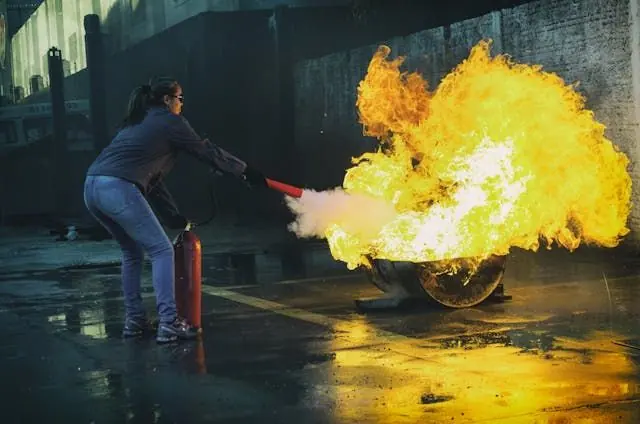
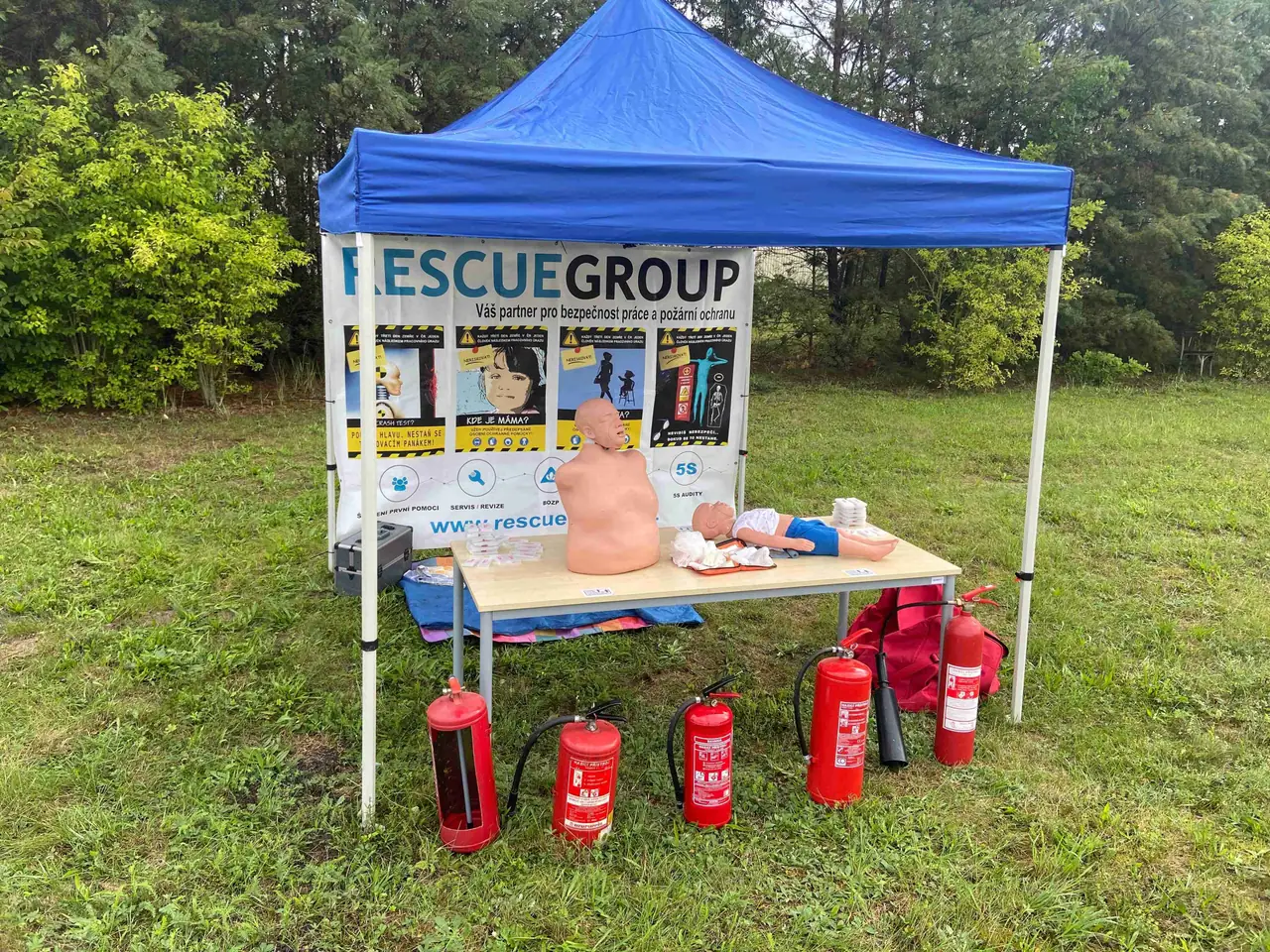
Employees are also trained in using basic fire extinguishers, a skill that in some cases can stop a fire spreading before professional firefighters arrive. During the training, they learn to recognise different types of fire and work out which type of fire extinguisher is most suitable for a particular situation. This training is key, because it can fundamentally influence whether a fire is contained in its early stages or the situation gets worse.
One of the aims of the training is also to strengthen teamwork and communication between employees. In a fire, fast and clear communication is key to making sure all employees know what to do and avoiding confusion. The training includes practising crisis communication, which helps employees find their way in a difficult situation and coordinate the evacuation with others.
Training for employees is not only about how to respond in a fire, but also about how to minimise the risks that lead to fires. Employees learn how to handle flammable materials correctly, how to maintain and store hazardous substances properly and how to use electrical equipment so as to minimise the risk of fire. This proactive approach helps organisations significantly reduce the likelihood of a fire and ensures employees are ready for a possible crisis.
Comprehensive fire safety preparation
Our fire safety training is carefully designed to give participants the comprehensive, practical skills they need to handle fire emergencies safely and effectively. The programme covers theoretical foundations, practical exercises and psychological preparedness, teaching participants how to respond correctly in a crisis. In the training you will learn how to become an active participant at moments when every second counts. Every step you take to prepare for a possible fire can have a fundamental influence on the safety not only of your family, but also of your colleagues and the wider community.
At Rescue Group we believe that good-quality education, regular practice and a timely response at critical moments are the foundation for building a safer, more responsible society. Our training is not only about theory, but above all about practical skills that can decide whether lives are saved in a real crisis. We are convinced that everyone can be ready to respond and that, through regular training, we can together create an environment where every crisis can be managed.
If you need training or any of our other services, do not hesitate to contact us.