Company driver training is a key tool not only for safety at work, but also for complying with the legislation on operating vehicles. It gives employees the knowledge they need about safe driving and accident prevention, minimising the risk of injury and damage. The emphasis is on the correct use of company and private vehicles during working hours and on responding to emergencies. The training thus makes a significant contribution to overall road safety and makes drivers more responsible.
Who counts as a company driver
In the Czech Republic, a “referent driver” is any employee who occasionally uses a motor vehicle as part of their job. Unlike professional drivers, driving is not their main activity. This includes, for example, employees who use company vehicles to visit clients, attend work meetings or deal with work matters away from the workplace. These employees must be trained not only for their own safety, but also so that the employer meets its legal obligations.
The legal obligation to train company drivers
Under the Czech Labour Code, the employer must provide training for all employees who use motor vehicles at work. The training focuses on reducing the risk of accidents and damage to property. The aim is for employees to master safe behaviour on the road and know the risks associated with operating a vehicle.
Even though many employees drive every day, the training focuses on the specifics of business trips and situations that may differ in a work context from ordinary private use of a car.


Legislation relating to driver training
Driver training in the Czech Republic is based on several key pieces of legislation, in particular:
- Act No. 361/2000 Coll., which governs road traffic and sets out the obligations of drivers and vehicle operators.
- Government Regulation No. 168/2002 Coll., which specifies the organisation of work and the procedures the employer must ensure in transport activities.
- Decree No. 108/1976 Coll. and Decree No. 64/1987 Coll., which govern the conditions of international road transport of dangerous goods (ADR) and the work of vehicle crews (AETR).
- Government Regulation No. 589/2006 Coll., which deals with the working hours and rest periods of employees in transport.
What company driver training covers
1. Current traffic regulations
In the training, participants learn about recent changes in traffic regulations and road traffic rules. This is important not only for complying with the law, but also for the safety of all road users.
2. Responsibility and risks on the road
Company drivers become aware of their responsibility for their own safety and the safety of other road users. They learn how to avoid risky situations, how to handle stress while driving and how to respond correctly to unexpected circumstances.
3. Basic vehicle maintenance
Before setting off, drivers should check the vehicle’s technical condition, such as the brakes, lights, tyres and fluids. These small checks can prevent more serious problems while driving.
4. First aid
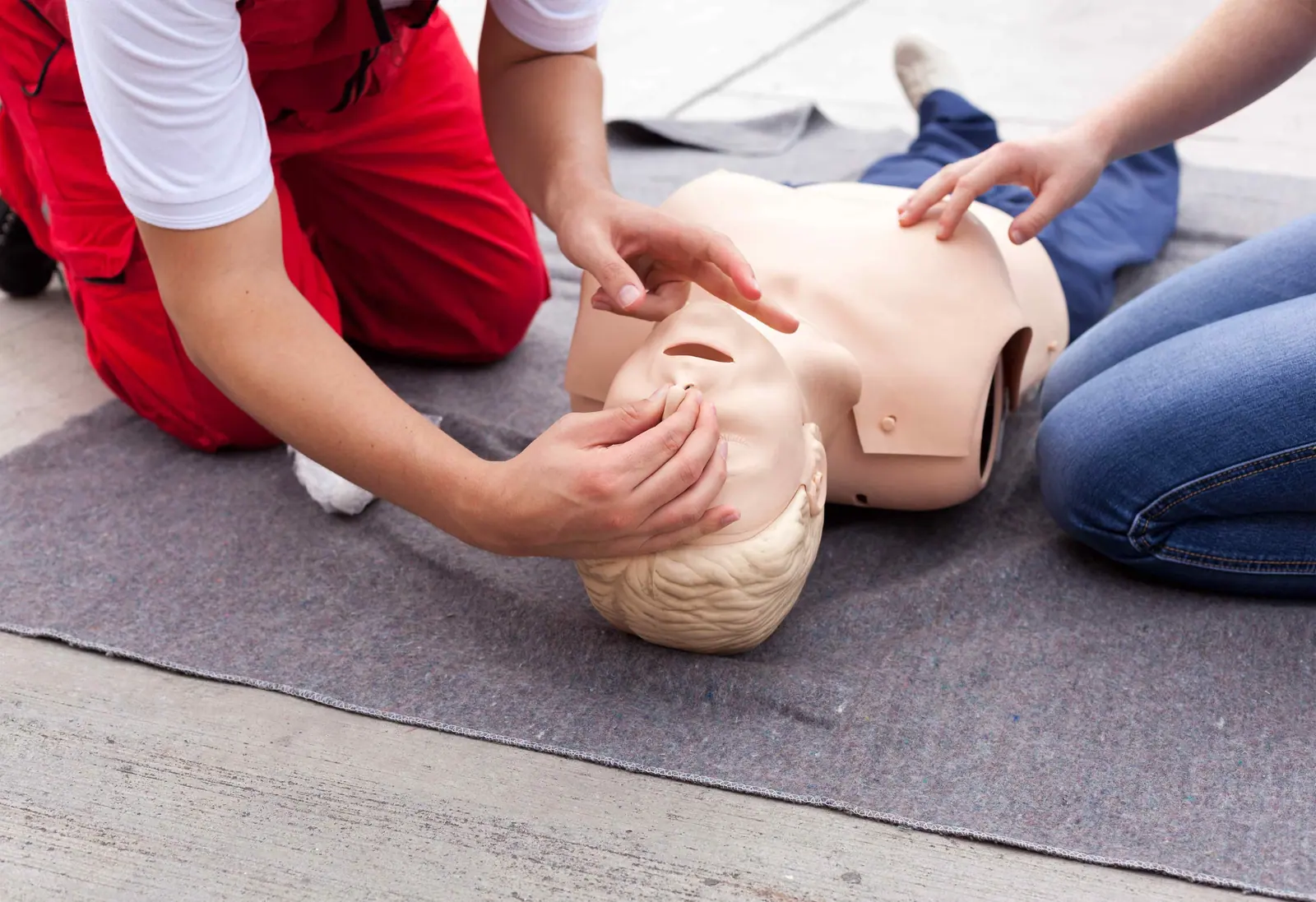
The training usually also includes basic first aid practice, which can be decisive in an accident. Drivers should know what to do in the event of an accident and how to call for help.
When giving first aid, the most important thing is to contact the emergency medical service first. The operator can give you valuable advice on assessing the situation. Remember that it is essential to protect not only the injured person, but also yourself. Find out whether the casualty responds and what injuries they have. Try to stop any bleeding. If the person does not respond and stops breathing, start resuscitation immediately. Once vital functions are restored, move the casualty into the recovery position to prevent dangers such as the tongue blocking the airway. Then wait for the paramedics to arrive.
How often the training should be repeated
The frequency of company driver training is not strictly set by law, and most employers choose periodic refresher training. It is recommended to follow Act No. 247/2000 Coll., which provides for regular driver training once a year. The State Labour Inspection Office says the training should take place at least once every three years, but recommends repeating it once every two years. The training can be led by a competent person (OZO), who is responsible for the methodology and organisation of training in occupational health and safety.
The benefits of training for employees and employers
Company driver training brings employers a number of benefits. Above all, it reduces the risk of road accidents and minimises possible damage to company property. The training also helps keep employees informed of their obligations and responsibilities when driving.
For employees themselves, the training means not only greater safety, but also learning defensive driving techniques, less stress when driving and a better ability to deal with risky situations on the road.
How to choose a suitable trainer
Company driver training can be delivered by an expert with sufficient qualifications and experience. The ideal solution is to work with specialist companies experienced in providing road safety training. Good trainers can not only prepare employees in theory, but also pass on practical advice and tips they can use in everyday driving.
Using modern technology
Today, modern technology plays a key role in road safety and in making company driver training effective. It can make a significant contribution to preventing accidents and improving employees’ driving behaviour.
Apps for monitoring driving behaviour
There are many apps that can monitor and analyse drivers’ behaviour. They can track speed, braking, acceleration and other factors, helping to identify risky behaviour and provide feedback for improving drivers’ skills.
Driving simulators
Driving simulators are an effective training tool, allowing realistic situations without the risk of a real accident. Trainees can practise emergencies such as skids, unexpected obstacles or bad weather, making them better prepared for real road conditions.


Telematics
Telematics systems allow vehicles to be tracked in real time, ensuring effective fleet management and safety. Collecting data on vehicle use helps optimise routes, monitor maintenance and analyse operating costs.
Online training
The law does not specify the form the training must take, which allows modern approaches, including online training. This form is fully recognised by the supervisory authorities and allows employees to complete the training comfortably from home or the office. Online training is becoming increasingly popular because it saves time and simplifies record-keeping of trained employees.
How we provide company driver training at Rescue Group
At Rescue Group we focus on company driver training with an emphasis on safety and legal regulations. Our training, prepared in cooperation with the Czech Police, takes participants through not only the traffic rules, but also the practical aspects of driving company cars. The aim is to prevent accidents and increase road safety.
The training includes:
- An overview of current regulations
- Filling in the European accident statement
- Consultations with Czech Police experts
- Merchandise and aids for drivers
You can adjust the frequency of the training, from every six months to every three years.
Company driver training is an essential step towards safety and meeting the employer’s legal obligations. Regularly updating knowledge of safe vehicle operation not only helps reduce the risk of road accidents, but also ensures that employees always have up-to-date information on legal and technical regulations.
We will provide practical company driver training for you